
Poloniny Dark-Sky Park

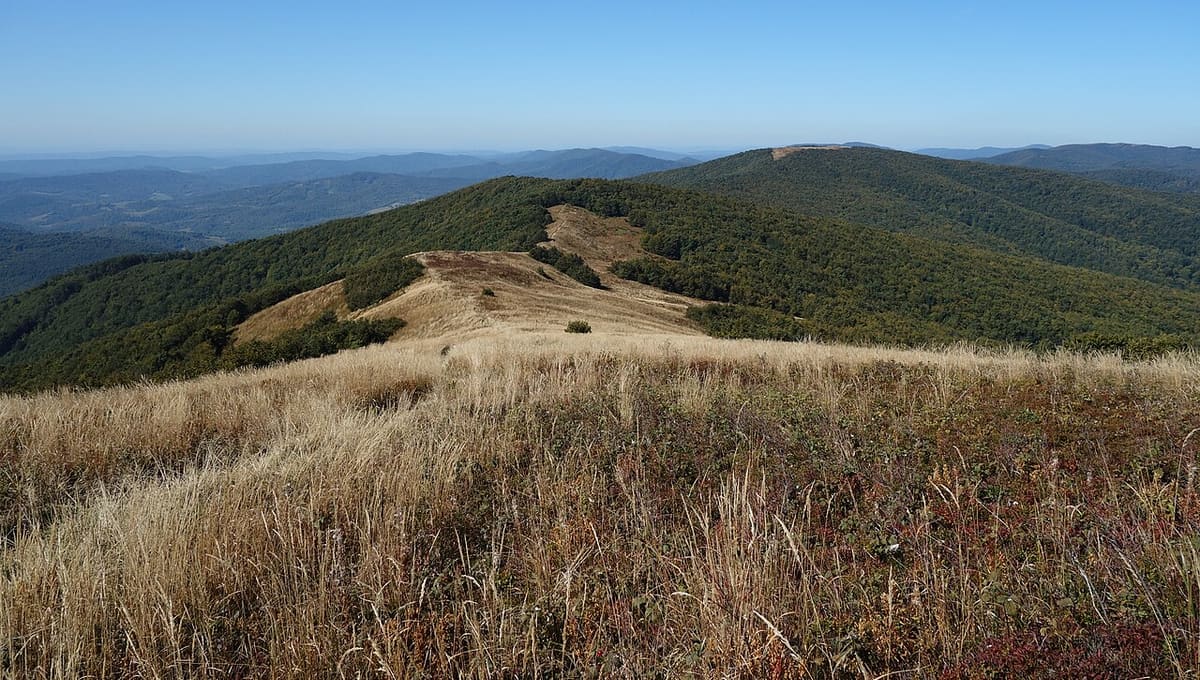
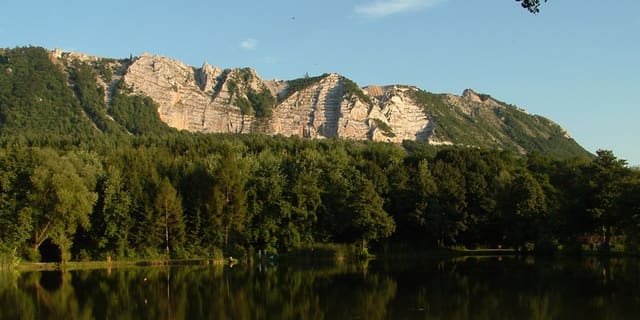
Image: Milan Bališin · CC BY-SA 4.0 · Wikimedia Commons
Poloniny Dark-Sky Park sits in the far northeast corner of Slovakia, where the border meets Poland's Bieszczady National Park and Ukraine's Uzhansky National Nature Park. Officially designated on 3 December 2010, it was Slovakia's first dark sky park and, at the time, the 20th in the world.
Why Poloniny Dark-Sky Park is a top stargazing spot
The park covers the entirety of Poloniny National Park, its surrounding buffer zone, and select nearby territories, protecting genuinely dark skies. Sky brightness here averages 21.5 magnitudes per square arcsecond, ranging from 21.3 to 21.7, which corresponds to Bortle scale readings of 2 to 3, among the darkest classifications used to rate night skies.
What you can see
Under skies this dark, the Milky Way and a dense field of fainter stars are clearly visible to the naked eye, placing Poloniny among the better stargazing destinations in Europe. Meteor showers stand out clearly against the dark background, and patient observers may also pick out zodiacal light and its fainter counterpart, the Gegenschein, along with subtle airglow near the horizon. The aurora borealis is rare at this mid-latitude, but strong geomagnetic storms have occasionally pushed the northern lights as far south as Slovakia and Germany in recent years, so it is not entirely out of the question on an exceptional night.
Visiting Poloniny Dark-Sky Park at night
The park regularly hosts stargazing events and astronomy workshops led by knowledgeable astronomers, and its ancient forests and meadows also support diverse wildlife, including deer and a rich variety of birds, making it worth a daytime hike as well. In the village of Nova Sedlica, the "Under the Dark Sky" educational path offers a 1.2 km interpretive trail with five information boards covering light pollution and night sky protection, a good introduction before dark. The park itself is accessible year-round, 24 hours a day, and camping is permitted in designated areas. Check the official Poloniny website for the current schedule of events before you travel.
Best time to go
Time your visit around the new Moon for the darkest sky, and give your eyes 20 to 30 minutes to adapt once you arrive, using a red light rather than a white torch. From this northern latitude, the Milky Way's core is best seen from roughly March to September, while the clear winter nights bring out Orion and the other winter constellations. The Perseids peak in August, the Geminids in December and the Quadrantids in January, all well placed for viewing from Poloniny's dark forested hills.
Getting there
Poloniny Dark-Sky Park lies in Slovakia's remote northeastern corner, within Poloniny National Park, close to the tripoint border with Poland's Bieszczady National Park and Ukraine's Uzhansky National Nature Park. The village of Nova Sedlica, home to the educational path, is a useful base for exploring the park.
See your named star from here
With Bortle 2 to 3 skies, Poloniny is one of the better spots in Central Europe to actually pick out a star you've named through Star Register. Bring its coordinates and a stargazing app, learn how to find a star in the night sky, browse the star catalogue, or see other certified dark-sky destinations on our observatories page.
Conditions and access vary by season. Check the official website and Google Maps before you travel, and aim for a clear night near the new Moon for the darkest sky.
Satellite imagery: Esri, Maxar, Earthstar Geographics

 16 kmPreserve
 21 kmPreserve
 39 kmPreserve
 174 kmDark Sky Park