
Bieszczady Starry-Sky Park

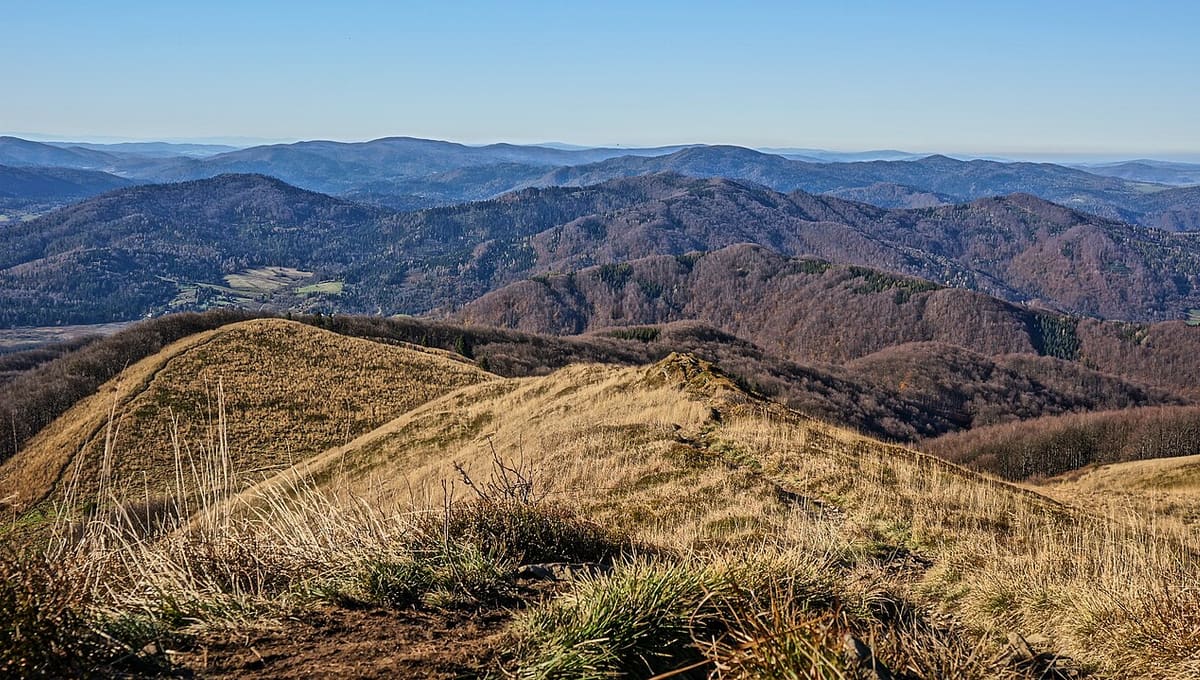
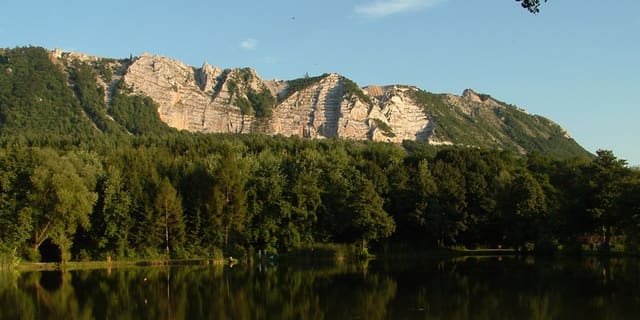
Image: Marta Żukowska · CC BY-SA 3.0 pl · Wikimedia Commons
Bieszczady Starry-Sky Park is a dark-sky preserve in the Bieszczady Mountains of southeastern Poland, part of the East Carpathian International Biosphere Reserve. Designated in 2013, it protects the largest dark-sky area in Poland and the second-largest in Europe.
Why Bieszczady Starry-Sky Park is a top stargazing spot
The preserve spans 113,846.41 hectares across Bieszczady National Park, the Landscape Park of the San Valley and the Ciśniańsko-Wetlińska Landscape Park, a huge, sparsely populated stretch of forest and mountain terrain far from major cities. Sky quality surveys have confirmed a Bortle 3 to 4 rating across the preserve. It also forms part of the Tripark of Dark Sky of the Eastern Carpathians, a cross-border network with neighbouring parks in Slovakia and Ukraine that together protect over 208,000 hectares of night sky. On a clear, moonless night, roughly 7,000 stars are visible to the naked eye here, a scale most stargazers never get to experience.
What you can see
With around 7,000 stars visible on the darkest nights, the full arc of the Milky Way is easy to trace overhead, and on the clearest, most transparent nights the limiting magnitude can exceed 6.5, faint enough that the Milky Way is said to cast a subtle shadow. The park is also a well-known spot for watching the Perseid meteor shower each August, when observers can see up to 100 meteors an hour under good conditions, and the Geminids each December offer a reliable second peak for a colder, quieter visit.
Visiting Bieszczady Starry-Sky Park at night
The park has built out real infrastructure for stargazers, including observatories, astronomy training centres and accommodation aimed at visitors who want to stay after dark; the Pod Trohańcem Cottage in the village of Dwernik even keeps a telescope on hand for guests. Astronomical shows and workshops run regularly, so it's worth timing a visit around one of these events. As always, a new-Moon night gives the best contrast, and it's worth allowing your eyes time to adjust once you're away from any lights.
Best time to go
The Milky Way core is at its best here from March through September, while the long, clear winter nights bring their own reward in the form of crisp views of Orion and the other bright winter stars. August's Perseids and December's Geminids are the two showers worth building a trip around, and the Quadrantids in early January are a cold-weather bonus for the committed. Whatever the season, plan for a night close to the new Moon, give your eyes 20 to 30 minutes to adapt once you're away from any light source, and carry a red-light torch to keep that adaptation once you have it.
Getting there
The preserve sits in the far southeastern corner of Poland, close to the borders with Slovakia and Ukraine. Wetlina is the most popular base village for visitors, with lodging and access points into the surrounding national and landscape parks; the nearest larger town is Ustrzyki Dolne, and Rzeszów is the closest city with an airport, a few hours' drive to the north.
See your named star from here
Few places in Europe offer skies as dark as Bieszczady's, which makes it an exceptional place to search out a star of your own. If you've named a star for yourself or someone else, its coordinates will guide you straight to it here with a stargazing app, far from any city glow. Explore the star catalogue for inspiration, or read our guide on how to find a star in the night sky before you go.
Conditions and access vary by season. Check Google Maps before you travel, and aim for a clear night near the new Moon for the darkest sky.
Satellite imagery: Esri, Maxar, Earthstar Geographics

 14 kmPreserve
 21 kmPreserve
 38 kmPreserve
 192 kmDark Sky Park