
Petrified Forest National Park

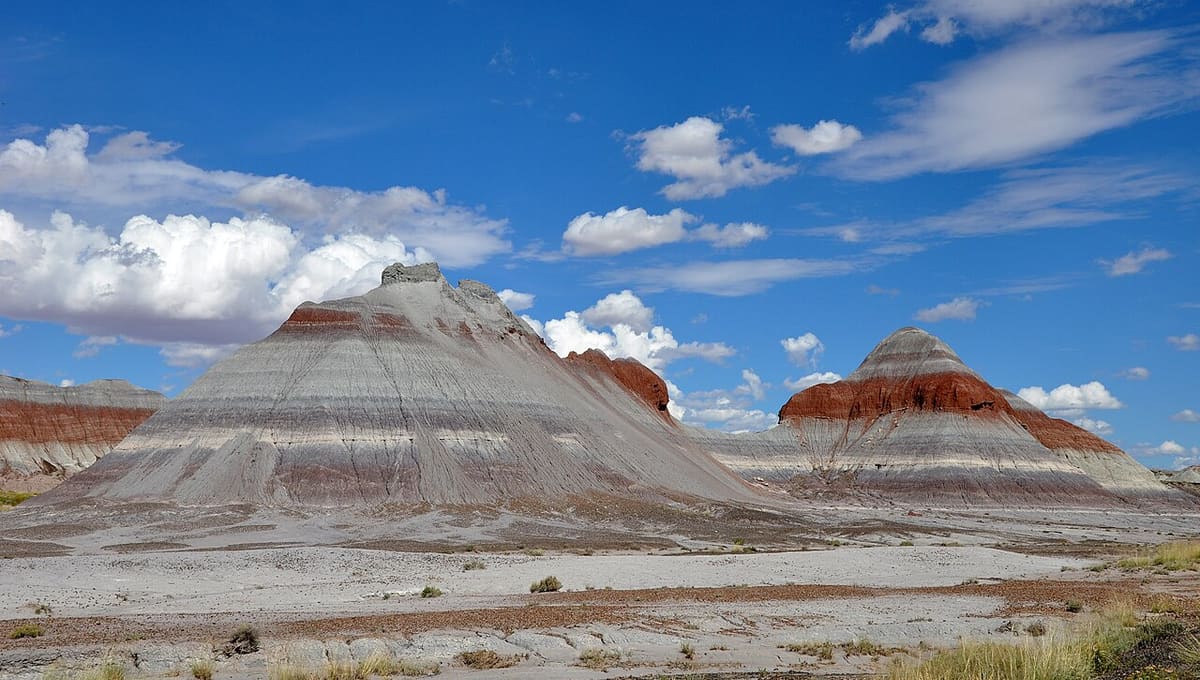
Image: Finetooth · CC BY-SA 3.0 · Wikimedia Commons
Petrified Forest National Park spans 594.6 square kilometres of badlands and desert in northeastern Arizona, known for its large deposits of fossilised wood. Established as a national park in 1962, it is also an International Dark Sky Park.
Why Petrified Forest is a top stargazing spot
The park's sky measures Bortle Class 2, an exceptionally dark rating, and roughly half of its territory is protected as designated wilderness. The park has also corrected problematic outdoor lighting on site, making it something of a model for proper dark-sky lighting practice among National Park Service units.
What you can see
Under Bortle Class 2 skies, the Milky Way and a dense field of stars are readily visible, and the park runs nighttime programming that highlights how much the night sky matters to the wildlife and resources it protects.
Visiting Petrified Forest at night
The park is open year-round, generally from 8am to 5pm daily with hours varying by season, and closes only on Christmas Day. Entry costs $25 per vehicle for a 7-day pass, $20 for a motorcycle, or $15 for a pedestrian or bicyclist, and is free on National Public Lands Day. There are two visitor centres: the Painted Desert Visitor Center at the north end, which screens a 17-minute film on petrified wood, and the Rainbow Forest Museum at the south end, with geological and human history exhibits. For nighttime access, the park issues two free Dark Sky Viewing Permits each day, first-come first-served and with no reservations, available only at the Painted Desert Inn and Visitor Center between 8am and 4:30pm; permit holders still pay the standard entrance fee (or present a valid pass), must park in designated areas, and need to exit before closing time. Backcountry campers staying overnight in the park's wilderness areas get unlimited dark sky access without needing a separate permit.
Best time to go
Plan around the new Moon for the darkest possible sky, and allow 20 to 30 minutes for your eyes to fully dark-adapt once you arrive, using a red light to protect that adaptation. From this Arizona latitude, the Milky Way's bright core rides high from roughly March through September, while the clear, dry winter air brings out Orion and the rest of the winter constellations. The Perseid meteor shower peaks in August, the Geminids in December and the Quadrantids in January, all of which are well placed for viewing here.
Getting there
The park's headquarters lies about 26 miles east of Holbrook along Interstate 40, which parallels old Route 66 as it crosses the park roughly east to west. Both the Painted Desert Visitor Center in the north and the Rainbow Forest Museum in the south have their own entrances off I-40 and Highway 180.
See your named star from here
Bortle Class 2 conditions make Petrified Forest one of the better places in Arizona to find a named star using its coordinates and a stargazing app. Explore the star catalogue to pick your star, learn how to find it in the night sky, and check the park's permit system before you go so a night sky visit fits into your plans.
Conditions and access vary by season. Check the official website and Google Maps before you travel, and aim for a clear night near the new Moon for the darkest sky.
Satellite imagery: Esri, Maxar, Earthstar Geographics

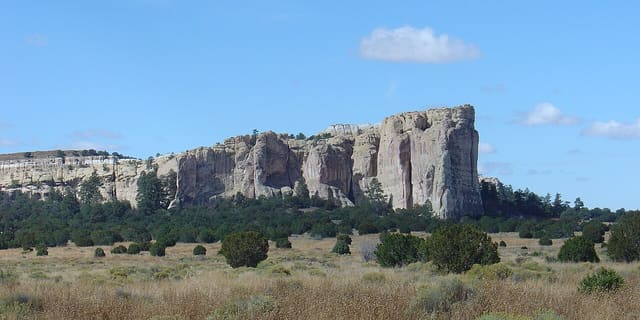 132 kmDark Sky Park
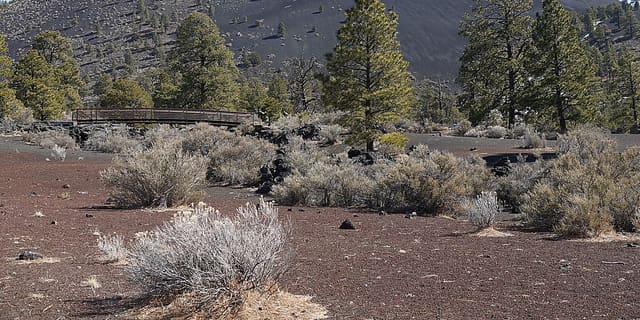 153 kmDark Sky Park
Flagstaff Area National Monuments
group of three national monuments in Coconino County, Arizona

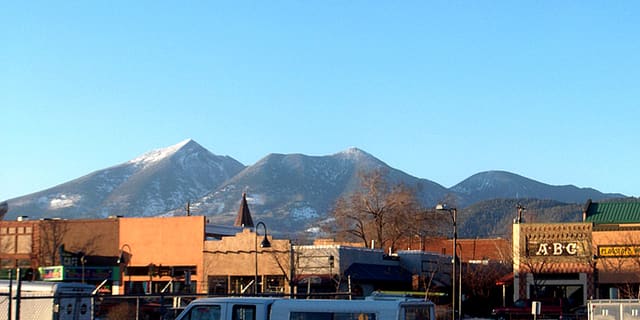 166 kmCommunity
Flagstaff
city in and county seat of Coconino County, Arizona, United States

 181 kmCommunity
Village of Oak Creek
census-designated place in Yavapai County, Arizona, United States