
Copper Breaks State Park

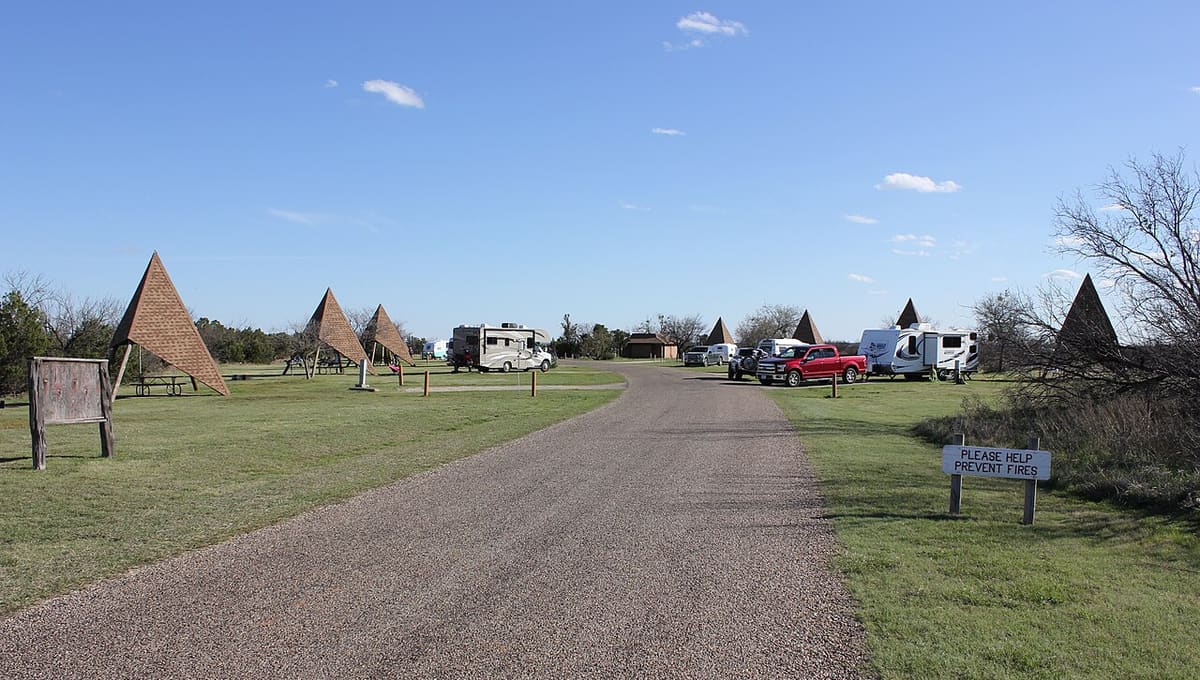
Image: Nicolas Henderson from Coppell, Texas · CC BY 2.0 · Wikimedia Commons
Copper Breaks State Park lies in Hardeman County, Texas, about 21 km south of Quanah, and has held International Dark Sky Park certification since August 6, 2014.
Why Copper Breaks State Park is a top stargazing spot
The park spans 1,898.8 acres and has been open to the public since 1974, but it's the sky above that draws stargazers: Bortle Class 2 conditions, rated excellent for astronomy, thanks to the park's distance from major city lights on the Texas plains. Managed by the Texas Parks and Wildlife Department, the park runs monthly star parties from April through November alongside year-round night sky programming.
What you can see
Under Bortle 2 skies, the Milky Way is a clear, prominent feature on moonless nights, and fainter stars and deep-sky detail become visible that are lost under typical suburban light pollution. The park's two small lakes and open trail network give plenty of clear sightlines for evening viewing.
Visiting Copper Breaks State Park at night
Beyond stargazing, the park offers 16 km of trails for hiking, biking and horseback riding, along with boating, fishing, swimming, playgrounds and picnic areas for a full day before dark. A visitor centre and museum on site covers the park's bison and its early inhabitants, worth a stop before the sky darkens. Camping ranges from primitive sites to well-equipped spots with water and electric hookups, with hot showers and restrooms available, plus a separate equestrian camping area with its own flush toilets, showers and water pumps. Check the park's website for the next scheduled star party, and bring a red-filtered light to protect your night vision once you arrive.
Best time to go
Sitting in the northern hemisphere, Copper Breaks gets its best Milky Way core views roughly March through September, while the drier Texas plains winter still offers crisp, clear nights for the winter constellations. The Perseids in mid-August pair naturally with the park's warm-season star party schedule, and the Geminids in mid-December or Quadrantids in early January are worth a colder-weather trip if skies cooperate. Any time of year, plan around the new Moon, allow 20 to 30 minutes for your eyes to dark-adapt, and use red light rather than white once you're set up.
Getting there
Copper Breaks State Park sits on the Texas plains about 21 km (13 miles) south of Quanah, off Highway 6 in Hardeman County, and is reachable as a day or overnight trip from the wider Wichita Falls area.
See your named star from here
Bortle Class 2 skies like those at Copper Breaks reveal far more of the night sky than any town, making it a great spot to find a named star using its coordinates and a stargazing app; see our guide on how to find a star in the night sky for pointers. Browse the star catalogue or explore other observatories for more dark-sky destinations.
Conditions and access vary by season. Check the official website and Google Maps before you travel, and aim for a clear night near the new Moon for the darkest sky.
Satellite imagery: Esri, Maxar, Earthstar Geographics

 408 kmDark Sky Park
 410 kmDark Sky Park
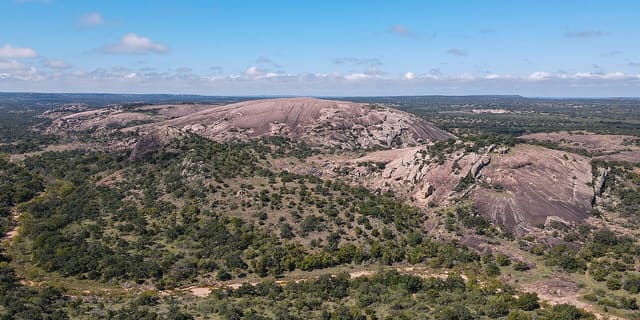
Enchanted Rock State Natural Area
state natural area in Gillespie and Llano County, Texas

 417 kmCommunity
 423 kmDark Sky Park