
Union Observatory

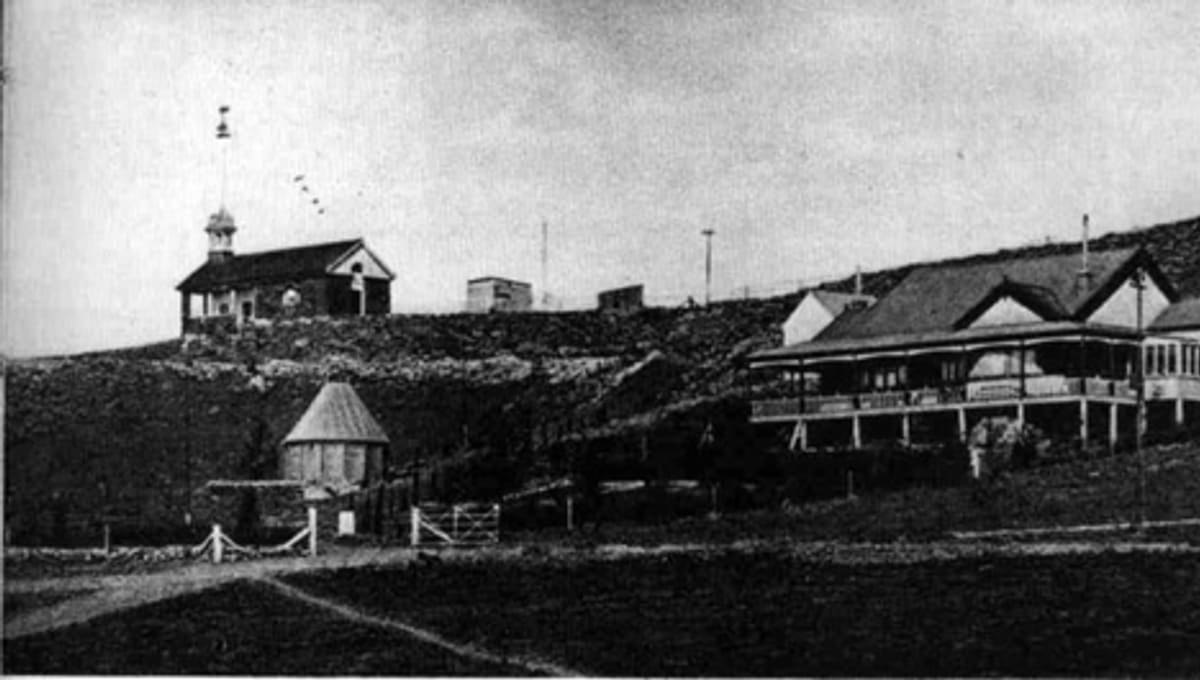
Image: Wikimedia Commons
Union Observatory, once known as the Transvaal, Republic, or Johannesburg Observatory, stood on the highest point in Johannesburg, South Africa, and left one of the richest discovery records of any observatory on the continent.
About Union Observatory
Union Observatory operated from 1903 to 1971 on Observatory Ridge, the city's highest point at 1,808 metres above sea level, in the Johannesburg suburb that still carries the name Observatory. Though decommissioned decades ago, its scientific legacy remains a landmark in southern-hemisphere astronomy.
History
Founded in 1903, the observatory (and its satellite site, the Leiden Southern Station) operated for nearly seven decades before closing in 1971. During that time it became one of the most productive minor-planet-hunting sites of its era.
Telescopes & research
Astronomer Robert Innes made the observatory's most celebrated discovery here: Proxima Centauri, the nearest known star to the Sun. Observers at Union Observatory also catalogued around 6,000 double stars and identified 578 minor planets, a record number for its time. The Minor Planet Center credits the site with 147 minor-planet discoveries, made by astronomers including Harry Wood, Cyril Jackson, Hendrik van Gent, Ernest Johnson, Ejnar Hertzsprung, Jacobus Bruwer, and Joseph Churms.
Location & getting there
The observatory sits at 1,808 metres elevation on Observatory Ridge in Johannesburg, South Africa, the city's highest ground, chosen precisely for the clearer, steadier skies that altitude afforded.
Visiting Union Observatory
The observatory has been decommissioned since 1971, so check the ASSA/SAAO history pages or contact local heritage bodies before planning a visit, as public access and facilities are not guaranteed at a site that no longer operates as a working observatory.
See your named star from here
A place that once tracked Earth's nearest stellar neighbour is a fitting backdrop for thinking about your own star. Any named star's right ascension and declination can be aimed at from anywhere with a telescope. Discover our star-naming packages or browse the star catalogue.
Opening hours and public-visit programs vary by season. Check the official website and Google Maps for current times before you travel.
Institutional and reference sources used to verify this guide.
Satellite imagery: Esri, Maxar, Earthstar Geographics

 5 km
5 km
 47 km
47 km