
LaCaille observatory
Satellite imagery: Esri, Maxar, Earthstar Geographics
Between 1751 and 1753, the French astronomer Nicolas-Louis de Lacaille observed the southern sky from a small, purpose-built observatory at the Cape of Good Hope, South Africa - work that reshaped how the world catalogued the southern stars.
About LaCaille observatory
Lacaille's observatory was a modest 12-foot by 12-foot structure, equipped with two six-foot radius sectors, a pendulum clock, a quadrant, and several telescopes. From this small base he carried out one of the most ambitious sky surveys of his era.
History
Working from the Cape between 1751 and 1753, Lacaille replaced Edmond Halley's 1677 catalogue of 341 southern stars with a far more comprehensive survey of 9,766 stars. His findings were published posthumously in 1763 as Coelum Australe Stelliferum, giving positions for 1,942 stars. Lacaille's original residence and observatory were demolished in 1973 to make way for the Old Mutual Centre, but the tradition of southern-sky observation from the Cape continued: the Royal Observatory at the Cape of Good Hope was established there in 1820 and evolved into today's South African Astronomical Observatory (SAAO).
Location & getting there
The historical site sits in Cape Town, South Africa, near the Cape of Good Hope on the country's southern coast.
Visiting LaCaille observatory
Lacaille's original observatory building no longer exists, so there's no structure on-site to tour. Visitors interested in his legacy can instead learn more through the South African Astronomical Observatory, which carries on the Cape's long observing tradition.
See your named star from here
Lacaille catalogued thousands of southern stars by eye and sextant; today, anyone under those same Cape skies can find a named star instantly using its coordinates. Name a star as a gift, or browse the catalogue of stars already named.
Opening hours and public-visit programs vary by season. Check Google Maps for current times before you travel.
Institutional and reference sources used to verify this guide.
Satellite imagery: Esri, Maxar, Earthstar Geographics

 5 km
5 km
 44 km
44 km
 524 km
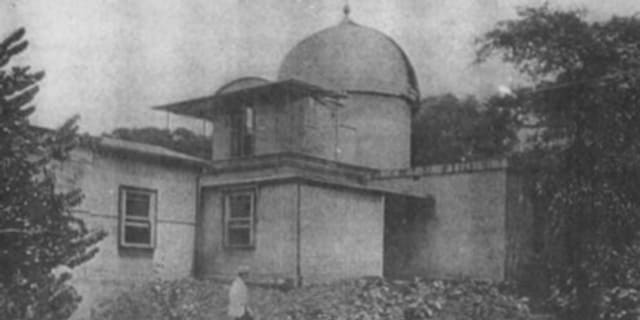
Natal Observatory
astronomical observatory in the Colony of Natal from 1882 to 1911