

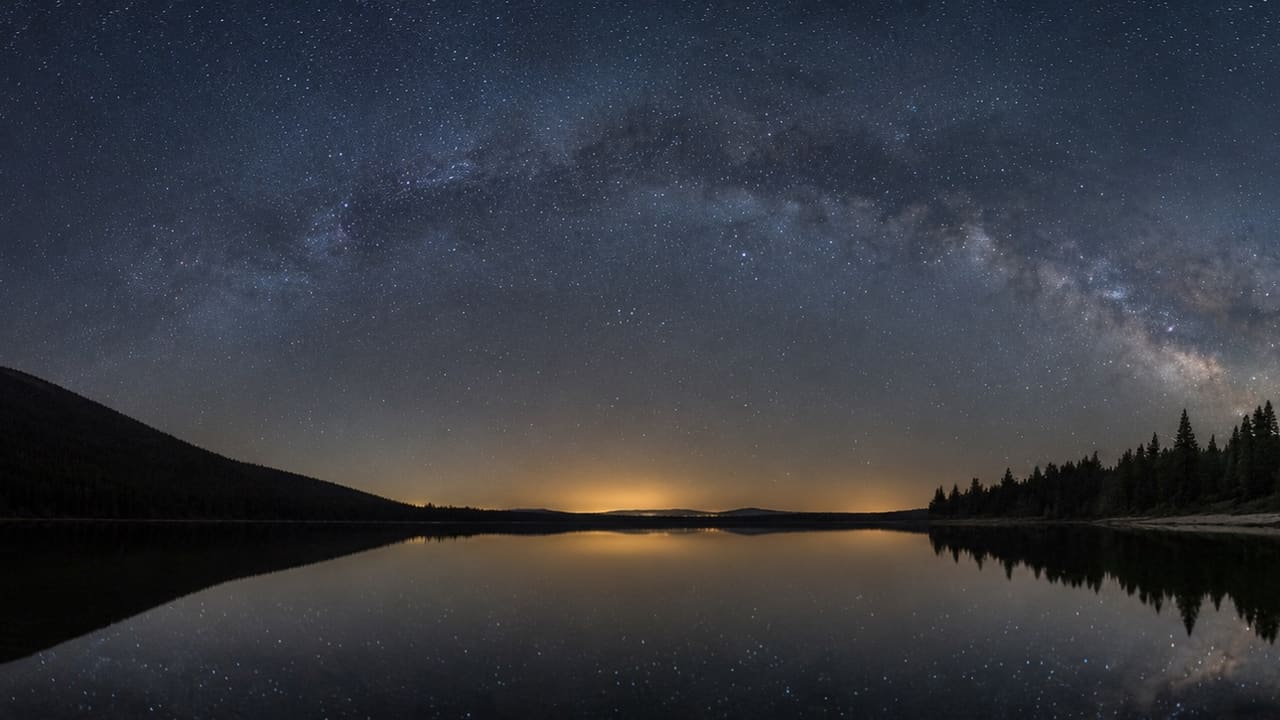
Warm, clear summer nights are the friendliest time to learn the sky. You don't need a telescope - just a comfortable spot away from the brightest lights, a little patience while your eyes adjust, and something to aim for. This tour walks you through the constellations worth finding first, the bright stars that anchor them, and the Milky Way treasures hiding in between. Learn a handful of these and the whole summer sky opens up.
- Start with the Summer Triangle - Vega, Deneb and Altair - the easiest anchor in the whole summer sky.
- Overhead: Cygnus, Lyra and Aquila. Low in the south: Scorpius and Sagittarius, marking the Milky Way's richest region.
- Best viewing is on a Moonless night, well away from city lights, with 20–30 minutes to dark-adapt.
- Vega and Antares are lovely, well-placed stars to dedicate a named star in during summer.
Start here: the Summer Triangle
Before you learn a single constellation, learn the Summer Triangle. It isn't an official constellation but an asterism - a memorable pattern made of three brilliant stars from three different constellations. On summer evenings it hangs almost directly overhead and is impossible to miss, which makes it the perfect launch pad for everything else.
How to find it
- Vega - a brilliant blue-white star nearly overhead; the brightest of the three and one of the brightest in the northern sky.
- Deneb - to Vega's east, marking the tail of Cygnus the Swan.
- Altair - lower and to the south, flanked by two fainter stars that make it easy to confirm.
Once you can hop between these three, the surrounding constellations fall into place.
Cygnus, the Swan
High overhead on summer evenings, Cygnus flies along the Milky Way. Its brightest star, Deneb, forms one corner of the Summer Triangle. The constellation's main stars make a large cross - hence its nickname, the Northern Cross - with the long "neck" of the swan (down to the star Albireo) pointing roughly toward the southern horizon.
Don't miss Albireo. At the swan's "head" sits one of the sky's most beautiful double stars - a gold-and-blue pair that splits cleanly in any small telescope. It's a perfect target for two people; read why in double stars, explained.
Lyra and brilliant Vega
Small but unmistakable, Lyra hangs right next to Cygnus. Vega is its jewel - a brilliant blue-white beacon that was the northern pole star some 12,000 years ago and will be again in the future, thanks to Earth's slow precession. Just below Vega, a compact parallelogram of fainter stars completes the little harp.
- The Ring Nebula (M57) lies between Lyra's two lowest stars - a faint smoke-ring of gas visible in a modest telescope.
- Epsilon Lyrae, the famous "Double Double", sits near Vega - a pair of pairs for keen eyes and small scopes.
Vega is bright, high and easy to point to, which makes it a lovely star to dedicate for a summer occasion.
Aquila, the Eagle
South of Cygnus, Altair marks the eye of Aquila, the eagle, flying up the Milky Way toward the swan. Altair is flanked by two dimmer stars, Tarazed and Alshain, forming a short line that makes the eagle easy to confirm once you've found the Triangle. This is a great region to sweep with binoculars - the star fields are dense here.
Scorpius, low in the south
Scorpius genuinely looks like its namesake, with a curved tail of stars and the red heart-star Antares glowing at its centre. Antares is a red supergiant so large that, placed where our Sun is, its surface would reach past the orbit of Mars. For northern observers it sits low on the southern horizon, so you'll want a clear, unobstructed view south.
"Antares - the 'rival of Mars' - burns a deep orange-red low in the summer south. Catch it on a warm night and you're looking at a star hundreds of times the diameter of the Sun."
Sagittarius and the galactic centre
Just east of Scorpius, Sagittarius marks the direction of the centre of our galaxy. Its brightest stars form a shape most people find easier to see as a teapot than an archer. On a dark night the Milky Way is at its richest here - the "steam" rising from the teapot's spout is the glow of billions of distant suns toward the galactic core.
- The Lagoon Nebula (M8) - a bright star-forming cloud visible to the naked eye from a dark site.
- The Trifid Nebula (M20) and dozens of star clusters lie within a few binocular fields.

Sweeping the summer Milky Way
If you do only one thing with binoculars this summer, slowly sweep the Milky Way from Cygnus down through Aquila to Sagittarius. You'll drift past open clusters, dark dust lanes and the soft glow of unresolved stars. A few showpieces worth pausing on:
| Object | In | What it is | How to see it |
|---|---|---|---|
| Albireo | Cygnus | Gold-and-blue double star | Any small telescope |
| Ring Nebula (M57) | Lyra | Planetary nebula | Small telescope, dark sky |
| Lagoon Nebula (M8) | Sagittarius | Star-forming cloud | Naked eye (dark site) / binoculars |
| Wild Duck Cluster (M11) | Scutum | Rich open cluster | Binoculars / small scope |
| Hercules Cluster (M13) | Hercules | Globular cluster, ~300,000 stars | Binoculars / small scope |
When and where to look
"Summer sky" means the constellations best placed after dark from about June to September in the Northern Hemisphere. Rough guide to what's highest and easiest each month, mid-evening:
| Month (N. Hemisphere) | Well placed after dark |
|---|---|
| June | Hercules high; Scorpius rising in the south-east |
| July | Summer Triangle climbing; Scorpius & Sagittarius due south |
| August | Triangle overhead; Milky Way at its best; Perseid meteors mid-month |
| September | Triangle still high; autumn stars rising in the east |
Give yourself the best chance
- Pick a Moonless night - a bright Moon washes out the Milky Way completely.
- Get away from city lights; even a short drive to darker skies transforms what you can see.
- Let your eyes dark-adapt for 20–30 minutes, and use a red torch to keep them adapted.
- A local observatory's public night is a great way to see summer showpieces through a large telescope.
Southern Hemisphere? These same constellations are visible around your winter (June–September), often higher and better than from the north - Scorpius and Sagittarius pass nearly overhead, and the galactic centre is a spectacular sight.
Frequently asked questions
What is the easiest constellation to find in summer?
Start with the Summer Triangle asterism (Vega, Deneb and Altair). It's overhead, made of three very bright stars, and leads you straight to Cygnus, Lyra and Aquila.
Do I need a telescope to enjoy the summer sky?
No. Everything in this tour can be found with the naked eye, and a pair of ordinary binoculars reveals star clusters and the Milky Way beautifully. A telescope adds nebulae and double stars once you're comfortable.
Why is the Milky Way brightest in summer?
Because on summer nights the Earth's night side faces toward the centre of our galaxy, in the direction of Sagittarius - so we look through the galaxy's densest, brightest star fields.
Which summer star is best to name for someone?
Vega (in Lyra) is bright, high and easy to point to on summer nights; Antares (in Scorpius) is a striking red star for a low southern view. Either sits in a constellation you can actually show your recipient - see our gift guide.
How do I find a specific star once I know the constellation?
Use its coordinates or catalogue number with a free app, or hop to it by eye. Our full method is in How to Find a Star in the Night Sky and finding your star with an app.
Sources & further reading
- H. A. Rey, The Stars: A New Way to See Them - the classic beginner's guide to learning constellation shapes.
- Terence Dickinson, NightWatch: A Practical Guide to Viewing the Universe - seasonal star charts and observing lists.
- Guy Consolmagno & Dan Davis, Turn Left at Orion - how to find the summer showpieces in a small telescope.
- Ian Ridpath & Wil Tirion, Stars and Planets (Collins) - a portable field guide to the constellations.
- IAU - the 88 official constellations and their boundaries.
Related reading: double stars, explained, how naming a star works, and the pillar guide How to Find a Star in the Night Sky. Partner article: Amazing Places to Stargaze (StarRegistration.net).
Found a constellation you love? Name a star in it and receive a certificate with its exact coordinates - then step outside this summer and point right at it.