
Waterton-Glacier International Peace Park

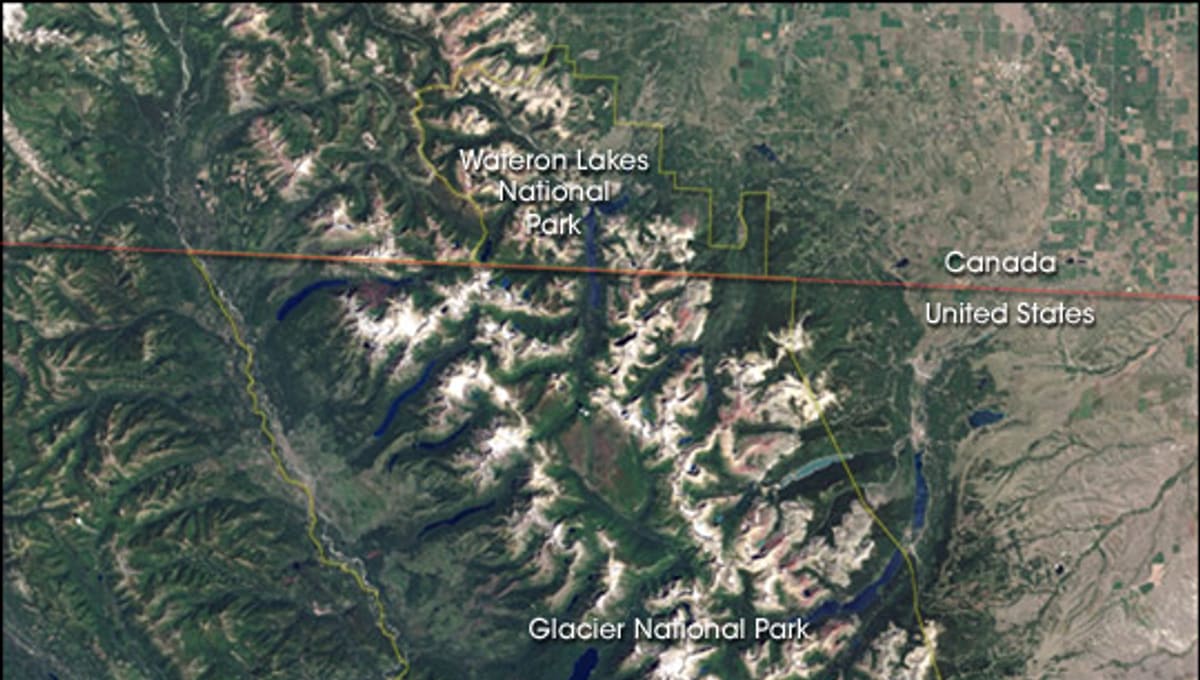
Image: Jesse Allen, NASA Earth Observatory, using data obtained · Public domain · Wikimedia Commons
Waterton-Glacier International Peace Park unites Waterton Lakes National Park in Alberta, Canada, with Glacier National Park in Montana, USA, across a combined 4,606 square kilometres. Originally established as the world's first International Peace Park in 1932, it earned International Dark Sky Park status in 2017, reaching full certification in 2021, and remains the only Dark Sky Park to span an international border.
Why Waterton-Glacier International Peace Park is a top stargazing spot
The park's remote location and rugged mountain terrain keep its night skies genuinely dark, and both sides of the border have installed dark-sky-friendly lighting, including LED streetlights and properly shielded fixtures, to protect that darkness. The park is also a UNESCO Biosphere Reserve and a UNESCO World Heritage Site, underlining the scale of conservation effort behind it.
What you can see
Away from the light of nearby towns, the park's isolation and elevation make for some of the clearest views of the Milky Way in the Rocky Mountains, set against a backdrop of glacially carved peaks and lakes on both sides of the border. The park's northern latitude also puts the Aurora Borealis within reach, most often visible from September through March; forecasters watch the Kp geomagnetic index for this, and areas as far south as this stretch of Montana typically need a reading of 7 or higher for a visible display.
Visiting Waterton-Glacier International Peace Park at night
On the Glacier side, the "Half the Park Happens After Dark" programme runs from June through September, with rangers hosting viewing events and guided constellation tours on clear nights at rotating locations; check the park's current schedule before you go. On the Waterton side in Canada, Dark Sky Guides run personalised interpretive tours covering constellations, the Moon, planets, nebulae, star clusters, the Milky Way and the Aurora Borealis. For aurora hunting specifically, the Bison Paddock Loop on the northeastern edge of Waterton Lakes, off Highway 6, is a favoured wide-open spot with essentially zero light pollution, while the shore of Lake McDonald near Apgar on the Glacier side is a good option in spring; a real-time aurora forecast app is worth having on hand for either location. Because the park spans two countries, check entry requirements and seasonal access for both the Canadian and American sides before you travel, and bring warm layers for mountain temperatures after dark.
Best time to go
This far north, the summer Milky Way core is best viewed from around June to September against short, dark nights, while the cold months bring Orion and the rest of the northern hemisphere's winter constellations, plus the best odds for aurora between September and March. The Perseid meteor shower peaks in mid-August, a natural pairing with the park's summer ranger programmes, and the Geminids follow in mid-December for anyone visiting in deep winter. Whatever the season, pick a clear night near the new Moon, allow twenty to thirty minutes for your eyes to adapt, and use a red light to protect your night vision.
Getting there
The park straddles the Canada-US border in the Rocky Mountains, combining Waterton Lakes National Park in Alberta with Glacier National Park in Montana; which side you approach from depends on where you're travelling from, and border-crossing requirements apply if you plan to visit both.
See your named star from here
A transnational park protected for both peace and darkness is a memorable place to search for a named star. Bring its coordinates along with a stargazing app, browse the star catalogue to name one of your own, and discover other dark-sky destinations nearby.
Conditions and access vary by season. Check Google Maps before you travel, and aim for a clear night near the new Moon for the darkest sky.
Satellite imagery: Esri, Maxar, Earthstar Geographics

 290 kmPreserve
 466 kmPreserve
 507 kmPreserve
 519 kmPreserve