
Jasper National Park

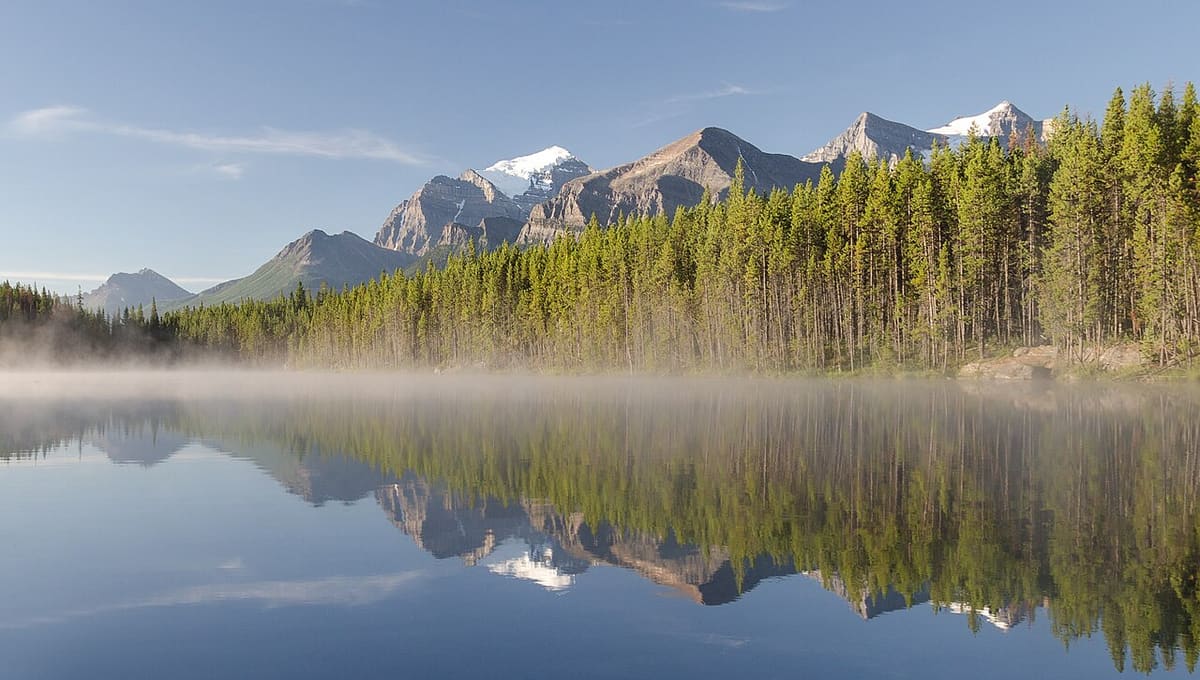
Image: Florian Fuchs · CC BY 3.0 · Wikimedia Commons
Jasper National Park, spanning 11,000 square kilometres in the Alberta Rockies, is a UNESCO World Heritage Site and the second-largest Dark-Sky Preserve in the world, designated by the Royal Astronomical Society of Canada on March 26, 2011.
Why Jasper National Park is a top stargazing spot
Jasper is also the largest accessible Dark-Sky Preserve, since the town of Jasper itself sits within the preserve's boundaries, meaning you can find dark skies without leaving the amenities of a town behind entirely. The park uses downward-facing streetlights throughout to minimise the impact of artificial light on the night sky. Sky quality readings back this up: measurements average around 21.4 magnitude per square arcsecond across the park, dip to about 21.1-21.2 near the Jasper townsite itself, and get darker than 21.7 at backcountry sites like Big Bend, placing much of the preserve in Bortle class 1 to 2, among the darkest ratings possible.
What you can see
Orion is visible from November through February, and the Geminid meteor shower puts on a winter display. The Milky Way arches clearly overhead thanks to the park's protected darkness. Jasper is also one of the more reliable places in the Rockies to catch the aurora borealis: sightings occur roughly once a week when geomagnetic activity, measured by the Kp index, reaches 4 or 5, most often between August and April. The free AuroraWatch alert service tracks this activity and issues Yellow alerts for a 50 percent or greater chance of aurora and Red alerts above 70 percent, so visitors can time their evenings accordingly.
Visiting Jasper National Park at night
Pyramid Island is a family-friendly stargazing spot, while Jasper Lake offers wide-open views well suited to reflection photography. For overnight stays, options range from the Fairmont Jasper Park Lodge, which has its own natural hot springs and runs virtual stargazing tours with live telescope viewing, to Marmot Lodge, the dog-friendly Miette Mountain Cabins, and the Jasper Downtown Hostel. Campers can choose Whistlers, the park's largest and recently renovated campground, year-round Wapiti, or Pocahontas near Miette Hot Springs. The annual Jasper Dark-Sky Festival runs each October, with guest speakers, science demonstrations, kids' activities and star parties; check the festival's official site for dates and programming.
Best time to go
The best conditions come on new Moon nights, especially in fall and winter when the nights are longest and Orion and the other winter constellations dominate the sky. The Milky Way's bright core is best viewed from around March to September, and the Geminid meteor shower in December is a highlight of the darker months, alongside a chance at the Quadrantids in January. Because aurora sightings run from August through April, a fall or winter trip timed to a Yellow or Red AuroraWatch alert offers a real chance of seeing the northern lights alongside the Milky Way. As always, give your eyes 20 to 30 minutes to adjust to the dark and bring a red light rather than white.
Getting there
The park sits in west-central Alberta, reached via the Icefields Parkway from Banff National Park to the south or the Yellowhead Highway from Edmonton to the east. The town of Jasper, inside the preserve itself, holds the park's main services, visitor information and access points to Pyramid Island and Jasper Lake.
See your named star from here
Few places combine dark-sky protection with accessibility quite like Jasper. Bring your certificate's coordinates and a stargazing app to Pyramid Island or Jasper Lake, and explore star-naming packages or the star catalogue before your visit. See our observatories directory for more dark-sky destinations, and our guide on how to find a star in the night sky for tips on locating it once you arrive.
Conditions and access vary by season. Check the official website and Google Maps before you travel, and aim for a clear night near the new Moon for the darkest sky.
Satellite imagery: Esri, Maxar, Earthstar Geographics

 347 kmPreserve
 507 kmDark Sky Park
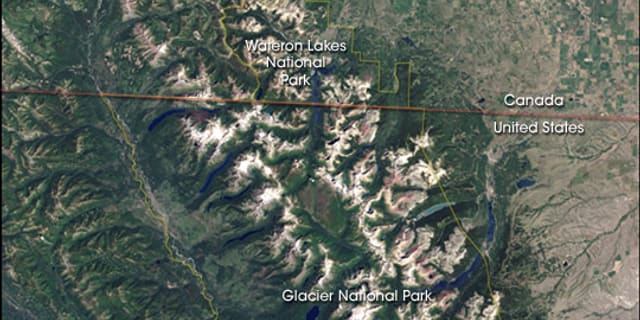
Waterton-Glacier International Peace Park
international park in the United States of America and Canada

 601 kmPreserve