
Grasslands National Park

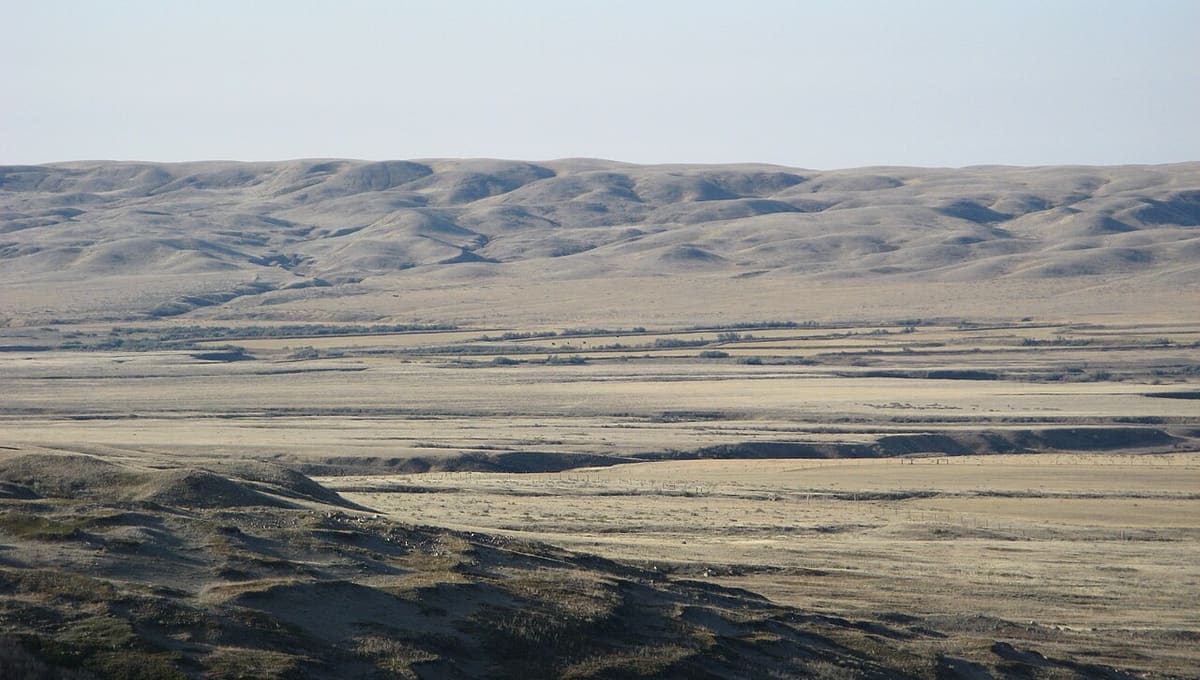
Image: Caitlin Mroz · Public domain · Wikimedia Commons
Grasslands National Park, a Dark Sky Preserve near the village of Val Marie in southern Saskatchewan, sits right on the Canadian border with Montana and protects some of the darkest skies anywhere in Canada.
Why Grasslands National Park is a top stargazing spot
The Royal Astronomical Society of Canada designated the park a Dark Sky Preserve in 2009, during the International Year of Astronomy. Spread across the park's East Block and West Block, which together cover more than 729 square kilometres, the night sky here measures around Bortle Class 1, with a recorded sky brightness of roughly magnitude 22.0 per square arcsecond and a limiting magnitude of at least 7.5. A 2017 observation recorded a naked-eye magnitude as faint as 8.4, dark enough that the Milky Way can be difficult to pick out from the sheer density of stars around it. The Canadian Space Agency has called it the country's darkest Dark Sky Preserve.
What you can see
On a clear night the Milky Way stretches overhead in exceptional detail, and the park's near-total lack of artificial light means faint stars and deep-sky detail are visible that would be lost anywhere near a city. In Blackfoot oral tradition the Milky Way is known as the Buffalo Trail, a fitting name for a park where plains bison were reintroduced to the West Block in 2005 and now number between 300 and 400 animals. This far north, the aurora borealis is also a genuine possibility, appearing most reliably in spring and autumn around the equinoxes.
Visiting Grasslands National Park at night
Car-accessible stargazing spots include Two Trees Trail, the Two Trees and Belza day use areas, and the Frenchman Valley and Rock Creek campgrounds. Parks Canada hosts a "Beyond the Big Dipper" star party series, held around four times over the summer season and timed around the new moon, with RASC astronomers on hand to give presentations alongside telescope tours and guided constellation walks. Because the park is home to bison and rattlesnakes and the terrain can be rugged, it is worth planning your route and sticking to marked areas after dark.
Best time to go
Summer brings the "Beyond the Big Dipper" star parties and the most comfortable prairie nights for viewing the Milky Way's core, which from this latitude is best seen roughly March to September. Spring and autumn, around the equinoxes, are the best windows for a chance at the aurora borealis. Meteor shower watchers should look for the Perseids in August and the Geminids in December, with the Quadrantids in January for those willing to brave a prairie winter. As always, plan around a new Moon, give your eyes 20 to 30 minutes to adjust to the dark, and use a red light rather than white.
Getting there
Grasslands National Park is reached via the village of Val Marie for the West Block, close to the Saskatchewan-Montana border. The park's visitor centre in Val Marie is the best first stop for road conditions, maps and the current star party schedule before heading out to the East or West Block.
See your named star from here
With skies this dark, Grasslands is one of the better places in North America to actually find a star you have named. Bring the coordinates from your certificate and a stargazing app, and use the park's near-total darkness to pick it out. Browse the star catalogue, or look at observatories near other dark sky destinations for your next trip.
Conditions and access vary by season. Check the official website and Google Maps before you travel, and aim for a clear night near the new Moon for the darkest sky.
Satellite imagery: Esri, Maxar, Earthstar Geographics

 187 kmPreserve
 466 kmDark Sky Park
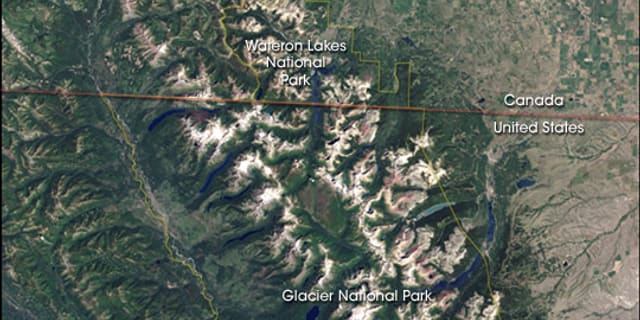
Waterton-Glacier International Peace Park
international park in the United States of America and Canada

 620 kmPreserve