
Sark

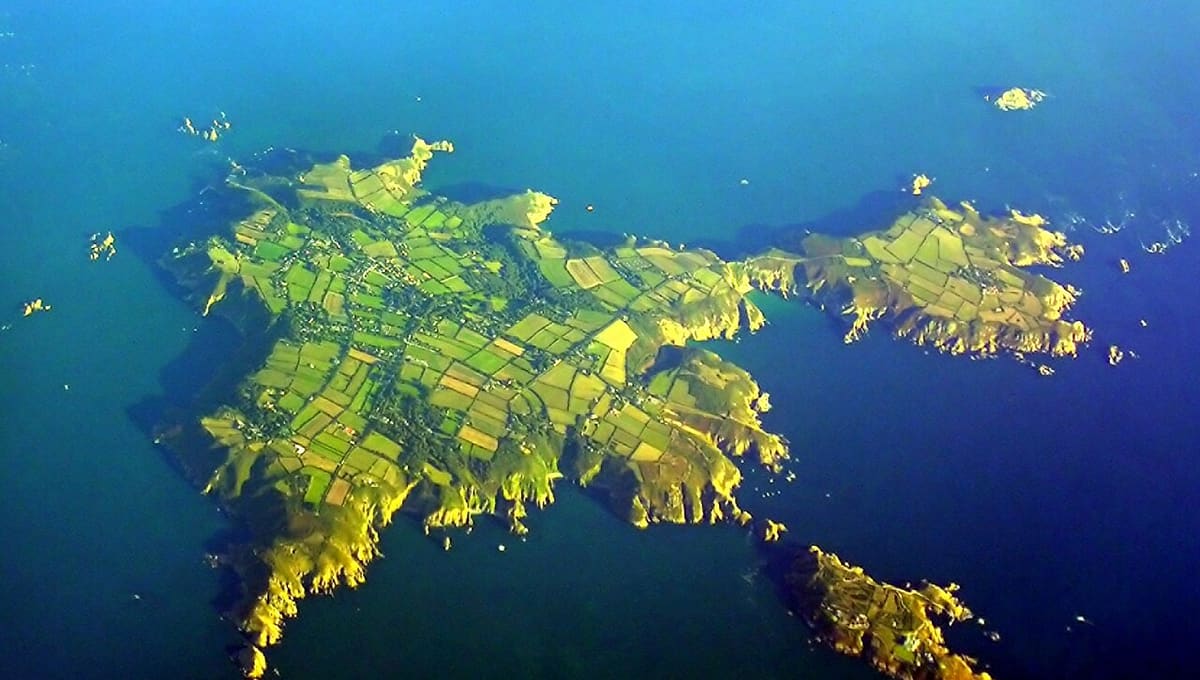
Image: Phillip Capper · CC BY 2.0 · Wikimedia Commons
Sark is a small, car-free island in the Channel Islands, part of the Bailiwick of Guernsey off the coast of Normandy. In January 2011 it became the world's first island community to receive Dark Sky Island designation, Europe's first International Dark Sky Community, a status built into the fabric of everyday life there.
Why Sark is a top stargazing spot
Sark has no public street lighting at all, and no motor vehicles beyond farm tractors, which between them remove the two biggest sources of night-time light pollution found on most inhabited islands. Sky quality readings across the island measure between 21.3 and 21.5 magnitudes per square arcsecond, corresponding to Bortle Class 3 skies with stars visible down to roughly magnitude 6.5, genuinely rich darkness for an island so close to mainland Europe.
What you can see
Without street lighting to compete with, Sark's night sky shows the Milky Way as a clear band overhead on clear nights, along with a density of stars that residents and visitors both describe as strikingly rich. The Sark Astronomy Society, SAstroS, runs the island's Dachinger Observatory, home to a 12-inch Meade LX90 telescope bought through public donations in 2023, for a much closer look at what's visible.
Visiting Sark at night
The Dachinger Observatory opens for stargazing sessions on demand, so visitors need to book ahead through SAstroS rather than turning up unannounced. SAstroS also hosts a Starfest each autumn or spring to mark the changing seasons, drawing guest speakers who have included Dr Marek Kukula, Public Astronomer at the Royal Observatory Greenwich, and Professor Chris Lintott of Oxford University, presenter of BBC's The Sky at Night. Because Sark has no cars, getting around after dark means walking or cycling, which only adds to how undisturbed the darkness feels. Residents themselves report that stargazing here has become something that strengthens family and community ties, not just a visitor attraction.
Best time to go
At around 49 degrees north, Sark's Milky Way core season runs roughly March through September, though the island's real strength is its year-round darkness rather than any one season. Autumn and spring bring the island's Starfest events, while winter delivers crisp views of Orion and the brighter stars once skies are clear. The Perseids in August and the Geminids in December are both worth watching for. Whenever you visit, time it around the new Moon, give your eyes twenty to thirty minutes to adapt to the dark, and use a red light rather than white to protect that adaptation.
Getting there
Sark is reached by ferry from Guernsey, with no cars on the island once you arrive, so getting around after dark means walking or cycling. Check the island's official website for current ferry schedules and Dachinger Observatory booking details before you travel.
See your named star from here
An island with no street lighting at all is about as good as dark sky viewing gets, which makes Sark an ideal place to find a star you have named through Star Register. Bring its coordinates and a stargazing app, look through the catalogue if you're choosing a star to name, and see our observatories page for other places offering guided night sky viewing.
Conditions and access vary by season. Check the official website and Google Maps before you travel, and aim for a clear night near the new Moon for the darkest sky.
Satellite imagery: Esri, Maxar, Earthstar Geographics

 171 kmReserve
 204 kmDark Sky Park
 217 kmReserve
 217 kmReserve