
Cranborne Chase


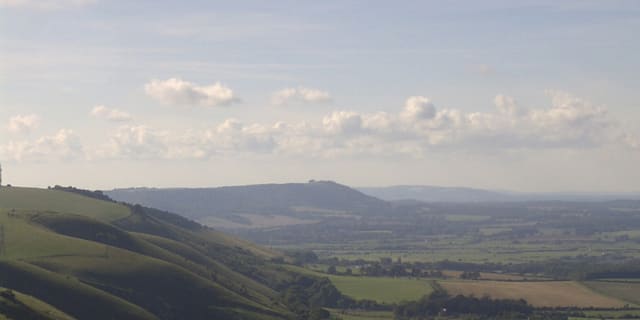
Image: Mike Searle · CC BY-SA 2.0 · Wikimedia Commons
Cranborne Chase is a chalk plateau straddling Dorset, Hampshire and Wiltshire in southern England, part of the Cranborne Chase and West Wiltshire Downs National Landscape, and it was certified an International Dark Sky Reserve in 2019.
Why Cranborne Chase is a top stargazing spot
The reserve's certification covers around 1,000 square km, the largest central dark area of any International Dark Sky Reserve in the UK, and it's one of only 23 such reserves worldwide. Reaching this standard has taken sustained conservation work, including an external lighting audit, planning consultation on new developments, and light pollution training for the surrounding communities, with the Wessex Astronomical Society assisting the National Landscape team with periodic meter readings of night sky darkness. Despite its rural darkness, Cranborne Chase is less than two hours from both London and Bristol.
What you can see
On clear nights the Milky Way is visible across the reserve, alongside the Andromeda Galaxy, planets and seasonal meteor showers. Its accessibility from major cities makes it one of the easiest genuinely dark skies to reach for visitors based in southern England.
Visiting Cranborne Chase at night
The National Landscape team runs stargazing evenings, talks, school visits and astronomy workshops throughout the year, including StarFest, an extended festival of night-sky events; the 2026 edition ran for eight days in March with live stargazing sessions, planetarium shows, space-themed crafts and movies, a night-sky choral evensong and an astrophotography exhibition, with most events free but booking essential due to limited capacity. The volunteer-run Cranborne Chase Astronomy Club also meets on the second Wednesday of most months, skipping July and August, and holds public stargazing sessions on the first Saturday after each new Moon, typically starting around 7 to 7.30pm and running two to two and a half hours with a guest-speaker talk, welcoming complete beginners. Check the official listings before you travel to catch an event, or for a self-guided visit choose a clear night around the new Moon and bring a red-light torch to preserve your night vision once you're out on the plateau.
Best time to go
From this latitude the Milky Way's bright core is best seen low in the south from around March to September, while winter offers crisp views of Orion and the bright winter stars. The Perseids peak in August and the Geminids in December are both well placed from the reserve, and during strong geomagnetic storms the aurora has occasionally been reported as far south as southern England. As always, aim for a clear night near the new Moon and allow 20 to 30 minutes for your eyes to adapt to the dark.
Getting there
The reserve sits inland between Salisbury, Shaftesbury and Blandford Forum, straddling the Dorset, Hampshire and Wiltshire borders, and is reached by rural roads from any of these towns. With London and Bristol both under two hours away by car, it is one of the most accessible dark-sky reserves for visitors from southern England.
See your named star from here
A reserve as dark and as accessible as Cranborne Chase is an ideal place to find a named star using its coordinates and a stargazing app. Browse the star catalogue or explore other observatories for more dark-sky destinations in the UK.
Conditions and access vary by season. Check Google Maps before you travel, and aim for a clear night near the new Moon for the darkest sky.
Satellite imagery: Esri, Maxar, Earthstar Geographics

 118 kmReserve
 121 kmReserve
 139 kmReserve
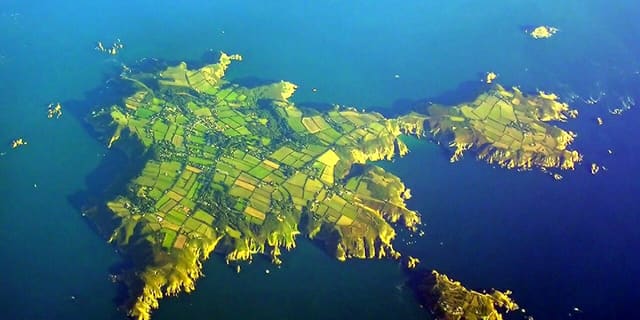 171 kmCommunity
Sark
one of the Channel Islands. Part of the Bailiwick of Guernsey, which is one of the British Crown Dependencies