
Mount Carleton Provincial Park

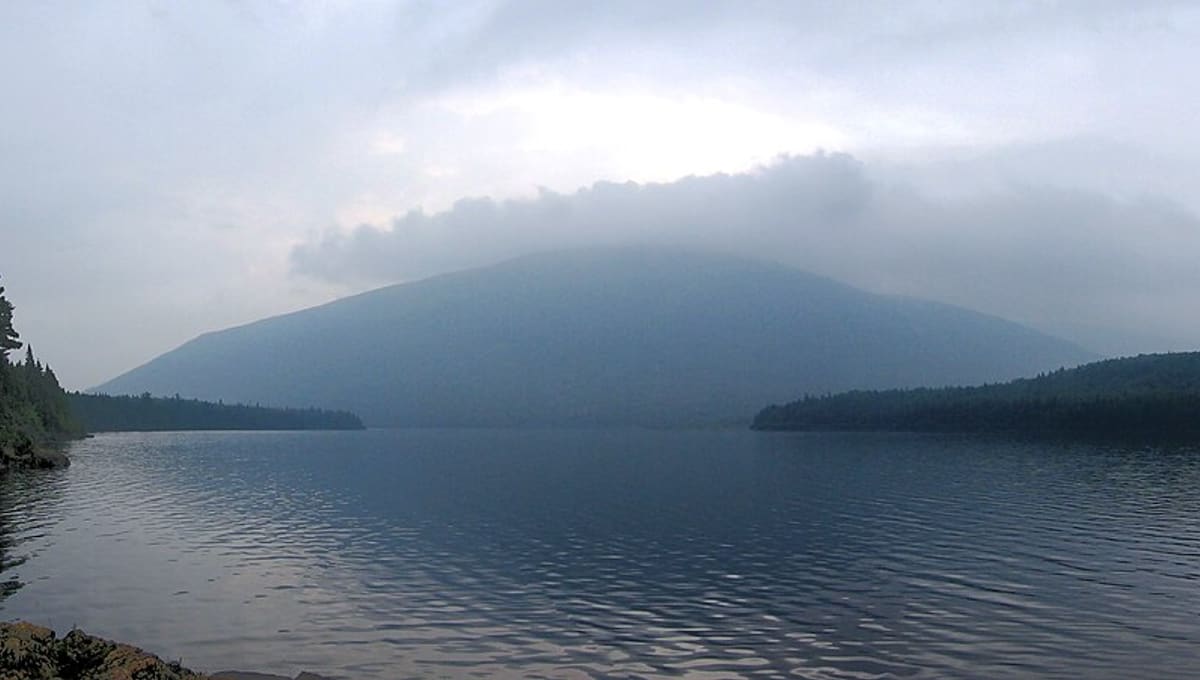
Image: CC BY-SA 3.0 · Wikimedia Commons
Mount Carleton Provincial Park, established in 1970, is the largest provincial park in New Brunswick, Canada, covering 174 square kilometres of remote highlands in the north-central part of the province. It was designated a dark-sky preserve in 2009 through a partnership between the New Brunswick Department of Natural Resources, the tourism department, and the RASC New Brunswick Centre.
Why Mount Carleton is a top stargazing spot
The park sits within New Brunswick's Highlands Ecoregion, more than 17,000 hectares of Acadian forest and mountain peaks, remote enough that no visible light domes from nearby towns intrude from any direction. Sky-quality readings of 21.85 on the Sky Quality Meter scale confirm what the location suggests: this is among the darkest measured skies in Atlantic Canada. Some outdoor enthusiasts call it the "Algonquin of New Brunswick", and it is arguably the darkest accessible stargazing site in the region, a reputation backed by its status as a lesser-known gem of the region's wilderness.
What you can see
Under skies this free of interference, the Milky Way and a huge range of fainter detail, including star clusters, galaxies and nebulae, become visible far more clearly than at most Atlantic Canada locations, weather permitting. The park hosts an annual Mount Carleton Star Party in July or August, drawing both amateur and professional astronomers to its designated viewing areas, and on nights of strong geomagnetic activity the aurora borealis is sometimes visible from this far-north latitude.
Visiting Mount Carleton at night
Armstrong Campground and Nictau Lake are the park's designated viewing areas, and during the star party, telescopes are set up around campsite 44, where pre-observation presentations at the nearby kitchen shelter walk visitors through what that evening's sky holds. Amateur astronomers are typically on hand to help set up and tune telescopes free of charge, and Saturday afternoons of the event often include safe, solar-filtered viewing of the Sun. The park has four campgrounds and two heritage cabins, and overnight stays are generally required except during dark-sky events, so plan accommodation ahead through Tourism New Brunswick. There is no cellular service inside the park, and the gates close at 8 p.m., so notify staff in advance if you expect to arrive late. As always, a new-Moon night gives the darkest sky, and allowing time to dark-adapt your eyes while using only red light will make the most of the view.
Best time to go
At this latitude, the Milky Way's core is best seen low in the south on clear nights from roughly March to September, while the long, crisp winter nights bring Orion and the rest of the winter sky overhead. The Perseids peak in mid-August, right around the timing of the park's own star party, and the Geminids in mid-December offer a colder but equally dark alternative. Whichever season you choose, aim for a few nights either side of the new Moon and give your eyes 20 to 30 minutes to adapt before relying on anything but red light.
Getting there
Mount Carleton sits in the remote highlands of north-central New Brunswick, well away from any major town, which is a large part of why its skies stay so dark. Plan your route and check road conditions with Tourism New Brunswick before setting out, especially outside the summer season.
See your named star from here
Few places offer skies this untouched, which makes Mount Carleton an excellent spot to find a named star using its coordinates and a stargazing app. Check your star's details in the catalogue, read our guide to finding a star in the night sky, and see our observatories list for other certified dark-sky sites.
Conditions and access vary by season. Check the official website and Google Maps before you travel, and aim for a clear night near the new Moon for the darkest sky.
Satellite imagery: Esri, Maxar, Earthstar Geographics

 205 kmSanctuary
 246 kmPreserve
 247 kmPreserve
Fundy National Park
Located on the Bay of Fundy, near the village of Alma, New Brunswick

 392 kmReserve