
Fort Union National Monument

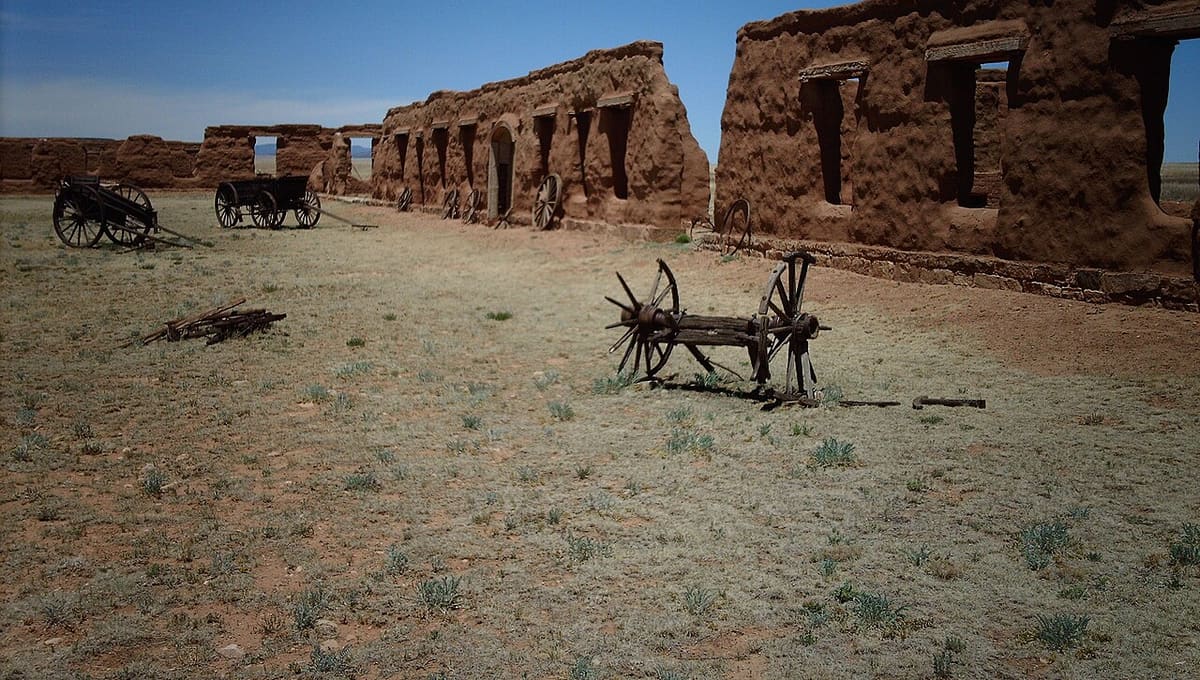
Image: en:User:Nationalparks · CC BY-SA 2.5 · Wikimedia Commons
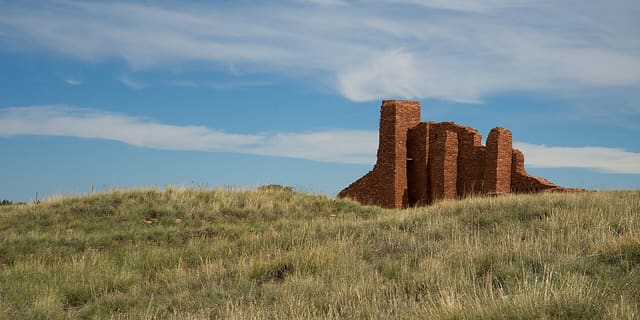
Fort Union National Monument preserves the ruins of the largest 19th-century fort in the American Southwest, in Mora County, New Mexico, 7.7 miles north of Watrous. Established in 1956, the monument earned International Dark Sky Park certification in September 2019, and at 6,760 feet elevation its high-desert position at the edge of the Great Plains keeps its skies dark, dry and largely unobstructed.
Why Fort Union National Monument is a top stargazing spot
Fort Union sits where the Great Plains meet the mountains, a location that leaves its skies largely free of the ridgelines and light domes that limit views elsewhere. Perched at roughly 6,760 feet, the monument has measured Bortle Class 2 conditions, among the darkest ratings on the scale, and it's far enough from city glow, about 150 miles from Albuquerque and 90 miles from Santa Fe, that neither metro area affects the sky overhead.
What you can see
Under Bortle 2 skies the Milky Way stretches clearly overhead, along with far more stars, star clusters and faint deep-sky detail than are visible from either nearby city. Ranger-led sessions point out these features and help visitors find their way around. Don't expect the aurora here, though: at just under 36 degrees north, Fort Union is well south of the latitudes where the northern lights appear with any regularity, which is mainly above about 55 degrees north. The monument's real strength is the Milky Way and deep-sky viewing rather than aurora chasing.
Visiting Fort Union National Monument at night
Night-sky programs run from May through September, with rangers guiding visitors to key celestial objects during scheduled observing sessions. The monument's remoteness makes it an easy stop for stargazers travelling between Albuquerque and Santa Fe. Check the official site for the current programme schedule before you go.
Best time to go
Because Fort Union sits in the northern hemisphere, the Milky Way's bright core is best placed from around March through September, rising higher through the night as summer approaches, which lines up neatly with the monument's May-to-September ranger programs. Outside that window, winter nights trade the galactic core for crisp views of Orion and the winter constellations. Meteor shower watchers can look for the Perseids in August, the Geminids in December and the Quadrantids in January. Whatever the season, plan around the new Moon for the darkest skies, give your eyes 20 to 30 minutes to adapt, and use a red light rather than white to protect your night vision.
Getting there
Fort Union sits 7.7 miles north of Watrous in Mora County, New Mexico, just off Interstate 25, making it a straightforward stop for anyone driving the roughly 150 miles from Albuquerque or 90 miles from Santa Fe.
See your named star from here
Fort Union's Bortle Class 2 sky is dark enough to reveal stars invisible from almost any city, making it a strong spot to find a star you've named. With your certificate's coordinates and a stargazing app in hand, you can pick it out for yourself beneath these plains skies. Explore star naming packages, browse the star catalogue, or see other dark-sky observatories worth visiting.
Conditions and access vary by season. Check the official website and Google Maps before you travel, and aim for a clear night near the new Moon for the darkest sky.
Satellite imagery: Esri, Maxar, Earthstar Geographics

 135 kmDark Sky Park
 140 kmDark Sky Park
 170 kmDark Sky Park
 208 kmDark Sky Park
Salinas Pueblo Missions National Monument
National Monument of the United States in New Mexico