
Dead Horse Point State Park

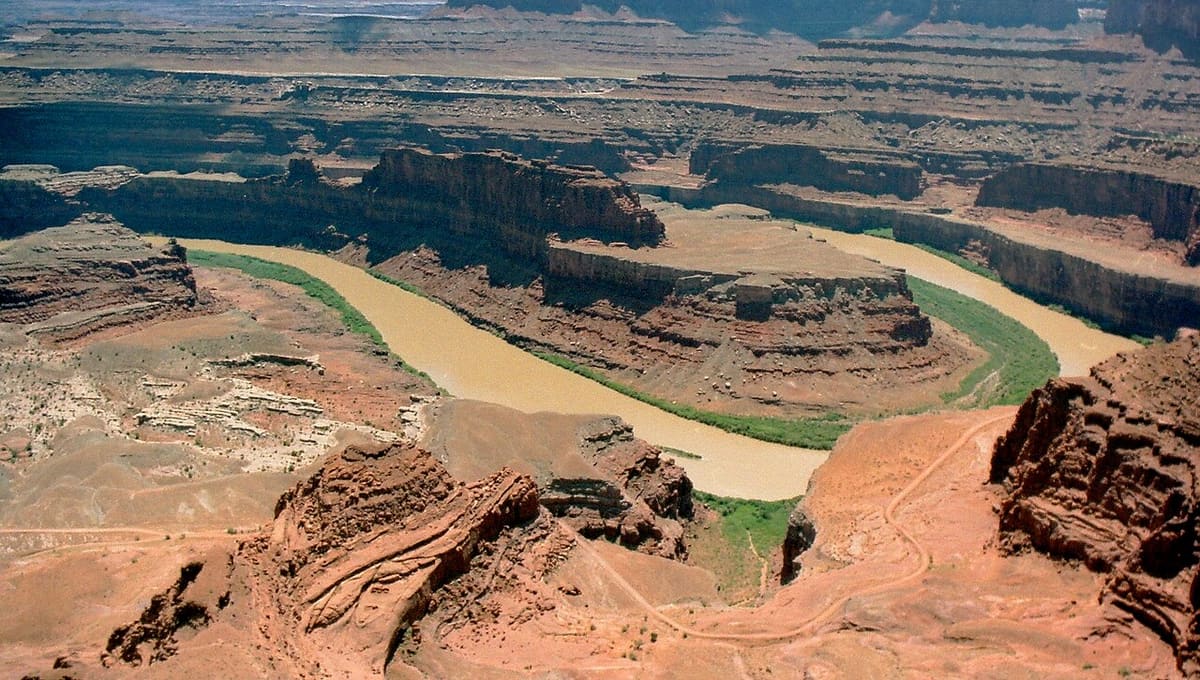
Image: Nikater · Public domain · Wikimedia Commons
Dead Horse Point State Park sits high above a dramatic bend of the Colorado River in San Juan County, Utah, roughly 30 miles from Moab, and holds Gold Tier International Dark Sky Park status, the first Utah state park to earn the certification.
Why Dead Horse Point State Park is a top stargazing spot
The park was certified an International Dark Sky Park in 2016 at the Gold Tier level, the highest rating DarkSky International awards. Sky quality readings taken across the park average between 21.39 and 21.59 magnitudes per square arcsecond, with three of seven measured sites topping 21.50, placing the park at Bortle Class 1, the darkest classification on the scale. Sitting at 5,900 feet of elevation with 360-degree panoramic views above the surrounding canyon walls, the overlook keeps distant light domes below the horizon rather than in your eyeline.
What you can see
Under Bortle 1 skies, the Milky Way stretches overhead in sharp detail, with its dust lanes and star clouds visible to the naked eye far beyond what most visitors have ever seen. Meteor showers, faint deep-sky objects and thousands more stars than a city sky allows are all within reach here, especially away from the rim on clear, moonless nights.
Visiting Dead Horse Point State Park at night
The park, which opened to the public in 1959 and covers 5,362 acres of high desert, overlooks both the Colorado River and Canyonlands National Park, and it runs one of the more active night-sky programmes of any Utah state park, including telescope programs, constellation tours, multimedia astronomy talks, star parties, full-moon hikes, planet walks, scorpion hunts and bat talks, most frequent from March through October though some run year-round. Overnight stays are easy here: the Kayenta Campground has 21 sites with 20/30/50-amp electrical hookups, flush toilets and a dump station, while the Wingate Campground offers 21 more electrical sites, 11 hike-in tent-only sites, and four yurts equipped with bunk and futon beds, air conditioning, heaters, grills and fire pits. There is no potable water in the park, so campers need to arrive with their water storage already filled. For current programme dates, check the official park site before you travel, time your visit around the new Moon, give your eyes at least 20 minutes to dark-adapt, and use a red flashlight to protect your night vision.
Best time to go
Dead Horse Point sits in the northern hemisphere, and the Milky Way's core puts on its best show from June through August, when it stays up for most of the night. From March through May the core only appears in the hours before sunrise, while from September through November it is best caught in the evening before it sets, so timing matters more here than at most sites. Winter nights bring the bright stars of Orion and the other winter constellations instead. The Perseid meteor shower peaks in August, right in the middle of prime Milky Way season, and the Geminids follow in December. As always, aim for a night near the new Moon and let your eyes adjust for 20 to 30 minutes before you start looking for fainter objects.
Getting there
The park is reached from Moab, about 45 minutes away: 9 miles northwest on US Highway 191, then 23 miles southwest on Utah State Route 313. Moab holds the nearest services, roughly 35 miles from the park, so it's worth fuelling up and stocking supplies there before heading out to the overlook.
See your named star from here
A Bortle 1 sky like Dead Horse Point's reveals stars that never appear above a city, which makes it an ideal place to actually find the star you have named. Bring your certificate's coordinates and a stargazing app, browse the full star catalogue or view nearby observatories, and if you have not named one yet, see the star-naming packages to get started.
Conditions and access vary by season. Check the official website and Google Maps before you travel, and aim for a clear night near the new Moon for the darkest sky.
Satellite imagery: Esri, Maxar, Earthstar Geographics

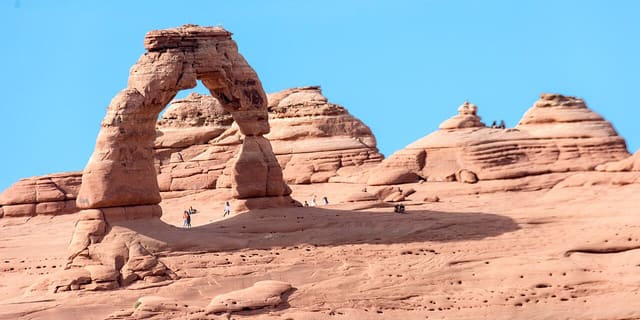 30 kmDark Sky Park
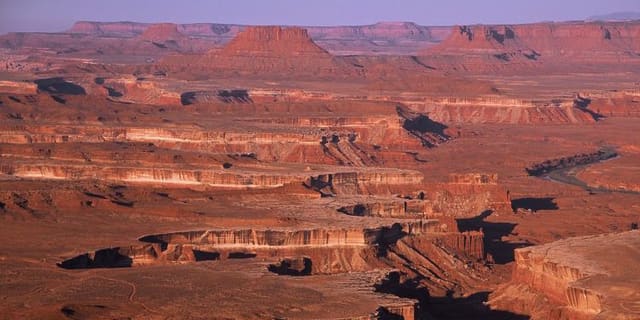 38 kmDark Sky Park
Canyonlands National Park
U.S. National Park located in southeastern Utah near the town of Moab

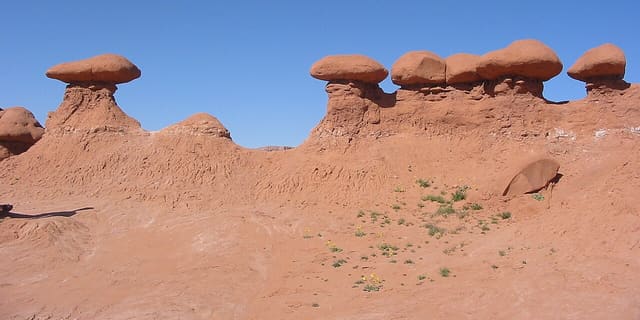 85 kmDark Sky Park
Goblin Valley State Park
state park in Emery County, Utah, United States

 104 kmDark Sky Park
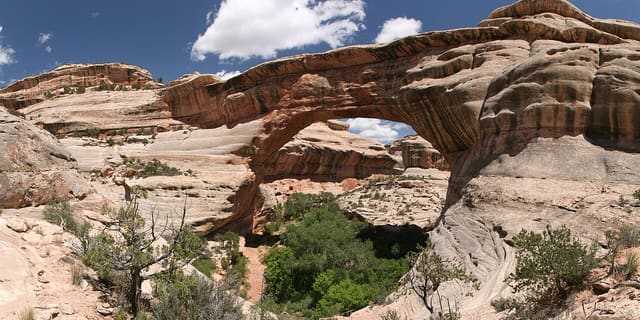
Natural Bridges National Monument
national monument in San Juan County, Utah, United States