
Boschplaat

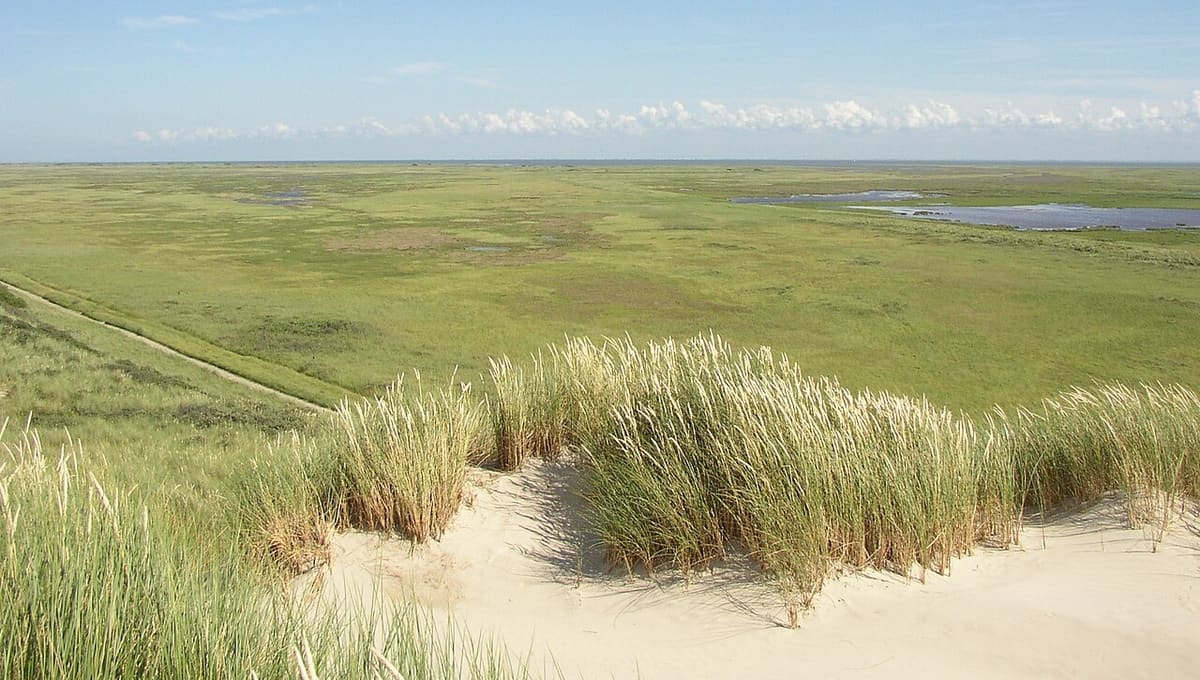
Image: DarkLoki at English Wikipedia · CC BY-SA 3.0 · Wikimedia Commons
Boschplaat is a 40 square kilometre nature reserve on the eastern end of Terschelling, one of the Dutch Wadden Islands. Protected as a Natura 2000 site and managed by conservation agency Staatsbosbeheer, it became the Netherlands' first International Dark Sky Park in 2015, with measured skies of Bortle Class 2 to 3.
Why Boschplaat is a top stargazing spot
What sets Boschplaat apart is the complete absence of electric lighting anywhere within the reserve. Combined with its position on the edge of the North Sea, far from mainland light pollution, that makes it one of the darkest places in the Netherlands. To help visitors get the most from the darkness, the park has laid out eight dedicated stargazing observation points.
What you can see
The Milky Way is visible from Boschplaat throughout the year, arcing over the dunes, heathland, and salt marshes that make up the reserve's landscape. Boschplaat is also recognised as the best place in the Netherlands to watch for the northern lights, on the nights when aurora activity reaches far enough south to be seen.
Visiting Boschplaat at night
Getting to Terschelling means taking the ferry from Harlingen on the Dutch mainland, either the conventional crossing, which takes around two hours, or a faster service that takes about 45 minutes. Once on the island, Qbuzz buses connect the ferry terminal to the rest of Terschelling, and cycling is the preferred way to get around, with bike rental available near the ferry dock; guided covered-wagon tours through the dunes, cranberry fields, beach and Boschplaat itself are also available. Crucially, the reserve closes each year from 15 March to 15 August for the bird breeding season, so it's only open to visitors, including for stargazing, from 16 August to 14 March. For the best views, aim for a clear, moonless night, give your eyes time to adjust to the dark, and use a red light rather than a white torch so you don't spoil your own or other visitors' night vision.
Best time to go
Because Boschplaat is closed to visitors from mid-March to mid-August for bird conservation, the practical stargazing season runs from mid-August through to mid-March, which conveniently covers the Netherlands' longer, darker autumn and winter nights. This window also lines up well with the Perseid meteor shower in August, right as the reserve reopens, and the Geminids in December during the darkest part of the year. From this latitude the aurora borealis is a genuine possibility on nights of strong solar activity, best watched for in autumn and winter when the nights are longest. Whenever you go within that window, plan around the new Moon, allow 20 to 30 minutes for your eyes to adapt, and stick to red light once you're out at one of the eight viewing points.
Getting there
Boschplaat is reached via Terschelling, accessible only by ferry from Harlingen on the Dutch mainland. From the ferry terminal at West-Terschelling, it's a bike ride or bus journey east along the island to reach the reserve; cycling is the most common way locals and visitors get around.
See your named star from here
A dark-sky park with no artificial lighting at all, like Boschplaat, is exactly the kind of place where a named star becomes findable rather than theoretical. Take your certificate's coordinates to one of the reserve's eight stargazing points with a stargazing app, look it up in the star catalogue, and see our observatories list for other nearby dark-sky spots.
Conditions and access vary by season. Check Google Maps before you travel, and aim for a clear night near the new Moon for the darkest sky.
Satellite imagery: Esri, Maxar, Earthstar Geographics

 49 kmDark Sky Park
 320 kmDark Sky Park
 419 kmReserve
 431 kmCommunity