
XO Telescope


Image: Wikimedia Commons
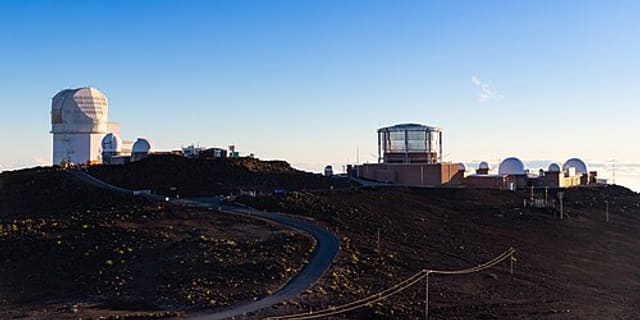
The XO Telescope sits atop Haleakalā on the Hawaiian island of Maui, at an elevation of around 3,054 metres, where it has helped astronomers find planets orbiting distant stars.
About the XO Telescope
The XO Project is an international team of amateur and professional astronomers searching for extrasolar planets, led by Peter R. McCullough of the Space Telescope Science Institute. The project is funded primarily by NASA's Origins Program and the Director's Discretionary Fund of the Space Telescope Science Institute, and the Haleakalā site is hosted alongside the U.S. Air Force's optical facilities on the mountain.
Telescopes & research
Rather than a conventional telescope, the XO instrument pairs two 200-millimetre telephoto camera lenses configured like binoculars, built for around $60,000 in hardware plus additional software costs. It searches for exoplanets using the transit method, watching for the periodic dimming of a star as a planet passes in front of it. The XO Project runs as a three-tier workflow: professional astronomers on Maui flag candidate signals, amateur astronomers help verify them, and professional astronomers confirm the finds at McDonald Observatory in Texas. By the time of its most detailed reporting, the project had identified seven exoplanet systems, mostly hot Jupiters, with one candidate, XO-3b, potentially a brown dwarf rather than a planet. Sister facilities were later set up in Spain and Utah.
Location & getting there
Haleakalā's high, dry summit on Maui is one of the best astronomical sites in the United States, well above the island's cloud layer. Use the map and directions button on this page to plan a route up the mountain.
Visiting the XO Telescope
The XO Telescope shares its site with U.S. Air Force facilities on Haleakalā, so it isn't set up for casual public visits. Check current access rules for the Haleakalā summit area before planning a trip.
See your named star from here
The same transit method the XO Telescope uses to spot far-off planets relies on precise coordinates, exactly what you get when you name a star with us. See the catalogue for stars already named by our customers.
Opening hours and public-visit programs vary by season. Check Google Maps for current times before you travel.
Institutional and reference sources used to verify this guide.
Satellite imagery: Esri, Maxar, Earthstar Geographics

 under 1 kmResearch
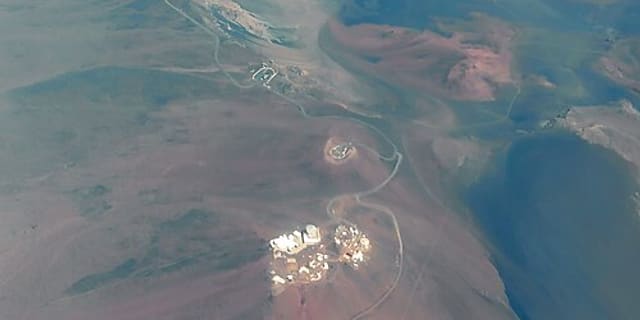
Haleakalā Observatory
first astronomical research observatory in Hawai'i

 under 1 km
 under 1 km
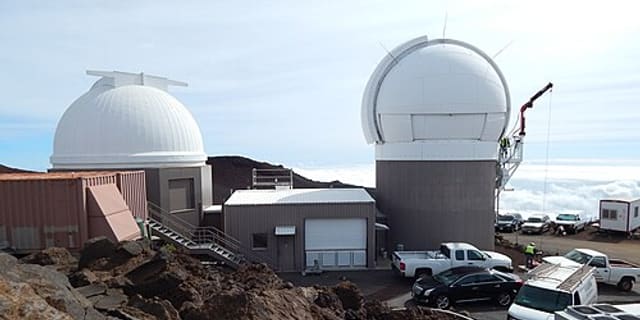
Pan-STARRS
array of astronomical telescopes, cameras, and computing equipment which surveys the sky on a continual basis

 under 1 km
Air Force Maui Optical and Supercomputing observatory
U.S. Air Force observatory in Hawaii