
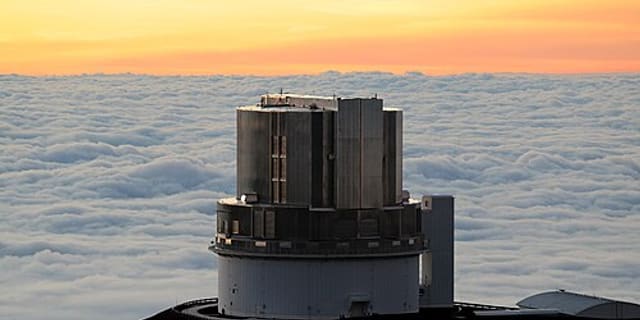
Air Force Maui Optical and Supercomputing observatory

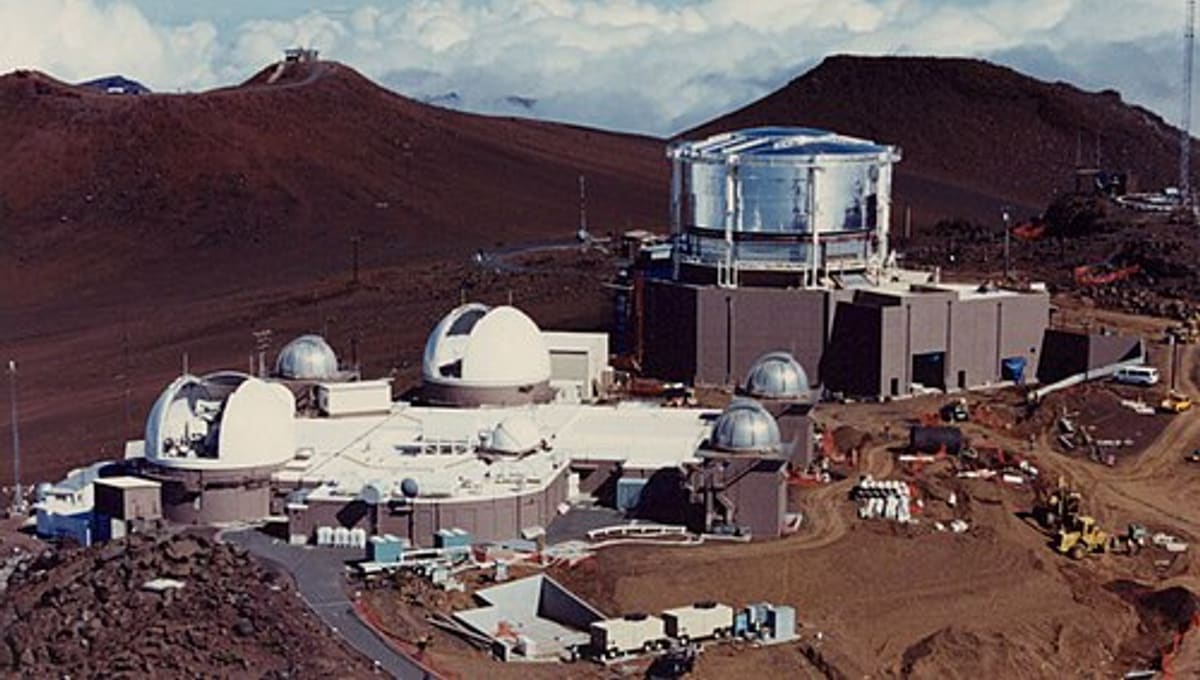
Image: Wikimedia Commons
Near the 10,000-foot summit of the Haleakalā volcano on Maui, Hawaii, the Air Force Maui Optical and Supercomputing observatory, better known by its long-standing acronym AMOS, has tracked objects in space for more than three decades.
About the Maui Space Surveillance Complex
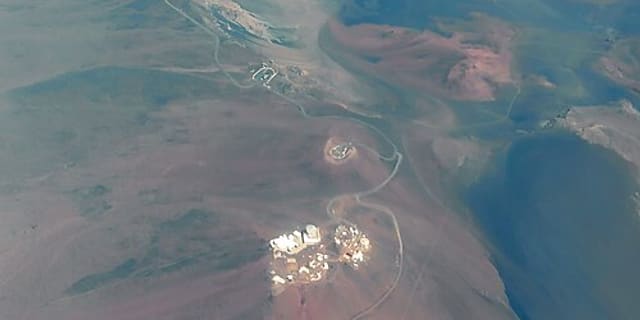
AMOS is the research and development arm of what is now formally called the Maui Space Surveillance Complex (MSSC), a U.S. Space Force site operated with the Air Force Research Laboratory. It sits within "Science City," an 18-acre cluster of astronomical and space-surveillance facilities near the Haleakalā summit that also includes Pan-STARRS and the Faulkes Telescope North.
History
The site's research and development mission dates back to 1993, and the AMOS name has remained in wide use in the technical community for decades, still appearing today in the annual AMOS technical conference held on Maui. The main-belt asteroid 8721 AMOS is named after the project.
Telescopes & research
The complex's flagship instrument is the 3.6-meter AEOS telescope, the largest optical telescope operated by the U.S. Department of Defense, used alongside the Maui High Performance Computing Center for space surveillance and satellite tracking research.
Location & getting there
The observatory sits near the summit of Haleakalā on the island of Maui, Hawaii, reached via the long summit road through Haleakalā National Park.
Visiting AMOS
This is an active military and research facility, not a general tourist site: the observatories atop Haleakalā are not open to casual visitors, and access is normally limited to pre-arranged technical tours, such as those offered around the annual AMOS conference. Check the official conference or facility websites before planning any visit.
See your named star from here
AMOS exists to track objects with extreme precision, the same principle behind the coordinates attached to every star in our star catalogue. If you've named a star, its RA/Dec position is recorded with the same kind of rigor this facility applies to tracking objects in orbit.
Opening hours and public-visit programs vary by season. Check the official website and Google Maps for current times before you travel.
Institutional and reference sources used to verify this guide.
Satellite imagery: Esri, Maxar, Earthstar Geographics

 under 1 kmResearch
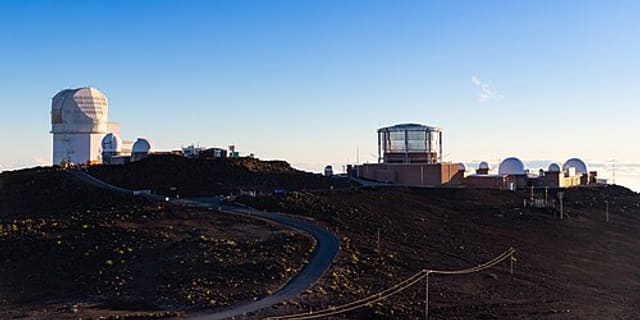
Haleakalā Observatory
first astronomical research observatory in Hawai'i

 under 1 km
 under 1 km
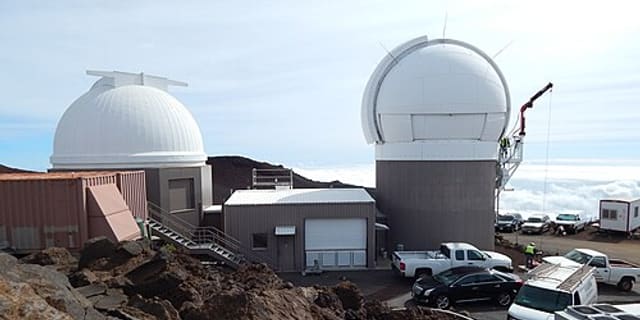
Pan-STARRS
array of astronomical telescopes, cameras, and computing equipment which surveys the sky on a continual basis

 128 km