
ATLAS–HKO observatory

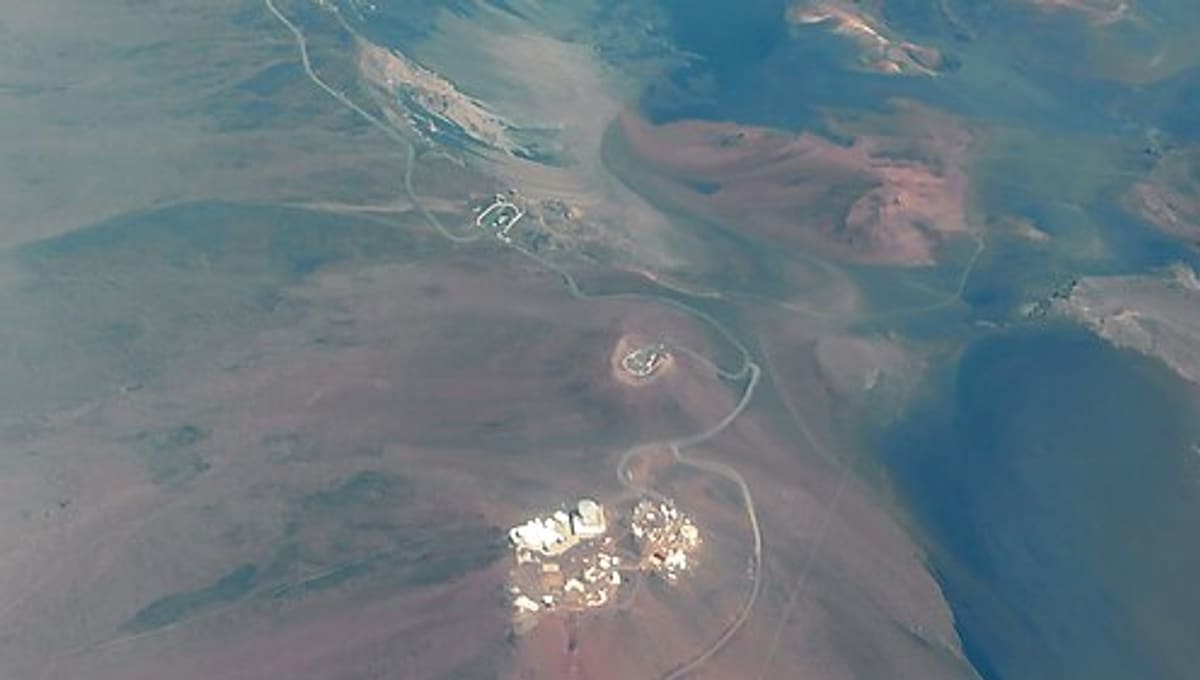
Image: Wikimedia Commons
ATLAS–HKO is the original station of the ATLAS asteroid-detection network, perched near the summit of Haleakalā on Maui, Hawaii, among the cluster of research telescopes known as Science City.
About ATLAS–HKO observatory
ATLAS–HKO was the first telescope of the Asteroid Terrestrial-impact Last Alert System (ATLAS) to come online, deployed in 2015 and fully operational by the end of that year. ATLAS is a NASA-funded robotic survey developed and run by the University of Hawaii's Institute for Astronomy, designed to give a few weeks' to days' warning before a small near-Earth asteroid could strike. The Haleakalā unit sits at roughly 3,030 metres elevation and carries the Minor Planet Center code T05.
Telescopes & research
Each ATLAS telescope is a 0.5-metre Wright-Schmidt design with an unusually wide field of view and a large-format CCD camera, letting it photograph broad areas of sky in a single exposure rather than zooming in on one target. Working alongside its twin unit at Mauna Loa, the Haleakalā telescope scans hundreds of sky fields every clear night. Beyond its asteroid-hunting mission, the ATLAS network has discovered thousands of supernovae and other short-lived transients and continues to search for comets and variable stars.
Location & getting there
ATLAS–HKO sits within the Haleakalā Observatories complex, informally called Science City, near the roughly 3,000-metre summit of the Haleakalā volcano on Maui. The site has been run by the University of Hawaii since 1961 and is separate from the neighbouring Haleakalā National Park, though the two share the same mountain.
Visiting ATLAS–HKO observatory
The observatory complex itself is not open to the public and requires institutional access. Visitors can, however, drive up through Haleakalā National Park to the summit area nearby, where the park offers sunrise viewing, stargazing, and views across the crater — with the observatory domes visible in the distance.
See your named star from here
Maui's high, dry summit air is part of why Haleakalā was chosen for professional telescopes — and it's just as good for spotting a named star. Name a star to receive its coordinates and certificate, then check the star catalogue or look for stargazing tours near Haleakalā National Park.
Opening hours and public-visit programs vary by season. Check the official website and Google Maps for current times before you travel.
Institutional and reference sources used to verify this guide.
Satellite imagery: Esri, Maxar, Earthstar Geographics

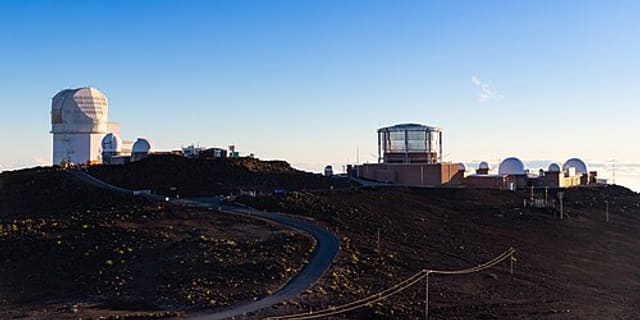 under 1 kmResearch
Haleakalā Observatory
first astronomical research observatory in Hawai'i

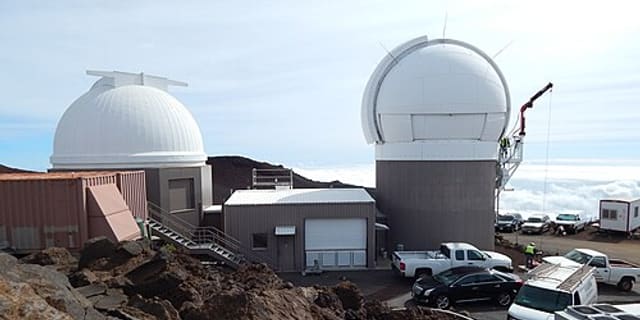 under 1 km
Pan-STARRS
array of astronomical telescopes, cameras, and computing equipment which surveys the sky on a continual basis

 under 1 km
Air Force Maui Optical and Supercomputing observatory
U.S. Air Force observatory in Hawaii

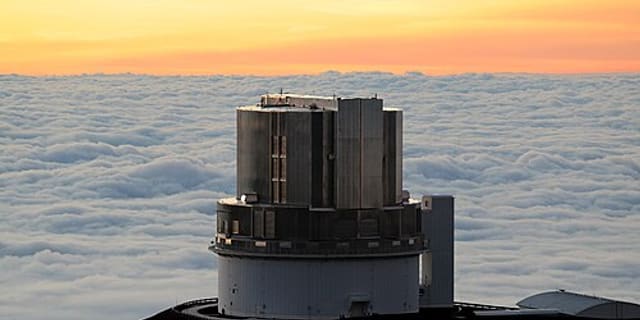 127 km