
University of Tokyo Atacama Observatory


Image: Wikimedia Commons
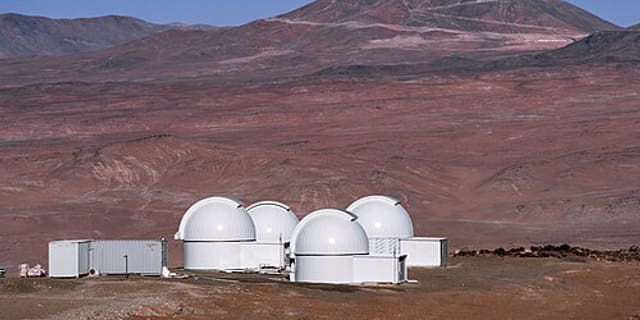
Perched at 5,640 metres on the summit of Cerro Chajnantor in Chile's Atacama Desert, the University of Tokyo Atacama Observatory is one of the highest astronomical sites on Earth.
About University of Tokyo Atacama Observatory
Known as TAO, the observatory is operated by the Graduate School of Science and Faculty of Science at the University of Tokyo. It began operations in 2024, having been founded in 2009, and sits less than 5 km north-northeast of the Llano de Chajnantor Observatory that hosts ALMA, though TAO stands over 580 metres higher.
Telescopes & research
The site's main instrument is the TAO 6.5 m optical-infrared telescope. Its extreme altitude is essential to the science: infrared light is absorbed by atmospheric water vapour, so observing from thin, high-altitude air is key. In 2023, TAO was noted as one of the few major telescopes in the world with light pollution below acceptable interference levels.
Location & getting there
The observatory sits atop Cerro Chajnantor, within a lava dome in the Atacama Desert of northern Chile, one of the driest and highest regions on the planet.
Visiting University of Tokyo Atacama Observatory
Given its extreme altitude and remote setting, TAO is a working research facility rather than a public attraction; check the university's website for any current visiting information.
See your named star from here
Once you've named a star with Star Register, an observatory like this, built for the clearest infrared views on Earth, shows just how precisely a telescope can be aimed at any set of coordinates. Find yours in our catalogue.
Opening hours and public-visit programs vary by season. Check the official website and Google Maps for current times before you travel.
Institutional and reference sources used to verify this guide.
Satellite imagery: Esri, Maxar, Earthstar Geographics
Tolar astronomical observatory
astronomical observatory in Salta Province, Argentina

 325 km
 327 km
 327 km