
Paranal Observatory

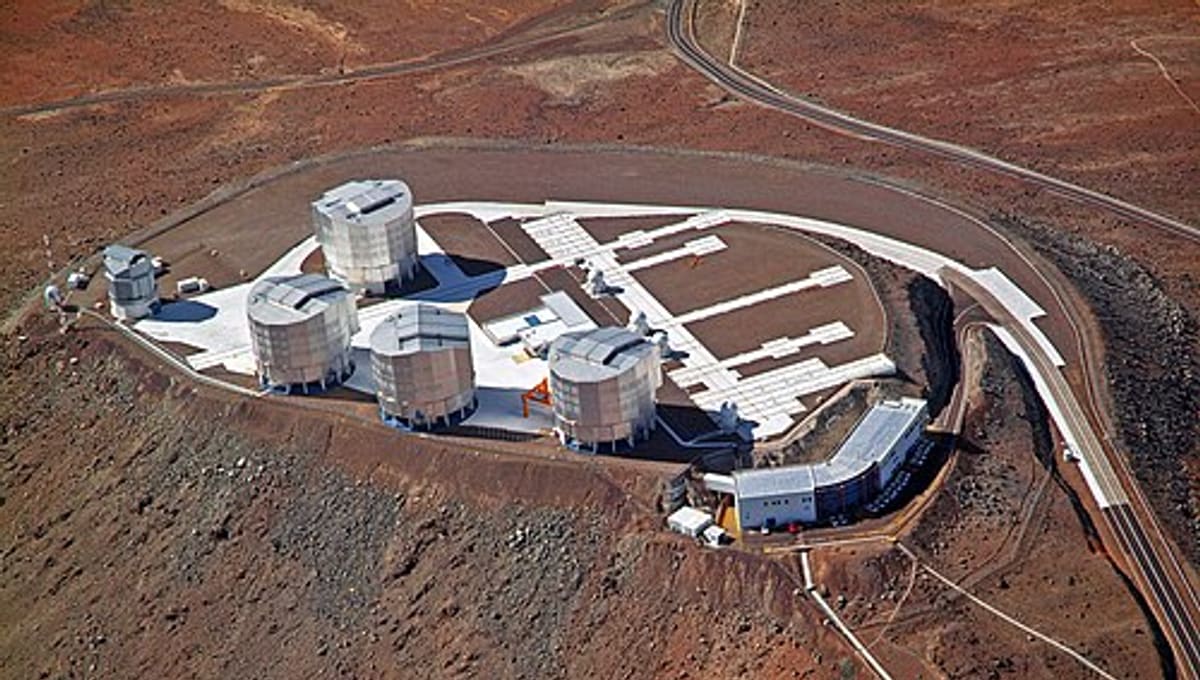
Image: Wikimedia Commons
Paranal Observatory crowns Cerro Paranal in Chile's Atacama Desert, where the European Southern Observatory runs one of the most powerful groups of telescopes on Earth under some of the clearest skies on the planet.
About Paranal Observatory
Paranal is operated by the European Southern Observatory (ESO) at 2,635 metres elevation, about 120 km south of Antofagasta in Northern Chile. By total light-collecting area it is the largest optical-infrared observatory in the Southern Hemisphere, and second in the world only to Mauna Kea in Hawaii.
History
The site was symbolically inaugurated in 1996 by Chilean President Eduardo Frei Ruiz-Tagle and Swedish King Carl XVI Gustaf, and officially opened in May 1998.
Telescopes & research
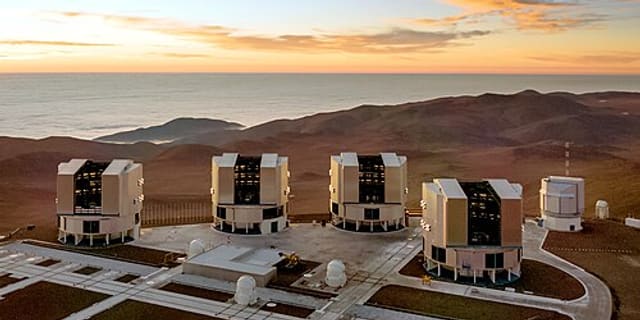
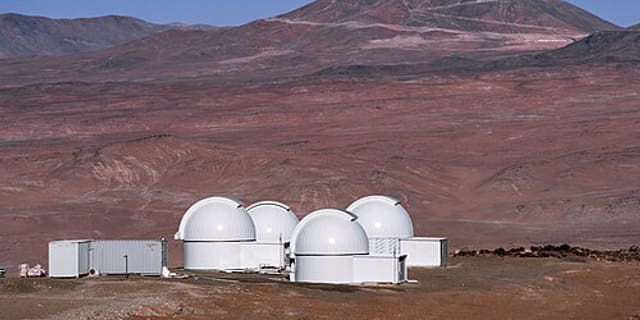
Paranal's centrepiece is the Very Large Telescope (VLT): four 8.2-metre telescopes named Antu, Kueyen, Melipal and Yepun, which can also work together for interferometry, joined by four 1.8-metre auxiliary telescopes as part of the VLT Interferometer. The site also hosts the 4.0-metre VISTA and 2.6-metre VLT Survey Telescope for wide-field sky surveys, plus the NGTS and SPECULOOS telescope arrays, which search for exoplanets. ESO's future Extremely Large Telescope (E-ELT) is under construction nearby on Cerro Armazones.
Location & getting there
Paranal sits high in the hyper-arid Atacama Desert of Northern Chile, one of the driest and darkest places on the planet for astronomy, roughly two hours' drive from Antofagasta.
Visiting Paranal Observatory
ESO opens Paranal to visitors through scheduled guided tours; check the official ESO website for current tour dates, booking requirements and any entry conditions before you travel.
See your named star from here
Under Paranal's exceptionally dark Atacama sky, more stars are visible than almost anywhere else on Earth — including the one you can name for someone you love. Find its coordinates in our star catalogue, or explore more dark-sky destinations on our observatories page.
Opening hours and public-visit programs vary by season. Check the official website and Google Maps for current times before you travel.
Institutional and reference sources used to verify this guide.
Satellite imagery: Esri, Maxar, Earthstar Geographics

 under 1 km
 2 km
2 kmTolar astronomical observatory
astronomical observatory in Salta Province, Argentina

 489 km