
New Horizons KBO Search-Magellan/Clay

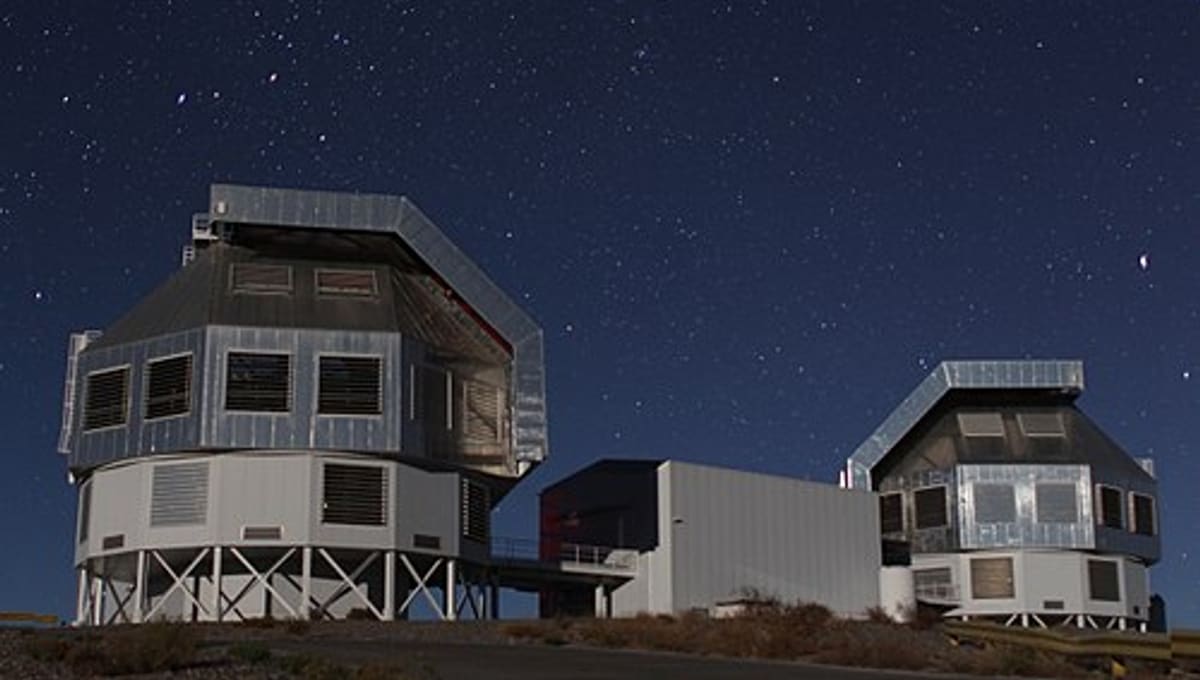
Image: Wikimedia Commons
The Magellan Clay Telescope, high in the Chilean Andes at Las Campanas Observatory, is the twin of the Baade Telescope and played its own part in the hunt for New Horizons' next destination.
About New Horizons KBO Search-Magellan/Clay
Clay is one of the two 6.5-metre Magellan Telescopes at Las Campanas Observatory in Chile, paired with the Magellan Baade Telescope. Beginning in 2011, it joined a coordinated ground-based search campaign for Kuiper Belt Objects (KBOs) as potential targets for the New Horizons spacecraft following its Pluto flyby.
Telescopes & research
Fitted with advanced wide-field imaging cameras, the Clay Telescope contributed to the search effort that ultimately discovered around 80 new Kuiper Belt Objects. Together, the Magellan telescopes produced what has been described as the best observational data set of the entire New Horizons KBO search campaign.
Location & getting there
The telescope is located at Las Campanas Observatory in the Atacama region of northern Chile, prized by astronomers for its exceptionally dry, dark and stable atmosphere.
Visiting New Horizons KBO Search-Magellan/Clay
As an active research facility, Las Campanas Observatory has limited public access that typically needs to be arranged in advance. Check the observatory's official information before planning a visit.
See your named star from here
A wide-field imager built to spot faint objects at the edge of the solar system can just as easily pinpoint the coordinates of a named star. If you've named a star with Star Register, look up its position in our star catalogue and picture it under Chile's dark Atacama skies.
Opening hours and public-visit programs vary by season. Check Google Maps for current times before you travel.
Institutional and reference sources used to verify this guide.
Satellite imagery: Esri, Maxar, Earthstar Geographics

 under 1 km
 27 km
27 km
 27 km
27 km