
Mamalluca Observatory
Satellite imagery: Esri, Maxar, Earthstar Geographics
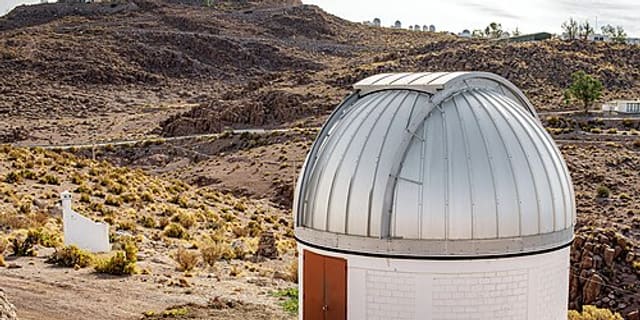
In Chile's Elqui Valley, famed for some of the clearest skies on Earth, Mamalluca Observatory has been welcoming visitors to look through a telescope since 1998.
About Mamalluca Observatory
Mamalluca was Chile's first observatory built specifically for tourism, sitting about 9 km northwest of the town of Vicuña at an elevation of roughly 1,100 metres. Its Quechua name means "mother who shelters," reflecting the valley setting that has made this stretch of northern Chile one of the world's premier stargazing destinations.
History
The observatory opened in November 1998, created by the Municipality of Vicuña together with the Club of Amateur Astronomy (CASMIA) and sponsored by the nearby Inter-American Observatory at Cerro Tololo. It was built to give the public direct access to the Elqui Valley's dark skies without needing to visit a working research facility.
Telescopes & research
Mamalluca's main instrument is a 12-inch telescope fitted with CCD detectors for electronic astrophotography. Guided visits begin with a roughly one-hour multimedia lecture before moving outside for observation, with typical sessions lasting about two hours in total.
Location & getting there
The observatory sits in the Elqui Valley of Chile's Coquimbo Region, a short drive northwest of Vicuña, in a part of South America renowned for exceptionally dark, dry skies.
Visiting Mamalluca Observatory
Guided tours typically include the introductory lecture followed by telescope viewing of the Moon, planets such as Saturn's rings and Jupiter's moons, and various constellations. The site also has administration offices, a dining facility and a gift shop; check current tour times and booking before travelling.
See your named star from here
With its 12-inch telescope trained on the Elqui Valley's dark skies most nights of the year, Mamalluca is a fitting place to seek out a star of your own. If you've named a star with Star Register, its coordinates can be requested during a visit — or browse our star catalogue to see stars named by others.
Opening hours and public-visit programs vary by season. Check Google Maps for current times before you travel.
Institutional and reference sources used to verify this guide.
Satellite imagery: Esri, Maxar, Earthstar Geographics

 23 km
23 km
 23 km
23 km
 28 km
28 km