
Cerro Pachón Observatory

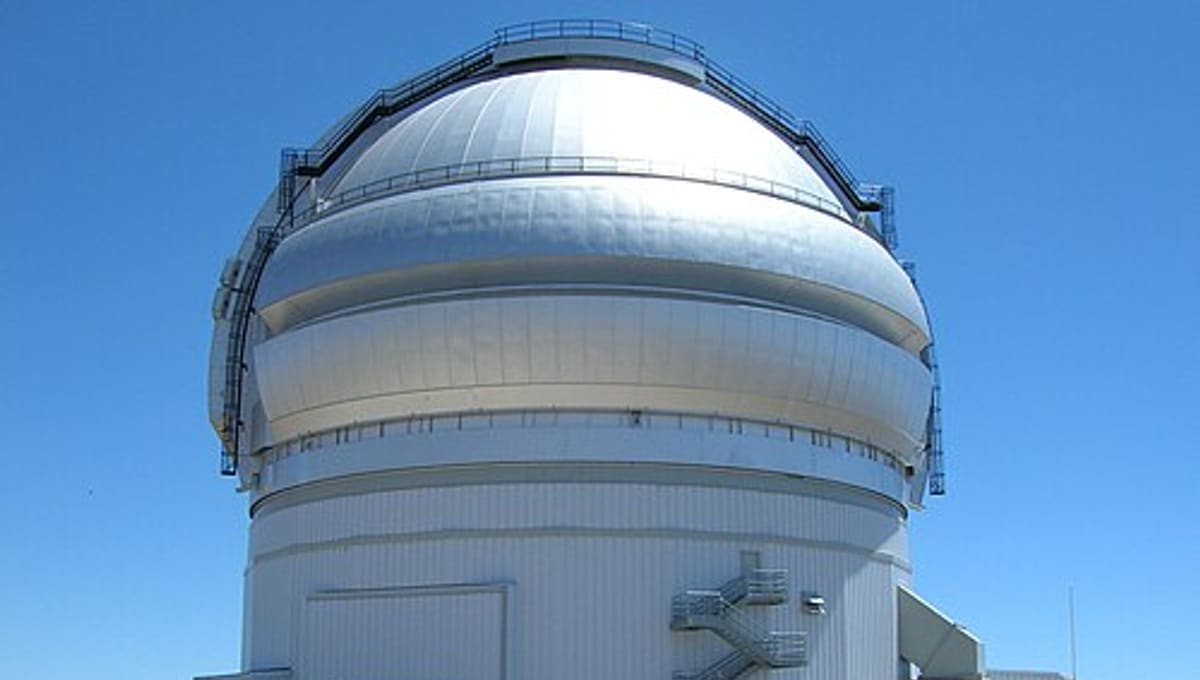
Image: Wikimedia Commons
Cerro Pachón Observatory sits atop a 2,700-metre summit in Chile's Coquimbo Region, one of the most prized astronomical sites in the Southern Hemisphere. Owned and operated by the Association of Universities for Research in Astronomy (AURA), the mountain hosts some of the world's most advanced telescopes under exceptionally dry, stable skies.
About Cerro Pachón Observatory
Cerro Pachón is a working mountaintop site rather than a single building: it shares its ridge with a cluster of major international astronomy projects, all benefiting from the site's very dry air and excellent atmospheric seeing, conditions especially prized for infrared observations.
History
Astronomers began monitoring the site's observing quality as early as 1964, when the Carnegie Institution first assessed the region. Serious planning for Cerro Pachón began in 1989, when the National Optical Astronomy Observatory evaluated the summit as a location for a pair of new 8-metre-class telescopes. The site was ultimately chosen because its seeing conditions rivalled those of Mauna Kea, one of the best observing locations on Earth.
Telescopes & research
Cerro Pachón is home to four major facilities. The Gemini South Telescope, an 8.1-metre instrument, saw first light on 18 January 2002. The Southern Astrophysical Research Telescope (SOAR), a 4.1-metre reflector, was dedicated in 2004. The Vera C. Rubin Observatory, built around an 8.4-metre mirror, captured its first images on 23 June 2025 and is now conducting a wide-field survey of the sky. The Andes Lidar Observatory, run by the University of Illinois, has been operational since 2009, studying the upper atmosphere.
Location & getting there
The observatory lies in the Coquimbo Region of northern Chile, part of the same high, arid stretch that hosts several of the world's leading observatories. At 2,700 metres, the summit rises well above the coastal cloud layer, giving it clear, dark skies for most of the year.
Visiting Cerro Pachón Observatory
Public visitor programmes are available at Cerro Pachón, though access to the working telescopes is limited and typically must be arranged in advance. Check the current visiting arrangements with NOIRLab or the individual facilities before planning a trip.
See your named star from here
Because every star named through Star Register comes with precise coordinates, a telescope at a site like Cerro Pachón can, in principle, be pointed straight at it. Name a star or browse the catalogue to find the coordinates for a star already named in someone's honour.
Opening hours and public-visit programs vary by season. Check Google Maps for current times before you travel.
Institutional and reference sources used to verify this guide.
Satellite imagery: Esri, Maxar, Earthstar Geographics

 10 km
10 km
 10 km
10 km