
SARA-CT

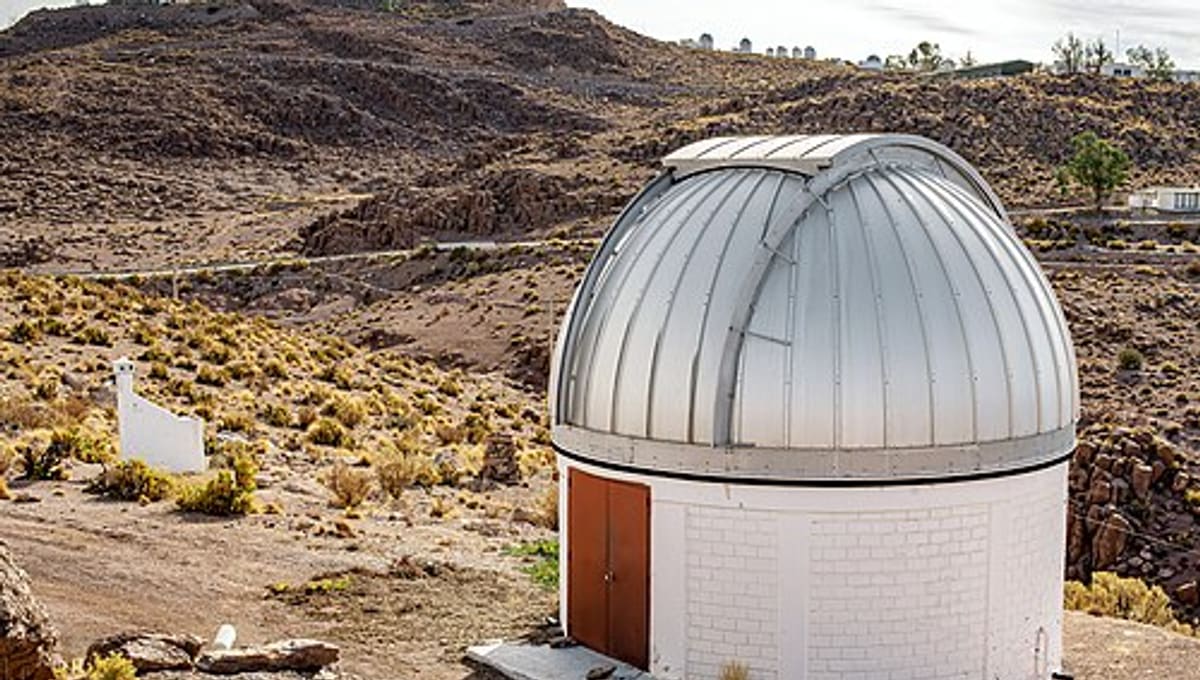
Image: Wikimedia Commons
SARA-CT is a 0.6-metre telescope operating at Cerro Tololo Inter-American Observatory in Chile, at an elevation of 2,123 metres, one of the sharpest astronomical sites in the southern hemisphere.
About SARA-CT
The telescope is run by the Southeastern Association for Research in Astronomy (SARA), a consortium founded in 1989 that has grown from four charter members to more than 15 university members worldwide, including Florida Tech, East Tennessee State, Clemson, Ball State, and Embry-Riddle Aeronautical University.
History
The instrument was originally operated by Lowell Observatory before Cerro Tololo closed it down in 1996. SARA acquired and refurbished the telescope in 2010, investing roughly $250,000 to add full remote internet access, extending its working life for a new generation of researchers.
Telescopes & research
SARA-CT is a 0.6-metre reflector fitted with a CCD camera and an Echelle spectrograph for high-resolution spectroscopy. Because it is fully remote-controlled, astronomers at SARA's member institutions around the world can carry out observations without travelling to Chile.
Location & getting there
Cerro Tololo Inter-American Observatory sits high in the Chilean Andes at over 2,100 metres elevation, chosen for its dark skies, dry air, and stable atmosphere. The site is part of a wider cluster of world-class observatories in Chile's Coquimbo Region.
Visiting SARA-CT
As a research telescope operated remotely for university astronomers, SARA-CT is not generally set up for casual public visits; check the SARA consortium's website or Cerro Tololo's visitor programme for the latest access information.
See your named star from here
High on Cerro Tololo, instruments like SARA-CT are built to point precisely at coordinates anywhere in the sky, exactly what it takes to find a star named through Star Register. Look up your star's right ascension and declination in the catalogue to see where it sits above this Chilean mountaintop.
Opening hours and public-visit programs vary by season. Check Google Maps for current times before you travel.
Institutional and reference sources used to verify this guide.
Satellite imagery: Esri, Maxar, Earthstar Geographics

 under 1 km
 10 km
10 km