
Tortugas Mountain Observatory
Satellite imagery: Esri, Maxar, Earthstar Geographics
Tortugas Mountain Observatory sits on Tortugas Mountain, known locally as 'A' Mountain, in southern New Mexico, where New Mexico State University (NMSU) has run planetary research for more than sixty years.
About Tortugas Mountain Observatory
The observatory is owned and operated by New Mexico State University, located approximately 8 kilometres southeast of Las Cruces and 4 kilometres east of the NMSU campus.
History
Founded in 1963 under the supervision of Clyde Tombaugh — the astronomer famous for discovering Pluto — the observatory was built to focus on observing the planets. Its first two-dome building was completed in 1964, with observing having already begun with one telescope in 1963, and a second building with a larger single dome followed in 1967 at the opposite end of the mountain's ridgeline. Regular use ceased around 1999–2000, though the equipment was never dismantled. The site saw renewed activity in 2008 supporting the Lunar Crater Observing and Sensing Satellite project, and from 2010 efforts began to revive it for use by the American Association of Variable Star Observers, reported to be 60–75% complete by June 2011.
Telescopes & research
Much of the planetary data gathered at Tortugas Mountain Observatory, including observations of Jupiter's atmosphere and Saturn, is now managed through NMSU and made available via the Planetary Data System's Atmospheres Node.
Location & getting there
The observatory sits on Tortugas Mountain in southern New Mexico, USA, at approximately 32.29°N, -106.70°W, close to Las Cruces and the NMSU campus.
Visiting Tortugas Mountain Observatory
As a research facility with a history of intermittent activity, current public access should be confirmed with New Mexico State University before planning a visit.
See your named star from here
An observatory built to track the precise positions of planets across the sky is well suited, in principle, to locating any other set of celestial coordinates — including a named star's right ascension and declination. Explore our star-naming packages or browse the star catalogue to find yours.
Opening hours and public-visit programs vary by season. Check Google Maps for current times before you travel.
Institutional and reference sources used to verify this guide.
Satellite imagery: Esri, Maxar, Earthstar Geographics

 99 km
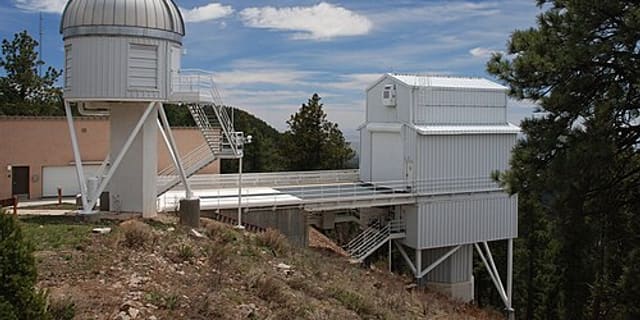
99 kmApache Point Observatory
astronomical observatory in Sunspot, New Mexico, United States

 99 kmSolar
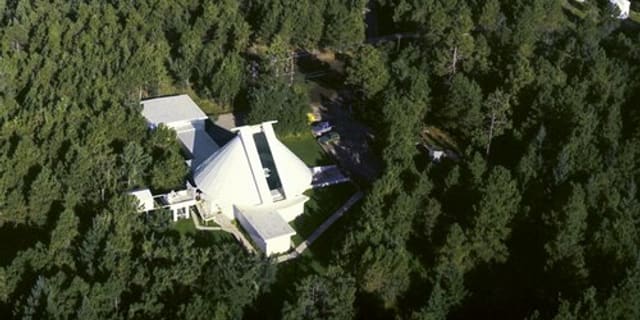
Sunspot Solar Observatory
astronomical observatory in Sunspot, New Mexico, United States

 118 km