
Apache Point Observatory

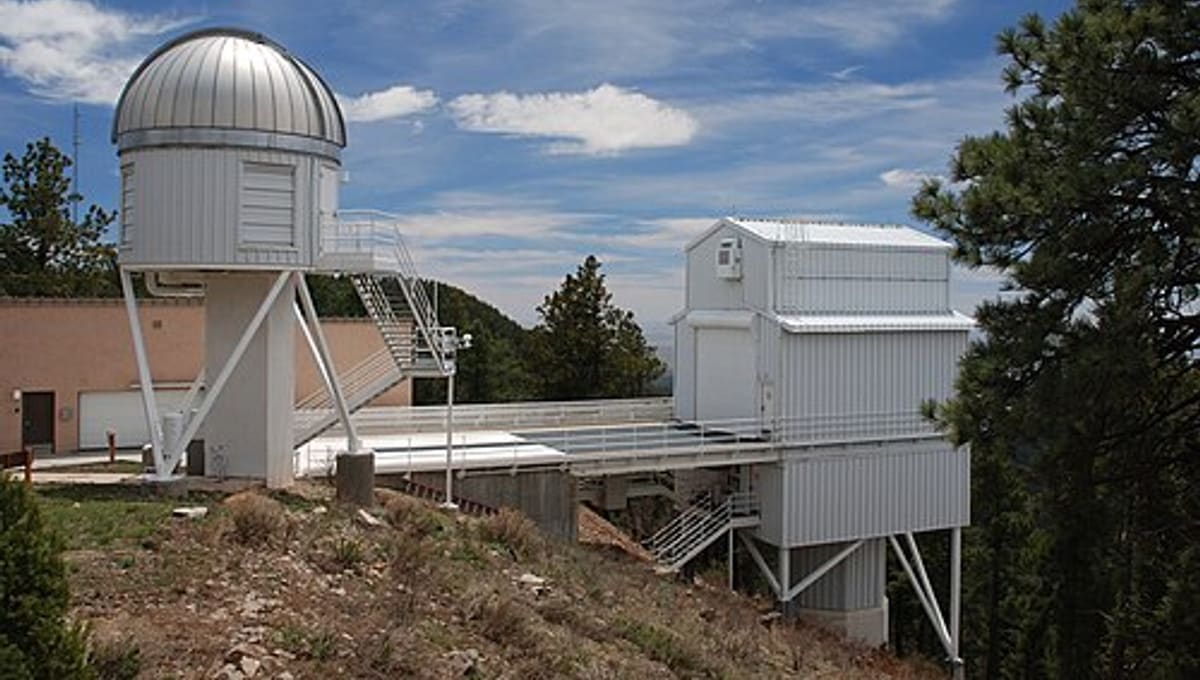
Image: Wikimedia Commons
High in the Sacramento Mountains of southern New Mexico, Apache Point Observatory sits at 2,788 metres above sea level near the tiny community of Sunspot, about 18 miles south of Cloudcroft. Since the 1980s it has served as one of the United States' leading research sites for optical astronomy.
About Apache Point Observatory
Apache Point Observatory (APO) is owned by the Astrophysical Research Consortium (ARC), a partnership of universities and research institutions, and operated day-to-day by New Mexico State University (NMSU). The dark, high-altitude site was chosen for its excellent atmospheric seeing, and the observatory has become a workhorse facility for large-scale sky surveys and precision astrophysics.
History
The ARC was formed in 1984 with the specific goal of building a 3.5-metre research telescope, and Apache Point Observatory began operations in 1985. The ARC 3.5m telescope reached full operation in November 1994, and the site has expanded steadily ever since to host additional instruments for member universities and survey collaborations.
Telescopes & research
APO hosts several telescopes of different sizes, each with its own role. The ARC 3.5m telescope, a Ritchey-Chrétien reflector, supports a wide range of optical and infrared instruments and, since 2005, the Apache Point Observatory Lunar Laser-ranging Operation (APOLLO), which bounces laser pulses off retroreflectors left on the Moon to measure the Earth-Moon distance to millimetre precision. The 2.5m SDSS telescope has driven the Sloan Digital Sky Survey since 2000, mapping millions of galaxies and stars across large areas of sky. Smaller instruments include the NMSU 1.0m telescope, used for university research and student training, and the 0.5m ARCSAT telescope, originally built for SDSS photometric calibration.
Location & getting there
Apache Point Observatory lies in a remote, high-altitude corner of the Sacramento Mountains in southern New Mexico, part of the same forested range that shelters the nearby Sunspot Solar Observatory. The elevation and dry mountain air are part of what make the site valuable for astronomy, but they also mean the surrounding terrain is rugged and best reached by car via Cloudcroft.
Visiting Apache Point Observatory
APO is a working research facility rather than a public attraction, and access to the telescope buildings is normally restricted. During occasional open events the grounds are made available to visitors for a few hours in the afternoon, with guided looks at the telescope domes, though there is no permanent visitor centre on site. The nearby Sunspot Astronomy and Visitor Center is the best first stop for anyone exploring the area, and it's worth checking the observatory's official website before planning a trip.
See your named star from here
Because every named star in our register comes with precise right ascension and declination coordinates, staff at a well-equipped observatory can point a telescope at exactly that spot in the sky. If you'd like to give someone a star of their own, see our naming packages, or browse the night sky already claimed in our star catalogue.
Opening hours and public-visit programs vary by season. Check the official website and Google Maps for current times before you travel.
Institutional and reference sources used to verify this guide.
Satellite imagery: Esri, Maxar, Earthstar Geographics

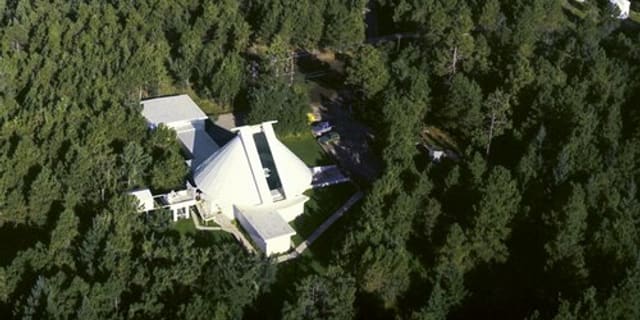 under 1 kmSolar
Sunspot Solar Observatory
astronomical observatory in Sunspot, New Mexico, United States

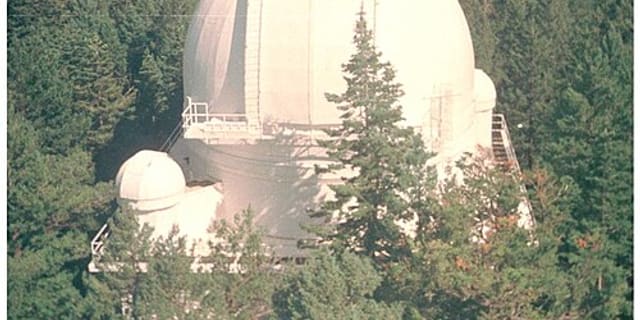 24 km
24 kmExperimental Test Site
MIT Lincoln Laboratory field site located in Socorro, New Mexico

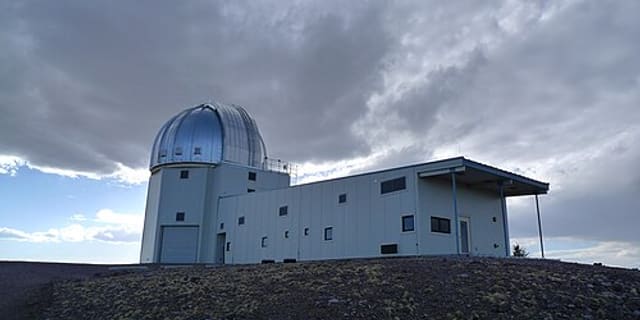 184 km