
Magdalena Ridge Observatory

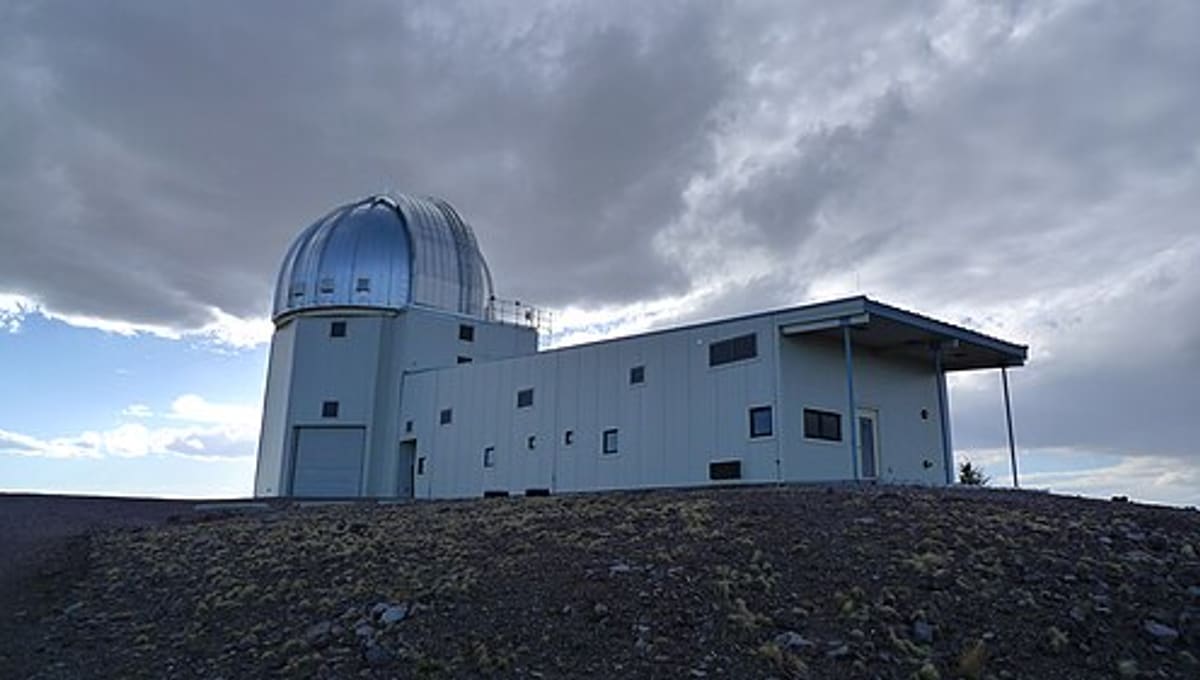
Image: Wikimedia Commons
Magdalena Ridge Observatory sits atop the Magdalena Mountains of Socorro County, New Mexico, about 32 kilometers west of the town of Socorro. Run by New Mexico Tech, the high-altitude site combines a large optical telescope with an interferometer array still taking shape.
About Magdalena Ridge Observatory
The Magdalena Ridge Observatory (MRO) occupies a roughly 1,000-acre site near the summit of South Baldy Mountain, adjacent to the Langmuir Laboratory for Atmospheric Research. It currently hosts three astronomical facilities: a fast-tracking optical telescope, an optical interferometer under construction, and a collection of robotic telescopes for time-domain astronomy managed by researchers at the University of Minnesota.
History
Cloud studies were already being carried out on the ridge in the 1930s, and the first permanent building went up in 1963 as part of the Langmuir Laboratory. A consortium to build a dedicated astronomical observatory formed in 1996, and the design for the current facility was commissioned in 2000. The 2.4-meter primary mirror now in use was originally built by Itek for a Hubble Space Telescope competition and later transferred from an Air Force project.
Telescopes & research
A 2.4-meter fast-tracking optical telescope has been operational at MRO since 2008. Alongside it, New Mexico Tech and the Cavendish Astrophysics Group at the University of Cambridge are building a ten-element optical interferometer as an international collaboration; as of 2025, two of the planned ten telescopes have been installed and verified on-sky. The site also hosts robotic telescopes dedicated to time-domain astronomy, operated by the University of Minnesota.
Location & getting there
At an elevation of about 3,230 meters, MRO sits high in the Magdalena Mountains of North America, in Socorro County, New Mexico. The remote, high-altitude setting gives the site dark, stable skies well suited to precision optical work.
Visiting Magdalena Ridge Observatory
MRO is a working research facility rather than a public visitor centre, so anyone planning a trip should check the current access and tour information on the official New Mexico Tech website before travelling.
See your named star from here
Because a named star is defined by its coordinates, staff at an observatory like MRO can point a telescope toward the right patch of sky to find it. If you've named a star with Star Register, its position is fixed and ready to be located from a site like this one - browse the star catalogue to see how it's recorded.
Opening hours and public-visit programs vary by season. Check the official website and Google Maps for current times before you travel.
Institutional and reference sources used to verify this guide.
Satellite imagery: Esri, Maxar, Earthstar Geographics
Experimental Test Site
MIT Lincoln Laboratory field site located in Socorro, New Mexico

 174 km
 183 kmSolar
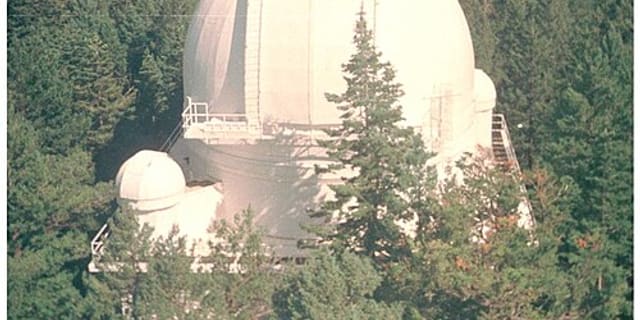
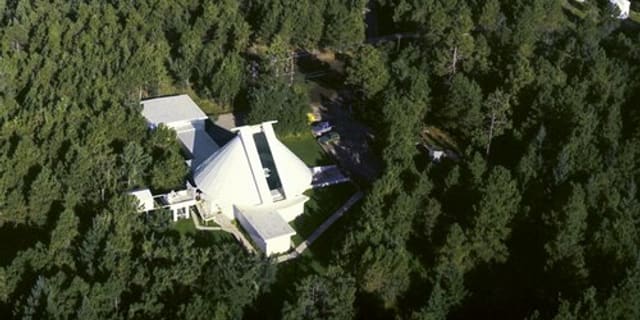
Sunspot Solar Observatory
astronomical observatory in Sunspot, New Mexico, United States