
Jim Carrigan Magnetic Observatory
Satellite imagery: Esri, Maxar, Earthstar Geographics
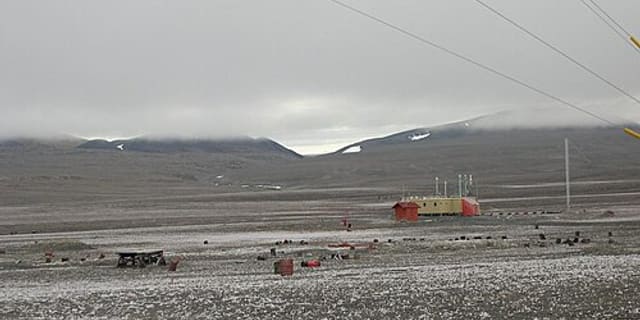
The Jim Carrigan Magnetic Observatory monitors Earth's magnetic field from T-Pad at Prudhoe Bay, Alaska, helping guide directional drilling in one of the world's most remote oil fields.
About Jim Carrigan Magnetic Observatory
Known as JCO, the Jim Carrigan Magnetic Observatory is a geomagnetic facility rather than an astronomical one. It was established in 1997 as a joint venture between the scientific community and industry, and its huts are raised on piles above the permafrost to keep them clear of snow banking.
History
Since 1997, JCO has provided real-time magnetic declination corrections used for directional drilling at the Prudhoe Bay oil fields. It works alongside the Barrow magnetic observatory, established in 1949 with major upgrades in 1957, using Barrow's one-minute field values and its own fluxgate magnetometer to monitor variations in the external magnetic field.
Location & getting there
The observatory sits at T-Pad, Prudhoe Bay, Alaska, United States, in the North America region, one of the most remote and northerly observation points on Earth.
Visiting Jim Carrigan Magnetic Observatory
JCO serves industrial and scientific monitoring purposes at a remote oil field site rather than welcoming public visitors. There is no general public access.
See your named star from here
JCO tracks the invisible pull of Earth's magnetic field rather than the stars overhead, but Prudhoe Bay's far-northern location under dark winter skies is still a reminder that a named star's coordinates are always waiting for a telescope, wherever one happens to be pointed. Name a star, or browse the catalogue of stars already named.
Opening hours and public-visit programs vary by season. Check Google Maps for current times before you travel.
Institutional and reference sources used to verify this guide.
Satellite imagery: Esri, Maxar, Earthstar Geographics

 2,283 km
 2,742 km
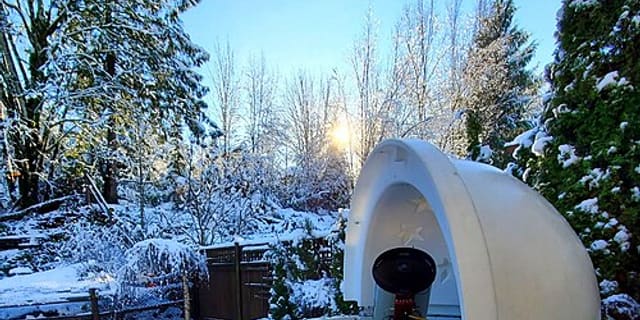
Golden Ears Observatory
astronomical observatory in Maple Ridge, British Columbia, Canada