
Dr. Neil Trivett Global Atmosphere Watch Observatory

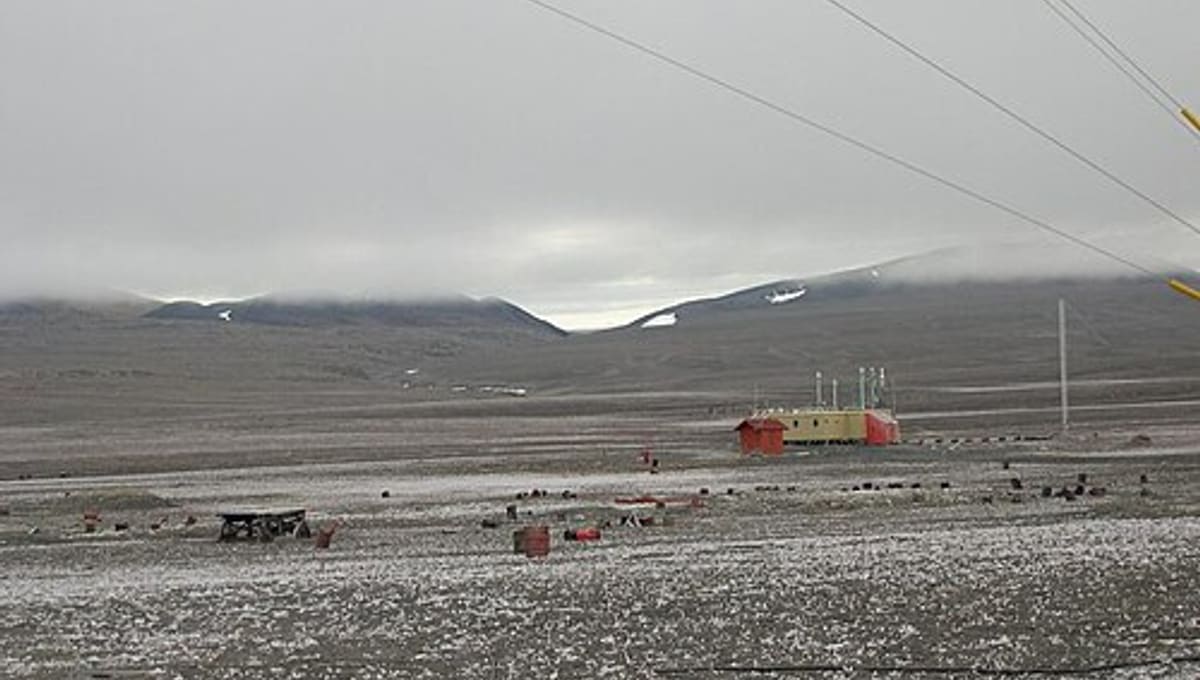
Image: Wikimedia Commons
Near the tiny settlement of Alert on the northern tip of Ellesmere Island, Nunavut, the Dr. Neil Trivett Global Atmosphere Watch Observatory sits about 800 km from the geographic North Pole, making it the northernmost research station of its kind on Earth.
About Dr. Neil Trivett Global Atmosphere Watch Observatory
The station is an atmospheric baseline observatory operated by Environment and Climate Change Canada, located roughly 6 km south-southwest of Alert. It is one of 31 stations worldwide in the World Meteorological Organization's Global Atmosphere Watch (GAW) programme, and one of only three official greenhouse-gas “intercomparison supersites” on the planet, alongside Mauna Loa in Hawaii and Cape Grim in Australia. Because it sits so far from industrial activity, the station provides scientists with an uncontaminated baseline record of the atmosphere.
History
Established in 1986 as Canada's first dedicated atmospheric research station, it was renamed in July 2006 in honour of Dr. Neil Trivett, in recognition of his contribution to atmospheric science.
Instruments & research
The site sits at an elevation of about 210 metres and carries a suite of monitoring equipment, including an aethalometer, an all-sky camera, sun photometers, broadband radiation sensors, and a flux tower fitted with a sonic anemometer. Together these instruments track long-term changes in trace gases, aerosols, and solar radiation in one of the least-disturbed air masses on Earth.
Location & getting there
The observatory lies in Canada's High Arctic, in the North America region, on Ellesmere Island near Alert — one of the most remote inhabited places on the planet, reachable only by military and scientific logistics flights rather than commercial travel.
Visiting Dr. Neil Trivett Global Atmosphere Watch Observatory
This is a working scientific research station rather than a public attraction, and it is not set up for visitor tours. Anyone with a professional interest should contact Environment and Climate Change Canada directly through the official station page before planning any trip.
See your named star from here
The polar night above Alert delivers some of the darkest, clearest skies anywhere on Earth, with the aurora and countless stars visible for months at a time. While this research station itself is not open for stargazing, the same dark-sky principle applies wherever you go to find your own star: if you have named a star through star-register, you can look up its exact coordinates and locate it yourself. Start at /#packages to name a star, or explore the full star catalogue.
Opening hours and public-visit programs vary by season. Check the official website and Google Maps for current times before you travel.
Institutional and reference sources used to verify this guide.
Satellite imagery: Esri, Maxar, Earthstar Geographics