
Auroral Observatory
Satellite imagery: Esri, Maxar, Earthstar Geographics
The Auroral Observatory, also known as the Tromsø Geophysical Observatory, sits high above the Arctic Circle in Tromsø, Norway, where it has tracked the aurora borealis and space weather for well over a century.
About Auroral Observatory
Part of the Faculty of Science and Technology at UiT, the Arctic University of Norway, the observatory studies the aurora borealis, geomagnetic fields, and space weather. It operates the Norwegian Centre for Space Weather (NOSWE), established in 2014, and its archival records of geophysical activity stretch back to 1843.
History
Founded in 1899, the observatory's geophysical research programme in Tromsø expanded over the following decades, with operations moving to a new auroral observatory building in 1928, funded in part by the Rockefeller Foundation.
Telescopes & research
Rather than optical telescopes alone, the observatory runs a 19-unit magnetometer chain spanning Norway, Sweden, and the Barents Sea, along with ionosondes, riometers, and all-sky cameras, all used to monitor the aurora and the wider space-weather environment above the Arctic.
Location & getting there
Tromsø's location well north of the Arctic Circle in Norway gives the observatory a direct view of some of the most active auroral displays on Earth, particularly through the long, dark winter nights.
Visiting Auroral Observatory
As a university research institution, the observatory is not primarily set up as a tourist attraction; check the University of Tromsø's Auroral Observatory website for current information before planning a visit.
See your named star from here
Between aurora displays, Tromsø's Arctic sky is also a striking place to look for a named star. Name a star or check the catalogue for its exact coordinates in this far-northern sky.
Opening hours and public-visit programs vary by season. Check the official website and Google Maps for current times before you travel.
Institutional and reference sources used to verify this guide.
Satellite imagery: Esri, Maxar, Earthstar Geographics

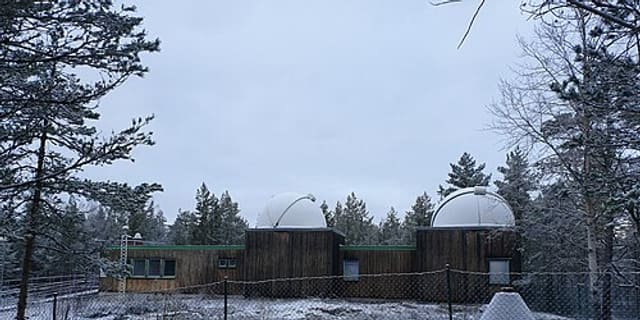 1,011 km
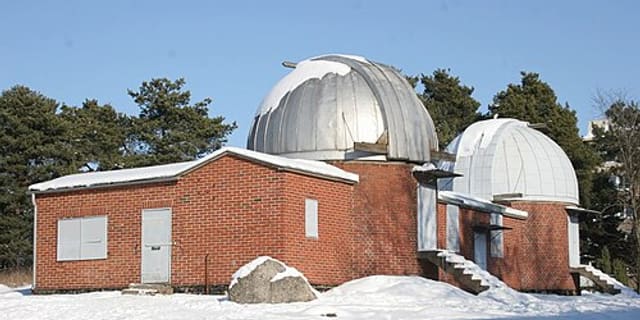 1,035 km