
HIPAS Observatory

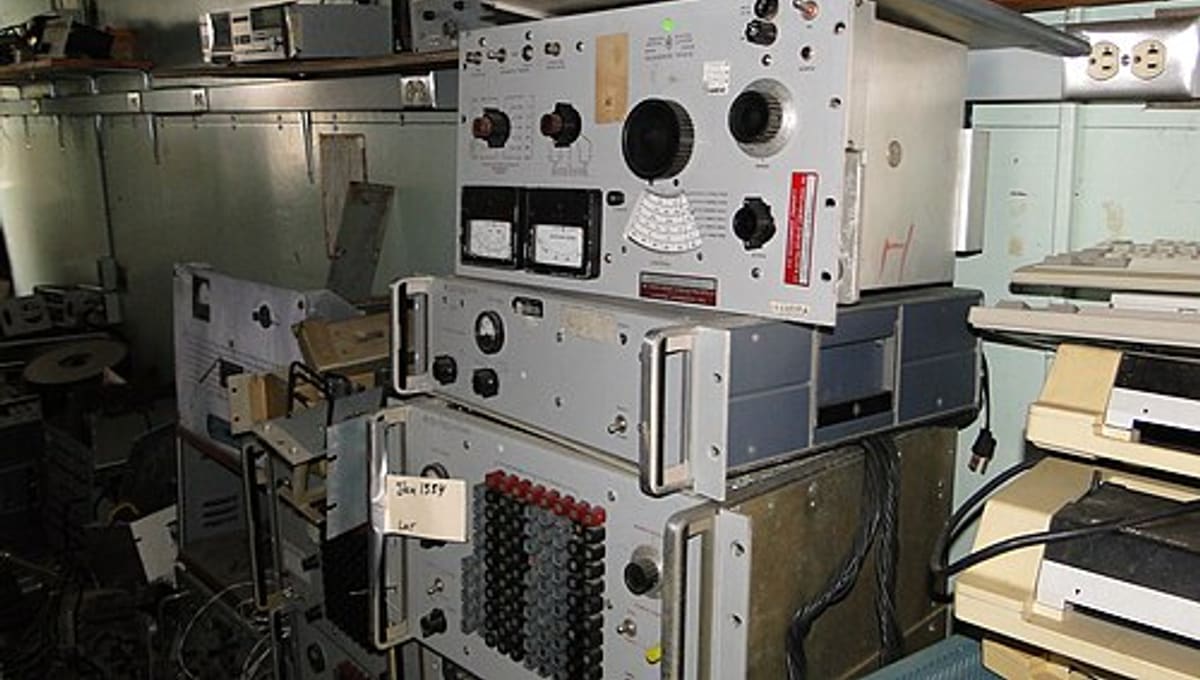
Image: Wikimedia Commons
HIPAS Observatory once stood in the boreal forest east of Fairbanks, Alaska, where UCLA researchers spent over two decades studying the ionosphere before the site closed.
About HIPAS Observatory
HIPAS stood for High Power Auroral Stimulation, and the facility was built to study Earth's ionosphere and how it affects radio communications. It was operated by UCLA's plasma physics laboratory from 1986, in the Fairbanks North Star Borough about 25 miles east of Fairbanks.
History
The observatory ran experiments from 1986 to 2007 under UCLA's plasma physics laboratory, and the site was fully shut down in the spring of 2010, when much of its equipment was sold as surplus.
Telescopes & research
HIPAS's signature capability was radiating up to 70 megawatts of effective radiated power at 2.85 or 4.53 MHz, frequencies chosen to interact with the electron gyro-frequency in the ionosphere; pulses of these radio waves could accelerate ionospheric electrons and reveal the ionosphere's structure through the backscatter. The site also ran a 2.8-metre liquid-mirror telescope, using a spinning bowl of mercury in place of glass, for laser experiments, plus a LIDAR instrument, an antenna array for exciting the ionosphere, and a plasma torch used in hazardous-waste research. The related HAARP facility, funded by the US Air Force and Navy, continues similar research elsewhere in Alaska.
Location & getting there
HIPAS was located about 25 miles east of Fairbanks, in Alaska's Fairbanks North Star Borough. Use the map on this page for its coordinates.
Visiting HIPAS Observatory
HIPAS Observatory is no longer operating; it was decommissioned in 2010 and its equipment sold. There is nothing to visit at the site today.
See your named star from here
HIPAS's unusual liquid-mirror telescope was built for ionospheric laser research rather than public stargazing, and the site is no longer active. But Alaska's far-northern skies remain a striking place to look up. Name a star to get its coordinates, then use a stargazing app to find it from anywhere, or browse the star catalogue.
Opening hours and public-visit programs vary by season. Check Google Maps for current times before you travel.
Institutional and reference sources used to verify this guide.
Satellite imagery: Esri, Maxar, Earthstar Geographics

 2,266 km
Golden Ears Observatory
astronomical observatory in Maple Ridge, British Columbia, Canada