
Hans-Ludwig-Neumann-Sternwarte

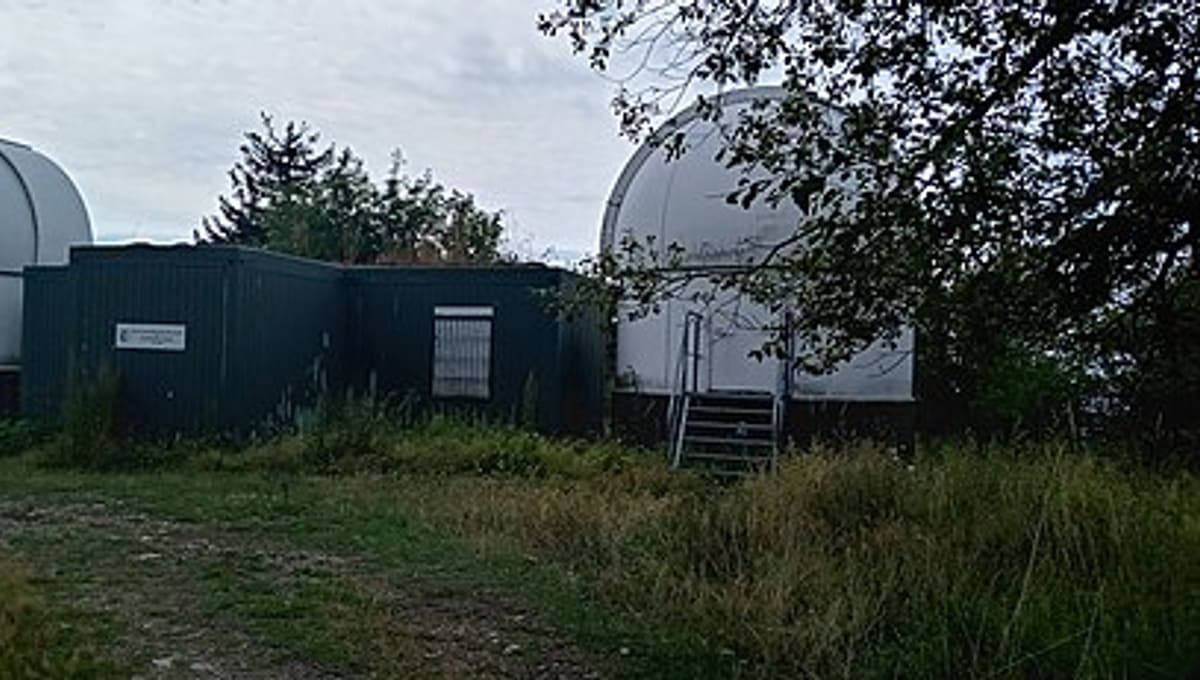
Image: Wikimedia Commons
Perched on Kleiner Feldberg in Germany's Taunus mountains near Glashütten, the Hans-Ludwig-Neumann-Sternwarte is one of the country's most productive volunteer-run observatories. Named for a former chairman of the Physikalischer Verein, it has spent more than two decades scanning the sky for undiscovered minor planets.
About Hans-Ludwig-Neumann-Sternwarte
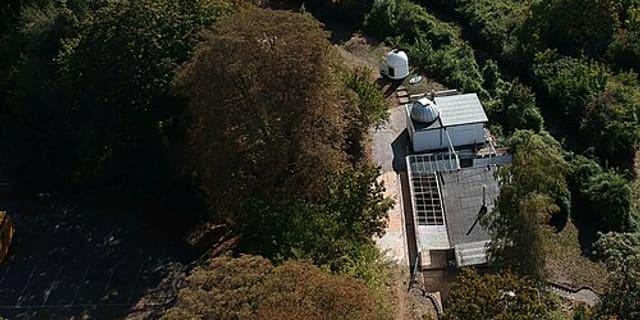
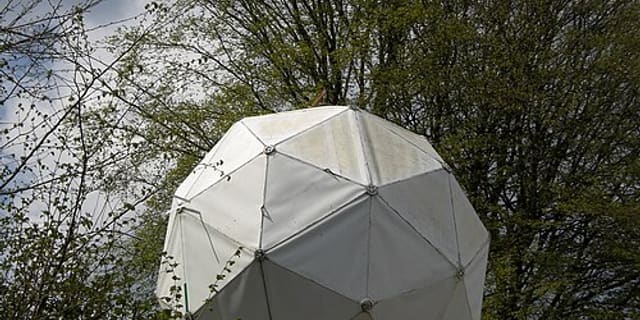
The observatory opened in 1998 and is operated by the Physikalischer Verein (Physical Society), a scientific association based in Frankfurt-Bockenheim. It carries the IAU observatory code B01 and houses two 4.2-metre Baader Classic Dome enclosures, the larger of which shelters the site's primary instrument: a 60cm Ritchey-Chrétien-Cassegrain telescope with a focal length of 5.716 metres.
History
The observatory is named after Hans-Ludwig Neumann (1938–1991), a former chairman of the Physikalischer Verein whose support helped establish the site on Kleiner Feldberg. Since opening in 1998, the observatory has built a reputation among German amateur facilities for its consistency: as of December 2024 it had logged 137 recognised minor planet discoveries, ranking it fourth among all observatories worldwide for this kind of work and making it Germany's most successful association-run observatory for minor planet discovery.
Telescopes & research
Observing runs are built around the 60cm Ritchey-Chrétien-Cassegrain, paired with the second, smaller dome for auxiliary equipment. The team's focus is systematic minor planet search and follow-up astrometry, work that has steadily added new asteroids to the official minor planet catalogues under the observatory's IAU code, B01.
Location & getting there
The observatory sits in the Taunus mountains near Glashütten in Hessen, an elevated, wooded region within easy reach of Frankfurt. The Taunus ridgeline gives the site darker skies than the nearby city, which is part of why the Physikalischer Verein chose Kleiner Feldberg for its telescopes.
Visiting Hans-Ludwig-Neumann-Sternwarte
As a facility run by a volunteer scientific association, opening times and public observing evenings are set by the Physikalischer Verein rather than fixed visiting hours. Check the society's website before travelling to confirm current access and any scheduled open evenings.
See your named star from here
Because any location on Earth can be pointed toward any set of celestial coordinates, a star named through Star Register can, in principle, be located from a site like this one using its right ascension and declination. Browse the catalogue to see how your named star's coordinates are recorded.
Opening hours and public-visit programs vary by season. Check Google Maps for current times before you travel.
Institutional and reference sources used to verify this guide.
Satellite imagery: Esri, Maxar, Earthstar Geographics

 33 km
33 km
 66 kmPublic