
Wiesbaden Observatory
Satellite imagery: Esri, Maxar, Earthstar Geographics
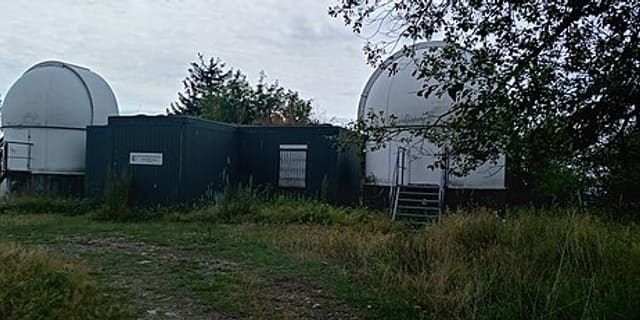
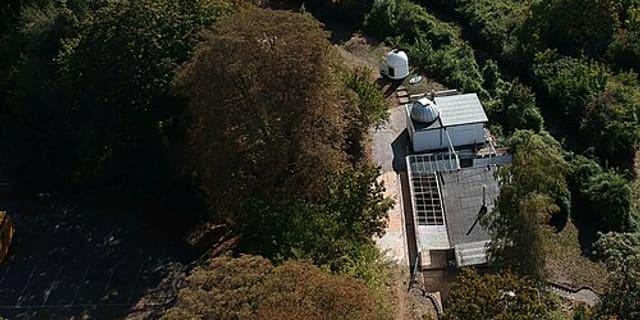
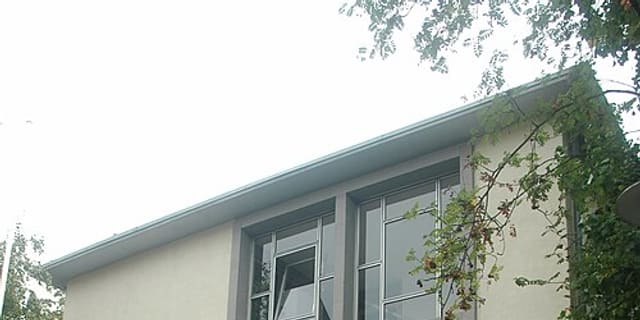
Wiesbaden Observatory occupies the rooftop of the Martin-Niemöller-Schule in Wiesbaden, Germany, where the volunteers of the Astronomische Gesellschaft Urania have been sharing the night sky with the public since the 1920s.
About Wiesbaden Observatory
The observatory is run by the Astronomische Gesellschaft Urania e.V. Wiesbaden, an amateur astronomy association, and sits at an elevation of 190 metres on Bierstadter Straße in the city.
History
Wiesbaden Observatory was founded in November 1925 by the astronomer Franz Kaiser, who discovered 21 asteroids during his career, together with a group of fellow amateur astronomers. The original observatory was destroyed during the Second World War and rebuilt in 1954, before the society moved to its current rooftop location in 1974.
Telescopes & research
The observatory's instruments include an apochromatic refractor of 1600/206mm, a secondary 1800/120mm refractor, a portable 600/110mm refractor, a 1270/250mm Dobsonian reflector, large 2×125mm binoculars, and a 4800/300mm Maksutov reflector, along with solar filters and cameras for astrophotography and solar observation.
Location & getting there
The observatory sits on the roof of the Martin-Niemöller-Schule at Bierstadter Straße 47 in Wiesbaden, western Germany, at an elevation of around 190 metres — an accessible, independently reachable public location within the city itself.
Visiting Wiesbaden Observatory
Wiesbaden Observatory is open to the public on Monday evenings and alternate Friday evenings from 20:00 to 22:00, with a dedicated solar observation session on the final Sunday of each month from 14:00 to 16:00. Admission costs between €1 and €3, and members of the society visit free.
See your named star from here
With regular public evenings and a range of telescopes from wide-field refractors to a 300mm Maksutov, Wiesbaden Observatory is a genuinely good place to try tracking down a star named through Star Register — bring the right ascension and declination from your certificate along on a visit. Browse the catalogue or visit our packages to name a star of your own.
Opening hours and public-visit programs vary by season. Check the official website and Google Maps for current times before you travel.
Institutional and reference sources used to verify this guide.
Satellite imagery: Esri, Maxar, Earthstar Geographics

 20 km
20 km
 36 km
36 km
 56 kmPublic
 80 kmResearch