
Starkenburg Observatory

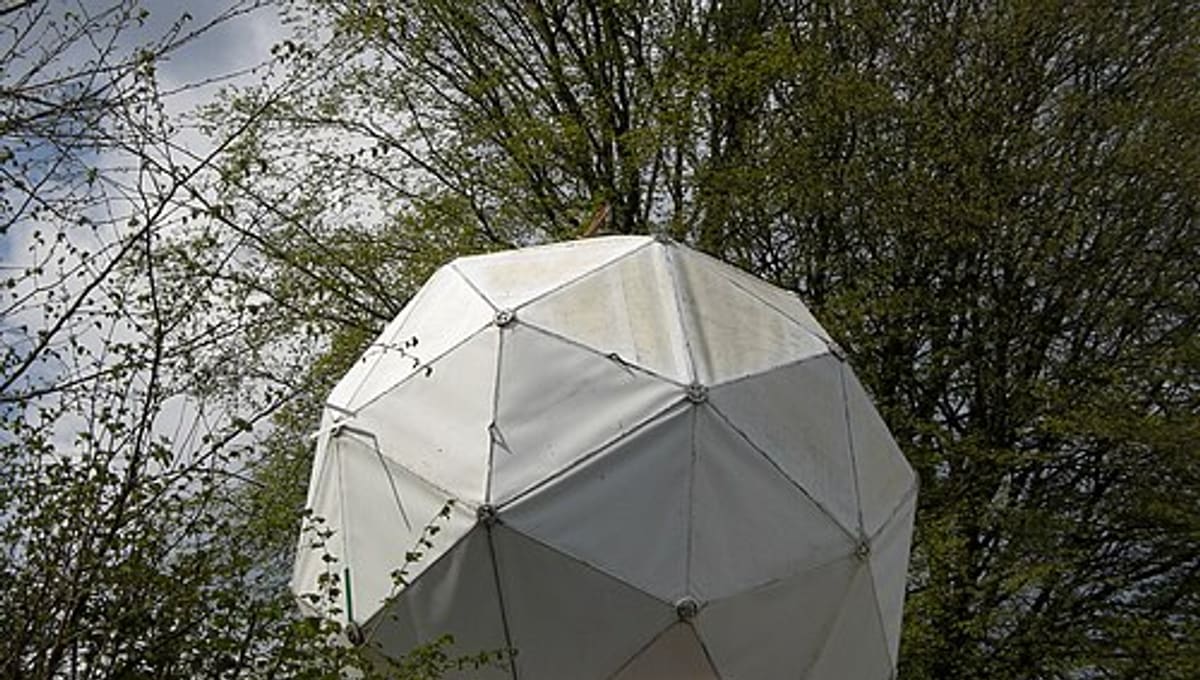
Image: Wikimedia Commons
Starkenburg Observatory rises above Heppenheim in Germany, a volunteer-run site with a genuine research record that includes discovering dozens of asteroids.
About Starkenburg Observatory
The observatory is run by Starkenburg-Sternwarte e.V., a members' association roughly 150 strong, at an elevation of 256 metres overlooking Heppenheim. Founded in 1970, it has grown from an amateur club project into a site with real standing in European astronomy circles, having hosted the European Radio Astronomy Congress in both 1997 and 2003.
History
Since its founding in 1970, Starkenburg's members have built up one of the more productive amateur observing programmes in Germany, discovering more than 40 asteroids and contributing to the ongoing tracking of near-Earth objects. Two main-belt asteroids, 6864 Starkenburg and 14080 Heppenheim, were later named in honour of the nearby medieval castle and town.
Telescopes & research
The observatory's instrument line-up covers a wide range of apertures and purposes: a 0.45-metre Newtonian, a 0.356-metre Schmidt-Cassegrain, a 0.30-metre Newtonian, refractors at 0.20, 0.15, and 0.10 metres, plus a 0.19-metre flat-field camera and a 0.14-metre Schmidt camera, giving members tools for everything from wide-field asteroid hunting to detailed planetary views.
Location & getting there
Heppenheim sits in Germany's Europe region, and the observatory's hillside position at 256 metres gives it a clearer horizon than many sites in the surrounding Rhine valley.
Visiting Starkenburg Observatory
Starkenburg-Sternwarte e.V. can be reached directly by phone at +49 6252 798844, and the observatory's own website is the best source for current opening times and public events before planning a visit.
See your named star from here
With eight different instruments and a club of asteroid-hunting amateurs on hand, Starkenburg is well equipped to help track down a named star's coordinates in the night sky. Find your star's exact position in the star catalogue first.
Opening hours and public-visit programs vary by season. Check the official website and Google Maps for current times before you travel.
Institutional and reference sources used to verify this guide.
Satellite imagery: Esri, Maxar, Earthstar Geographics

 26 kmResearch
 66 km
66 km
 70 kmPublic