
Marburg observatory
Satellite imagery: Esri, Maxar, Earthstar Geographics
On a tower of Marburg's old city wall stands the Marburg observatory, better known as the Gerling Observatory, a 19th-century teaching and research site of Philipps-Universität Marburg in Germany.
About Marburg observatory
The observatory takes its familiar name from Christian Ludwig Gerling, the astronomer who established it as part of the university. Built into the fabric of Marburg's historic fortifications, it combined precise timekeeping with hands-on training for young scientists.
History
Marburg observatory was founded on 12 October 1841. Its original transit instrument was used to measure stars crossing the meridian, work that doubled as an accurate time service for the city and university. In 1847 Gerling proposed using the observatory's measurements to help determine the solar parallax, a contribution to the wider international astronomical research of the period. Observers continued to record variable stars here into the 1930s, the last sustained programme run from the historic building.
Telescopes & research
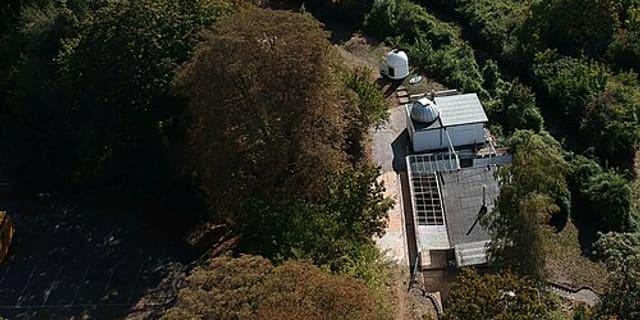
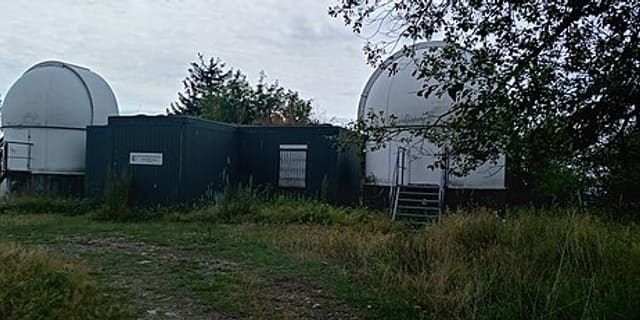
Today the historic building functions as a museum piece rather than a working research station. Marburg's modern astronomy group instead carries out time-domain work on variable stars from an observatory at Stumpertenrod in the Vogelsberg, continuing the tradition the Gerling Observatory began.
Location & getting there
The observatory stands in the university town of Marburg, in the German state of Hesse, built directly onto a tower of the old city wall in the historic centre.
Visiting Marburg observatory
As a historic building tied to Philipps-Universität Marburg, opening times are limited; check the university astronomy department's website before planning a visit.
See your named star from here
A named star's coordinates can be shared with any observatory or astronomy group willing to point a telescope at them. Name a star of your own, or explore stars already listed in the catalogue.
Opening hours and public-visit programs vary by season. Check Google Maps for current times before you travel.
Institutional and reference sources used to verify this guide.
Satellite imagery: Esri, Maxar, Earthstar Geographics

 69 km
69 km
 69 km
69 km
 71 kmPublic