
Enriched Xenon Observatory
Satellite imagery: Esri, Maxar, Earthstar Geographics
Despite its name, the Enriched Xenon Observatory near Carlsbad, New Mexico, doesn't point telescopes at the sky — it's a particle physics experiment searching deep underground for one of physics' rarest predicted events.
About Enriched Xenon Observatory
The Enriched Xenon Observatory, known as EXO, is a particle physics experiment based at the Waste Isolation Pilot Plant (WIPP) near Carlsbad, New Mexico. Rather than studying starlight, it searches for neutrinoless double beta decay in xenon-136, a hypothetical process that — if detected — would prove that neutrinos are their own antiparticles (so-called Majorana particles) and help settle open questions about neutrino mass and ordering.
Instruments & research
The experiment's main detector, EXO-200, is a 200-kilogram xenon liquid time-projection chamber. Researchers have used it to detect ordinary xenon double beta decay and to set limits on the neutrinoless variant, while a follow-up, ton-scale detector called nEXO is in active research and development.
Location & getting there
EXO is located at WIPP, a U.S. Department of Energy facility near Carlsbad, New Mexico, in the southwestern United States. As an underground nuclear-waste and physics research site, it is not a conventional dark-sky destination.
Visiting Enriched Xenon Observatory
WIPP is an active Department of Energy facility, not a public astronomy site, so the Enriched Xenon Observatory does not offer stargazing or public telescope viewing. Anyone interested in the science should look to the collaboration's published research rather than planning an in-person visit.
See your named star from here
Because EXO studies subatomic particles rather than starlight, it isn't the place to look for a named star. If you've named a star through Star Register, though, any optical observatory can use its coordinates to find it — browse our list of observatories or the catalogue to plan where to look.
Opening hours and public-visit programs vary by season. Check Google Maps for current times before you travel.
Institutional and reference sources used to verify this guide.
Satellite imagery: Esri, Maxar, Earthstar Geographics

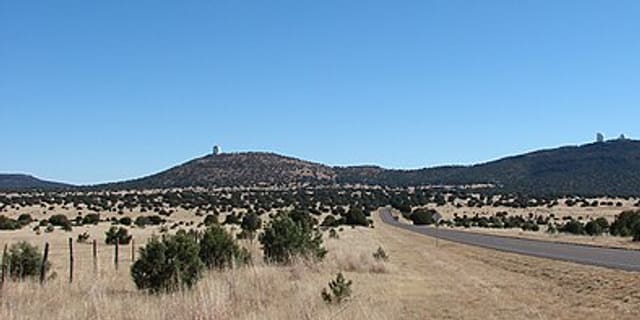 190 km
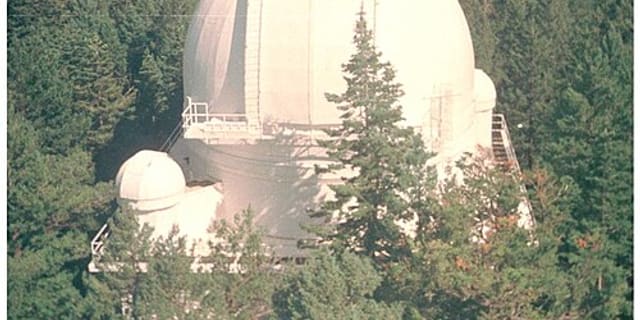 194 km
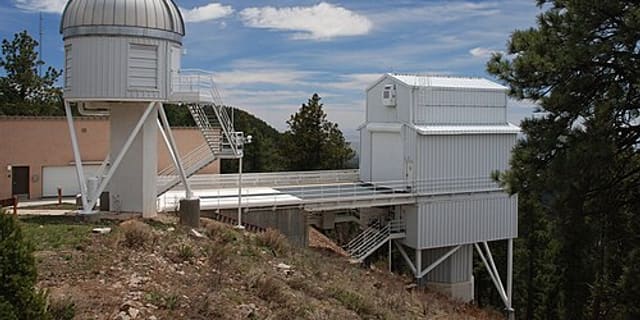 195 km
Apache Point Observatory
astronomical observatory in Sunspot, New Mexico, United States

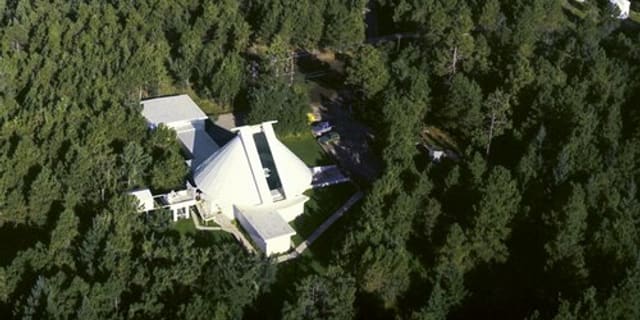 195 kmSolar
Sunspot Solar Observatory
astronomical observatory in Sunspot, New Mexico, United States