
McDonald Observatory


Image: Wikimedia Commons
McDonald Observatory rises above the Davis Mountains of West Texas on Mount Locke, a dark-sky research site run by The University of Texas at Austin near the town of Fort Davis.
About McDonald Observatory
The observatory was founded in 1933 through an endowment from Texas banker William Johnson McDonald (1844–1926) and is operated today as part of the University of Texas at Austin's College of Natural Sciences. It sits at an elevation of 2,077 metres, giving it some of the clearest, darkest skies of any major American observatory.
History
Its first telescope was installed in 1939, and at the time it ranked as the second-largest telescope in the world. The Otto Struve Telescope, an 82-inch instrument, was dedicated on May 5, 1939, and the site later added the 107-inch Harlan J. Smith Telescope as the programme grew.
Telescopes & research
Beyond the main summit, McDonald operates additional facilities on nearby Mount Fowlkes, about 1.3 km to the northeast. The observatory is also known well beyond the astronomy community for producing StarDate, a daily syndicated radio program carried by roughly 400 NPR and commercial radio affiliates.
Location & getting there
McDonald Observatory is located near Fort Davis in Jeff Davis County, Texas, on Mount Locke in the Davis Mountains — one of the most remote, light-pollution-free regions in the continental United States.
Visiting McDonald Observatory
The site is open to the public with visitor programs, though schedules and star party dates change seasonally. Check the official McDonald Observatory website for current opening hours and tickets before travelling.
See your named star from here
With telescopes capable of being pointed at any coordinates in the sky, staff at McDonald Observatory can locate a named star using its right ascension and declination from the star catalogue, making a visit here a memorable way to see it for yourself.
Opening hours and public-visit programs vary by season. Check the official website and Google Maps for current times before you travel.
Institutional and reference sources used to verify this guide.
Satellite imagery: Esri, Maxar, Earthstar Geographics
Texas Star Party, Inc.
One of three major annual star parties in the USA hosting dark site amateur astronomy events.

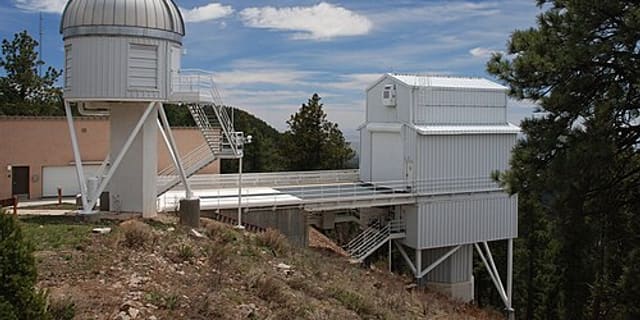 290 km
Apache Point Observatory
astronomical observatory in Sunspot, New Mexico, United States

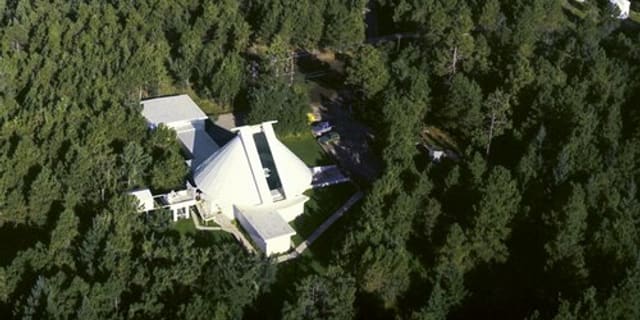 290 kmSolar
Sunspot Solar Observatory
astronomical observatory in Sunspot, New Mexico, United States