
Texas Star Party, Inc.
Satellite imagery: Esri, Maxar, Earthstar Geographics
The Texas Star Party is an annual dark-sky gathering held near Fort Davis, Texas, drawing amateur astronomers from across North America and beyond to the Prude Guest Ranch for a week of observing under some of the darkest skies in the United States.
About Texas Star Party, Inc.
Texas Star Party, Inc. is the 501(c)(3) nonprofit that organizes the event, run almost entirely by volunteers with support from the University of Texas' McDonald Observatory. It ranks among the oldest and largest amateur astronomy gatherings in North America.
History
The party was founded in August 1979 by Deborah Byrd and members of the Austin Astronomical Society, with backing from McDonald Observatory. In 1982 it was reorganized into the week-long event held today at the Prude Guest Ranch, an effort led by David Clark, George Ellis, and Don Garland.
Telescopes & research
Rather than a fixed set of instruments, the party is defined by what attendees bring: a wide range of amateur telescopes set up for visual observing and astrophotography. The site sits roughly 12 miles from McDonald Observatory, and guided tours of that professional facility are part of the week's program, alongside guest speakers, technical talks, observing challenges, and an astrophotography contest. Two annual awards, the Lone Star Gazer Award and the Omega Centauri Award, recognize community members.
Location & getting there
The gathering takes place near Fort Davis in the Davis Mountains of West Texas, at an elevation of about 5,040 feet. The region is rated Bortle Class 2, among the darkest skies accessible in the continental US, which is why the event is timed each year for late April or May near the new moon.
Visiting Texas Star Party
Attendance is by registration for the week-long event; check the official website for dates and ticket details before planning a trip, since the party runs on a set annual schedule rather than being open year-round.
See your named star from here
Under skies this dark, even a modestly sized telescope can pick out a star by its exact coordinates. If you've named a star with Star Register, its RA/Dec can be located from a site like this one - browse the catalogue to find the coordinates for your own star.
Opening hours and public-visit programs vary by season. Check the official website and Google Maps for current times before you travel.
Institutional and reference sources used to verify this guide.
Satellite imagery: Esri, Maxar, Earthstar Geographics

 10 km
10 km
 299 km
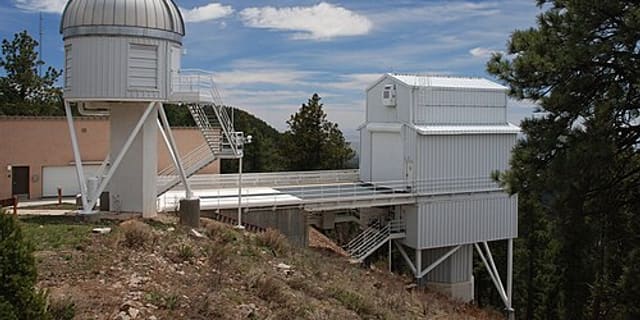
Apache Point Observatory
astronomical observatory in Sunspot, New Mexico, United States

 300 kmSolar
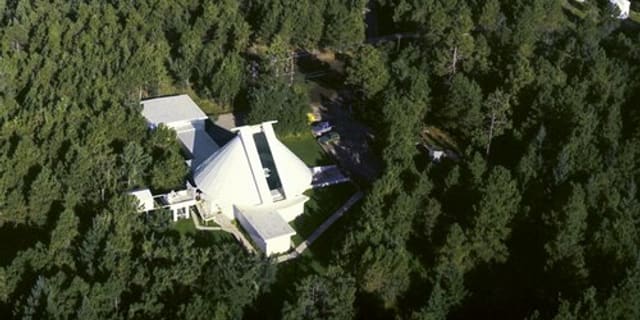
Sunspot Solar Observatory
astronomical observatory in Sunspot, New Mexico, United States