
Besely Observatory
Satellite imagery: Esri, Maxar, Earthstar Geographics
Besely Observatory, about 40 kilometres from Mahajanga in north-west Madagascar, is the country's first robotized astronomical facility, built to give students and amateur astronomers real access to the night sky.
About Besely Observatory
The observatory stands on the Besely Campus, a site that also includes a school, canteen and infirmary. It was built through a collaboration between the associations Haikintana - Astronomy and Ecoles du Monde - Madagascar, together with Uranoscope de l'Île de France, astronomer Antoine Cailleau (Astromecca), the Africa Initiative for Planetary and Space Sciences, and Université Paris-Saclay.
Telescopes & research
Besely Observatory is equipped with a 35 cm telescope housed under a sliding roof, and is fully robotized and remotely controllable. It exists mainly for education and outreach: helping university students practise astrophotography and letting association members photograph the sky to help popularise astronomy in Madagascar. Haikintana Astronomy used the observatory's work to name the country's first discovered asteroid after the Malagasy name "Besely."
Location & getting there
The observatory is located roughly 40 kilometres from Mahajanga in north-west Madagascar, near 18.991°S, 47.518°E, in the Africa section of Star Register's observatories directory. Its rural setting, away from Mahajanga's coastal city lights, was chosen for clearer, darker skies.
Visiting Besely Observatory
The observatory is part of an active campus with school and community facilities, and works with student and association groups on astrophotography. For current visiting arrangements, contact Haikintana - Astronomy or Ecoles du Monde - Madagascar directly, as it is a working educational site rather than a standard tourist attraction.
See your named star from here
Besely Observatory's robotized telescope already helped name Madagascar's first asteroid — a fitting neighbour for anyone wanting to locate a star of their own by its coordinates. Name a star through Star Register, or search the catalogue for one already named.
Opening hours and public-visit programs vary by season. Check Google Maps for current times before you travel.
Institutional and reference sources used to verify this guide.
Satellite imagery: Esri, Maxar, Earthstar Geographics

 2,058 km
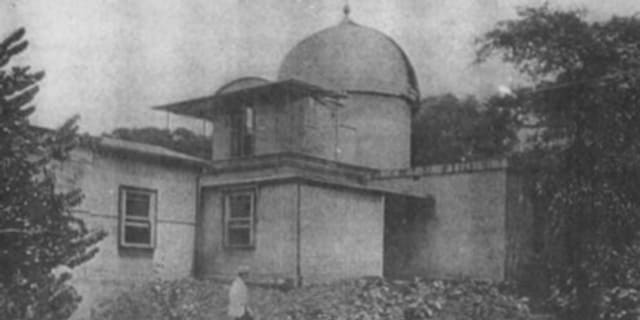
Natal Observatory
astronomical observatory in the Colony of Natal from 1882 to 1911

 2,119 km
 2,152 km