
Barrow Magnetic Observatory
Satellite imagery: Esri, Maxar, Earthstar Geographics
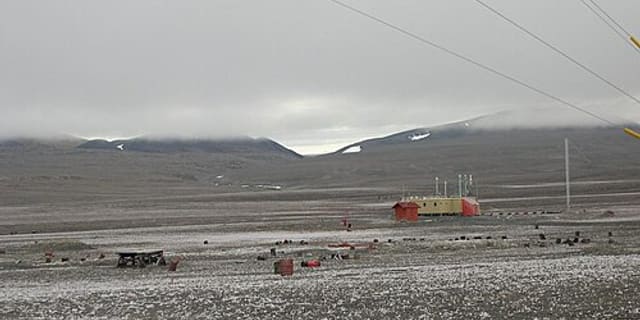
On the Arctic coast near Utqiaġvik (Barrow), Alaska, this facility is the United States' northernmost magnetic observatory, monitoring Earth's magnetic field rather than the stars above it.
About Barrow Magnetic Observatory
Barrow Magnetic Observatory is operated by the USGS Geomagnetism Program in cooperation with NOAA's Global Monitoring Division and the Bureau of Land Management. Sitting within the auroral oval, it is the northernmost of the USGS network of magnetic observatories and covers a 45-acre site.
History
The observatory was established in 1949. It underwent major upgrades in 1957 as part of the International Geophysical Year, and its current physical plant dates from 1975.
Telescopes & research
Rather than optical telescopes, the observatory runs vector and scalar magnetometers that continuously record Earth's magnetic field. The data feeds into main-field modelling, geophysics and space-physics research, and space weather hazard assessment, work made especially valuable by the observatory's high-latitude position under the auroral oval.
Location & getting there
The observatory sits at 71.32°N, on the far northern coast of Alaska near Utqiaġvik (Barrow), one of the northernmost inhabited places in the United States.
Visiting Barrow Magnetic Observatory
This is a scientific monitoring station rather than a public astronomy site, and it isn't set up for stargazing visits or telescope tours. Anyone interested in the geomagnetic research itself should reach out to the USGS Geomagnetism Program directly.
See your named star from here
Although this particular facility studies Earth's magnetic field rather than the night sky, the far-northern latitude around Barrow offers dramatic aurora and star views on clear, dark nights, and the coordinates of any star named through Star Register can be found from here just as from anywhere else on Earth. Name a star or browse the star catalogue.
Opening hours and public-visit programs vary by season. Check Google Maps for current times before you travel.
Institutional and reference sources used to verify this guide.
Satellite imagery: Esri, Maxar, Earthstar Geographics

 2,290 km
 3,027 km
Golden Ears Observatory
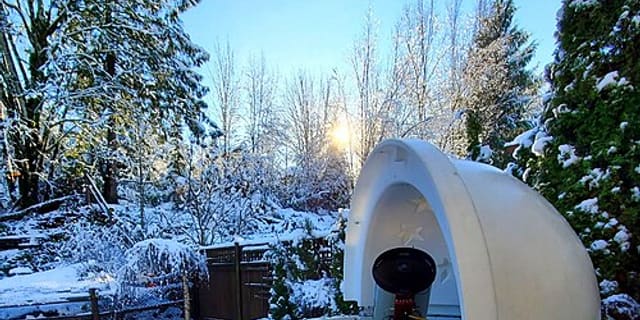
astronomical observatory in Maple Ridge, British Columbia, Canada