
Astrophysical Observatory of Javalambre

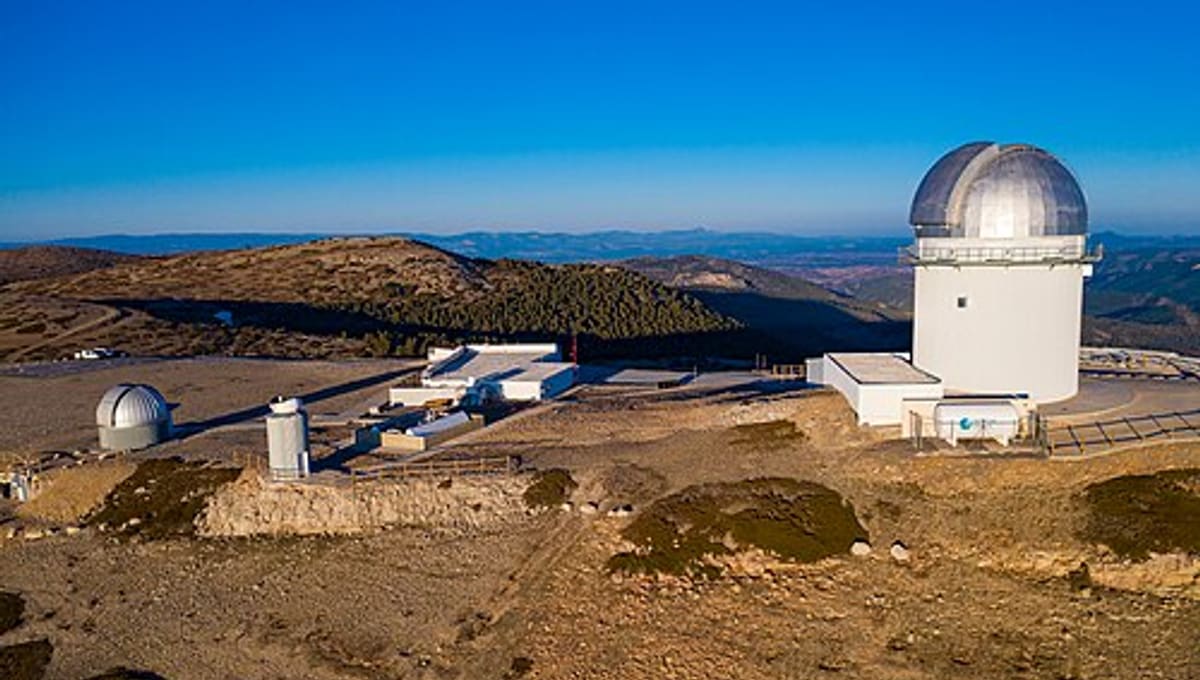
Image: Wikimedia Commons
On a 1,957-metre summit in the mountains of Teruel, Spain, the Astrophysical Observatory of Javalambre scans the entire visible sky, one wide-field image at a time.
About the Astrophysical Observatory of Javalambre
Known by its Spanish initials, OAJ, the observatory sits atop Pico del Buitre in the Sierra de Javalambre, within the municipality of Arcos de las Salinas. It is managed by the Aragón Center for Physics of the Cosmos (CEFCA), under the regional government of Aragón's Department of Science, and specialises in large-scale sky surveys rather than single targeted observations.
History
The observatory was founded in 2013, purpose-built for wide-area survey astronomy rather than adapted from an older facility.
Telescopes & research
OAJ operates two purpose-built survey telescopes: the 2.5-metre JST250, one of the widest-field telescopes of its size anywhere, and the 0.8-metre JAST80, fitted with the high-resolution T80Cam camera. Its flagship instrument, JPCam, is a 1.2-gigapixel camera built for the J-PAS survey, while JAST80 also supports the J-PLUS survey - both designed to map the colours and positions of hundreds of millions of stars and galaxies.
Location & getting there
At nearly 2,000 metres above sea level in the Sierra de Javalambre, Teruel province, the observatory sits within Aragón's growing astrotourism region, prized for its clear mountain air and dark skies.
Visiting the observatory
OAJ itself is a working research facility, but the public can experience it through Galáctica, an astronomy outreach centre opened in 2023 about 10 kilometres away in Arcos de las Salinas. Galáctica organises guided night tours where visitors can observe the sky through telescopes and learn about the observatory's survey work; visits are booked in advance through Galáctica's website.
See your named star from here
Bring the coordinates of your named star from the Star Register catalogue on a visit to Galáctica, and ask the guides to help you find it among the mountain's dark skies.
Opening hours and public-visit programs vary by season. Check the official website and Google Maps for current times before you travel.
Institutional and reference sources used to verify this guide.
Satellite imagery: Esri, Maxar, Earthstar Geographics

 193 km