
La Hita observatory


Image: Wikimedia Commons
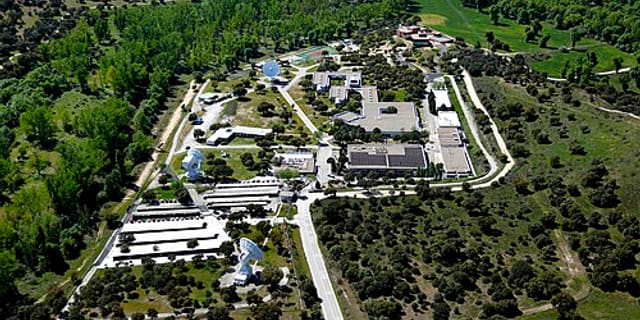
La Hita Observatory rises from the plains of Toledo province in Spain, 9 kilometres from the town of La Puebla de Almoradiel, where founder Faustino Organero built one of the country's most research-active observatories.
About La Hita Observatory
Founded in 2007, La Hita is managed by the AstroHita Foundation as part of the wider La Hita Astronomical Complex. The site sits at an elevation of 695 metres and combines serious scientific research with public science outreach.
History
Faustino Organero founded the observatory in 2007, and it has since grown into a recognised research site collaborating with several Spanish universities and institutes.
Telescopes & research
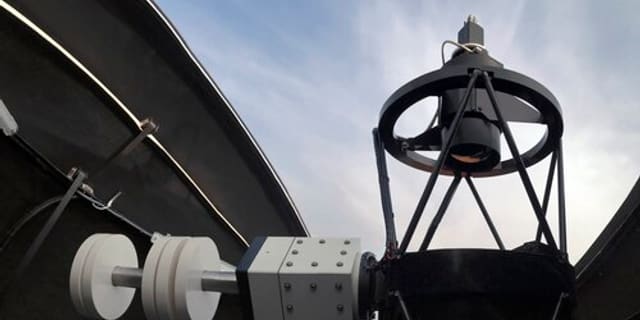
La Hita hosts two custom-built telescopes alongside a dedicated public observation area. Research carried out here includes the study of dwarf planets with the Institute of Astrophysics of Andalusia, asteroid detection work with the University of Huelva, and lunar impact detection as part of the MIDAS Project.
Location & getting there
The observatory sits 695 metres above sea level near La Puebla de Almoradiel in Toledo province, central Spain, open countryside that keeps the surrounding skies dark. Use the map on this page for directions.
Visiting La Hita Observatory
The AstroHita Foundation runs public engagement and dissemination activities at the site. Contact the foundation directly, via its official website or by phone, to check current opening times and how to book a visit.
See your named star from here
La Hita's telescopes are already tuned to hunting down faint, precisely positioned objects like dwarf planets and asteroids, exactly the kind of coordinate-based search that finds a Star Register named star. Name a star, or browse the catalogue.
Opening hours and public-visit programs vary by season. Check Google Maps for current times before you travel.
Institutional and reference sources used to verify this guide.
Satellite imagery: Esri, Maxar, Earthstar Geographics

 68 km
68 km
 117 kmResearch
 141 kmRadio
 141 km