
Warrumbungle National Park

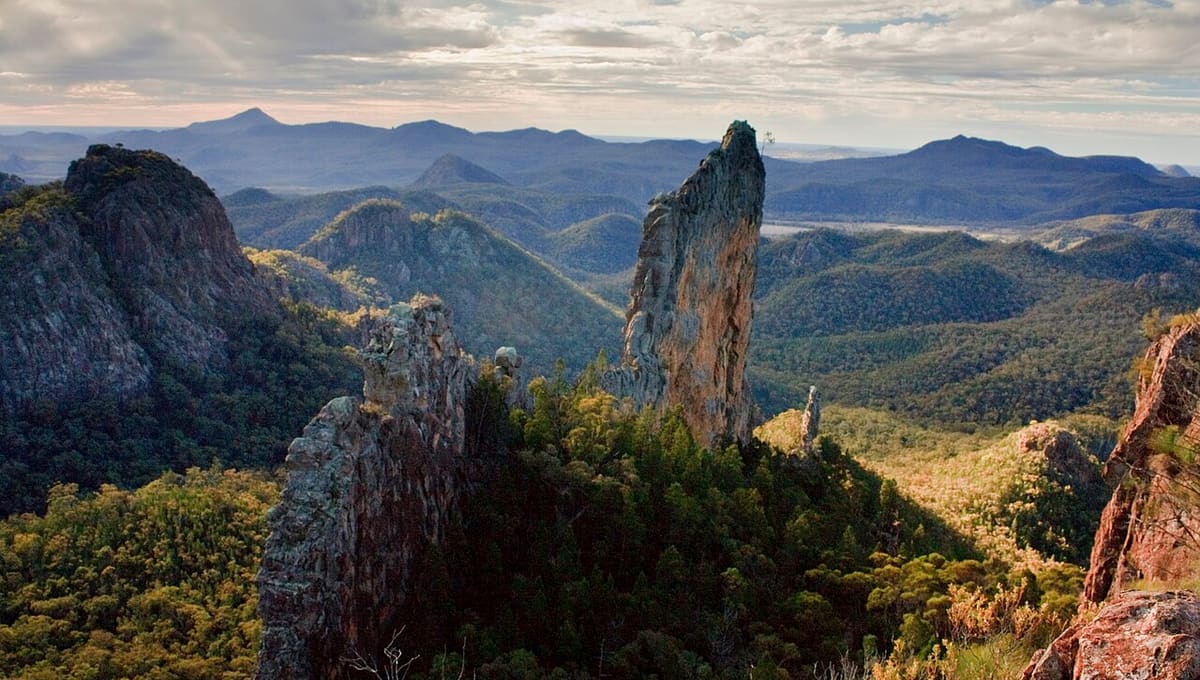
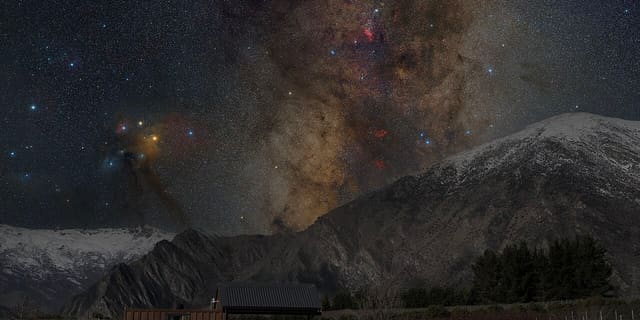
Image: Mgillaus · CC BY-SA 3.0 · Wikimedia Commons
Warrumbungle National Park lies in the Orana region of central-western New South Wales, near Coonabarabran, and covers 23,312 hectares of volcanic mountain landscape. In 2011 it became Australia's first International Dark Sky Park, and the first anywhere in the southern hemisphere, drawing around 35,000 visitors a year.
Why Warrumbungle National Park is a top stargazing spot
The park sits directly beside Siding Spring Observatory, Australia's premier optical and infrared research facility, home to more than 20 telescopes including the Anglo-Australian Telescope, the largest in the country. Sky Quality Meter readings here run around 21.7 mag/arcsec², an exceptionally dark measurement, and that neighbouring observatory is itself a sign of just how dark and clear the local skies are.
What you can see
From this southern-hemisphere park, clear nights bring out a bright sweep of the Milky Way, the Magellanic Clouds and the Southern Cross, sights that aren't visible from the northern hemisphere at all. The volcanic peaks and open landscape give unobstructed horizons for wide views of the night sky.
Visiting Warrumbungle National Park at night
Entry costs $8 per vehicle per day, paid at the visitor centre, and the park's Breadknife and Grand High Tops walk is rated among the best in New South Wales, worth pairing with an evening stargazing session. Camping is available within the park: Camp Blackman, the main site, costs $24 a night unpowered or $34 powered, Camp Wambelong is $16 a night, and the walk-in Burbie campground costs $5 per adult and $3 per child. Just six kilometres east of the park, Milroy Observatory runs 90-minute stargazing sessions every night, led by comet-discoverer Donna Burton, with views of planets, galaxies, nebulae and star clusters through her telescopes. Siding Spring Observatory, 27 kilometres west on the park's edge, offers free public access to its visitor gallery inside the Anglo-Australian Telescope dome by day, with guided tours during NSW school holidays and behind-the-scenes tours for groups of 15 or more; the observatory itself closes to the public at night. Each October, over the Labour Day long weekend, Siding Spring hosts its annual Star Fest, opening the full site for exploration and conversations with working astronomers.
Best time to go
South of the equator, Warrumbungle's best window for the bright Milky Way core runs roughly February to October, with the galaxy climbing high overhead on clear, moonless evenings. The Geminid meteor shower in December and the Eta Aquariids in May both favour southern-hemisphere viewers and are worth building a visit around. Whatever the season, aim for a night near the new Moon, give your eyes twenty to thirty minutes to adapt to the darkness, and use a red light rather than a white torch.
Getting there
The park sits near Coonabarabran, about 550 kilometres northwest of Sydney, with Siding Spring Observatory just 27 kilometres further west and Milroy Observatory 6 kilometres east of the park itself.
See your named star from here
Standing beside one of the world's leading observatories under genuinely dark southern skies is a fitting place to look for a named star. Bring its coordinates and a stargazing app, browse the star catalogue to name one yourself, and see more observatories and dark-sky parks worth a visit.
Conditions and access vary by season. Check the official website and Google Maps before you travel, and aim for a clear night near the new Moon for the darkest sky.
Satellite imagery: Esri, Maxar, Earthstar Geographics

 946 kmReserve
 2,246 kmPreserve
 2,311 kmReserve
 2,311 kmPreserve