
Joshua Tree National Park

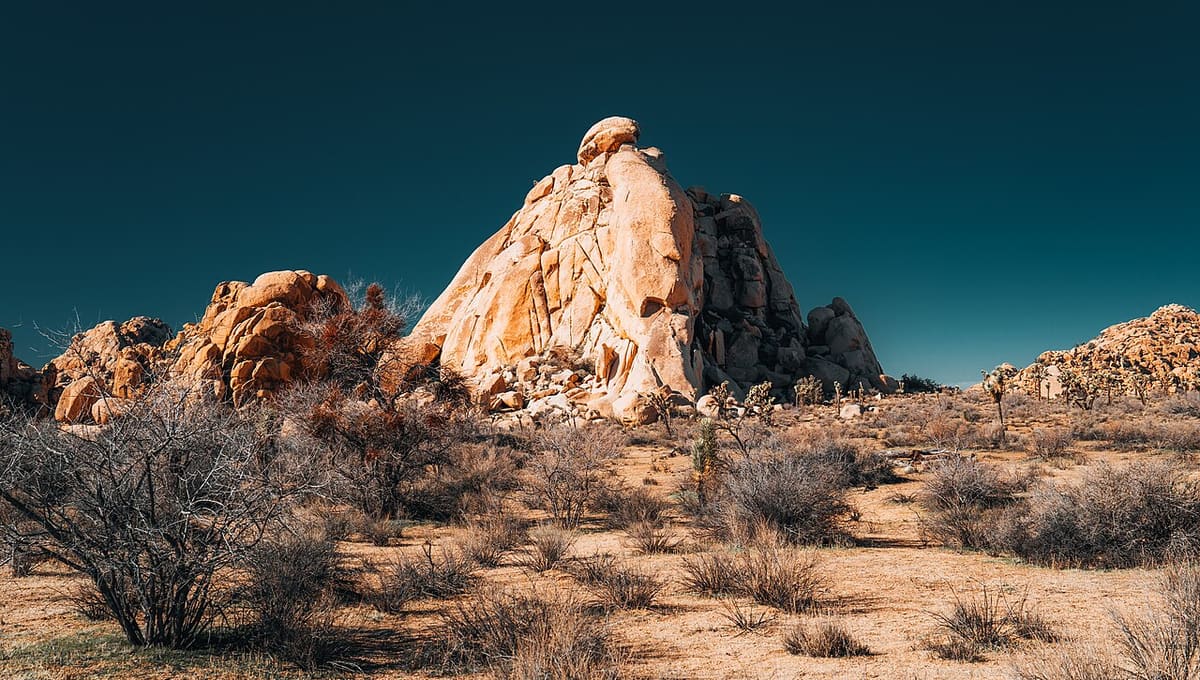
Image: Sergiy Galyonkin · CC BY-SA 4.0 · Wikimedia Commons
Joshua Tree National Park spans the California desert where the Colorado and Mojave deserts meet, straddling Riverside and San Bernardino counties about 130 miles east of Los Angeles. Named for the spiky, endemic Joshua tree, the park is a certified International Dark Sky Park and one of the most accessible dark-sky destinations in Southern California.
Why Joshua Tree National Park is a top stargazing spot
Joshua Tree holds International Dark Sky Park status in recognition of the exceptionally dark skies over its eastern wilderness, where conditions reach Bortle class 2, among the darkest ratings on the scale. The park's western half, closer to Palm Springs, sees some light pollution spillover, but head east toward Pinto Basin, which has the darkest skies in the park, and the sky opens up into something most visitors have never seen from home.
What you can see
On a clear, moonless night the Milky Way arches directly overhead, its dust lanes and star clouds visible to the naked eye. The park's high desert elevation and dry air add to the clarity. Four parking lots are officially designated for stargazing: Quail Springs, Hidden Valley, Cap Rock and Ryan Mountain, along with the eastern reaches near Cottonwood, all offering wide horizons away from roads and light domes for watching meteor showers or tracing constellations across the desert sky.
Visiting Joshua Tree National Park at night
The park is open 24 hours, so nighttime access for stargazing is never a problem, but there are no services inside: no running water, food, lodging or electricity, so come prepared. Entrance costs $30 per vehicle for a 7-day pass, $15 for an individual, or $55 for an annual pass. Visitor centres typically open between 8 and 9am and close between 3 and 5pm depending on the season. The park hosts an annual Night Sky Festival and regular ranger-led night sky programmes; check the park calendar for current dates. The nearby Sky's the Limit Observatory also runs supplementary stargazing programmes. Plan around the new Moon for the deepest darkness, bring a red-light torch to protect your night vision, and dress warmly, since desert nights cool quickly even after a hot day.
Best time to go
Joshua Tree's latitude gives it Milky Way core season from around March to September, with the galactic centre climbing higher and staying visible longer into the summer months. Winter nights are the longest and often the clearest, ideal for spotting Orion and the other bright winter constellations without the summer heat. The Perseid meteor shower in August and the Geminids in December are both well placed here, and the Quadrantids in January reward a cold desert night. Whatever the season, aim for a night close to the new Moon, allow 20 to 30 minutes for your eyes to adapt to the dark, and use only red light once you're stargazing.
Getting there
The park has entrances near the towns of Joshua Tree and Twentynine Palms to the north and Cottonwood, off Interstate 10, to the south. It is roughly 130 miles east of Los Angeles and close to Palm Springs, Indio and Palm Desert, which serve as convenient bases before a night in the park; since there is no lodging inside the boundary, most visitors stay in one of these towns or at a park campground.
See your named star from here
A Bortle 2 sky like Joshua Tree's reveals stars that are simply invisible from any city, which makes it an ideal place to look for a star you've named through star-register.eu. Bring your certificate's coordinates and a stargazing app, and use the dark desert horizon to help you find it. Browse our catalogue of named stars, or explore more certified dark-sky destinations on our observatories page.
Conditions and access vary by season. Check the official website and Google Maps before you travel, and aim for a clear night near the new Moon for the darkest sky.
Satellite imagery: Esri, Maxar, Earthstar Geographics

 82 kmCommunity
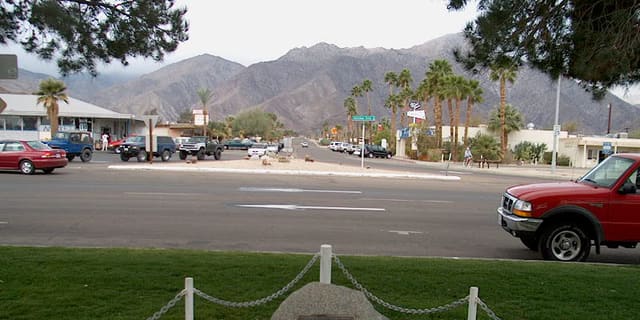
Borrego Springs
census-designated place in San Diego County, California, United States

 82 kmDark Sky Park
 299 kmDark Sky Park
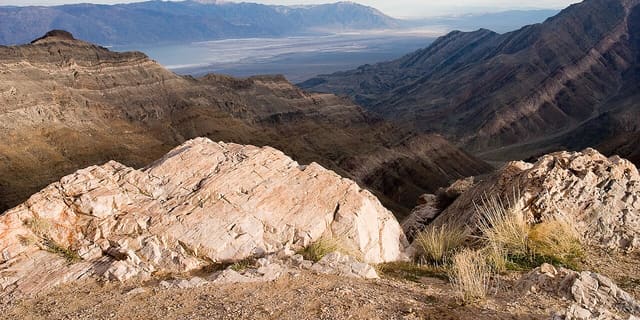
Death Valley National Park
national park in California and Nevada in the United States

 345 kmDark Sky Park
Grand Canyon-Parashant National Monument
national monument in the United States