
Borrego Springs

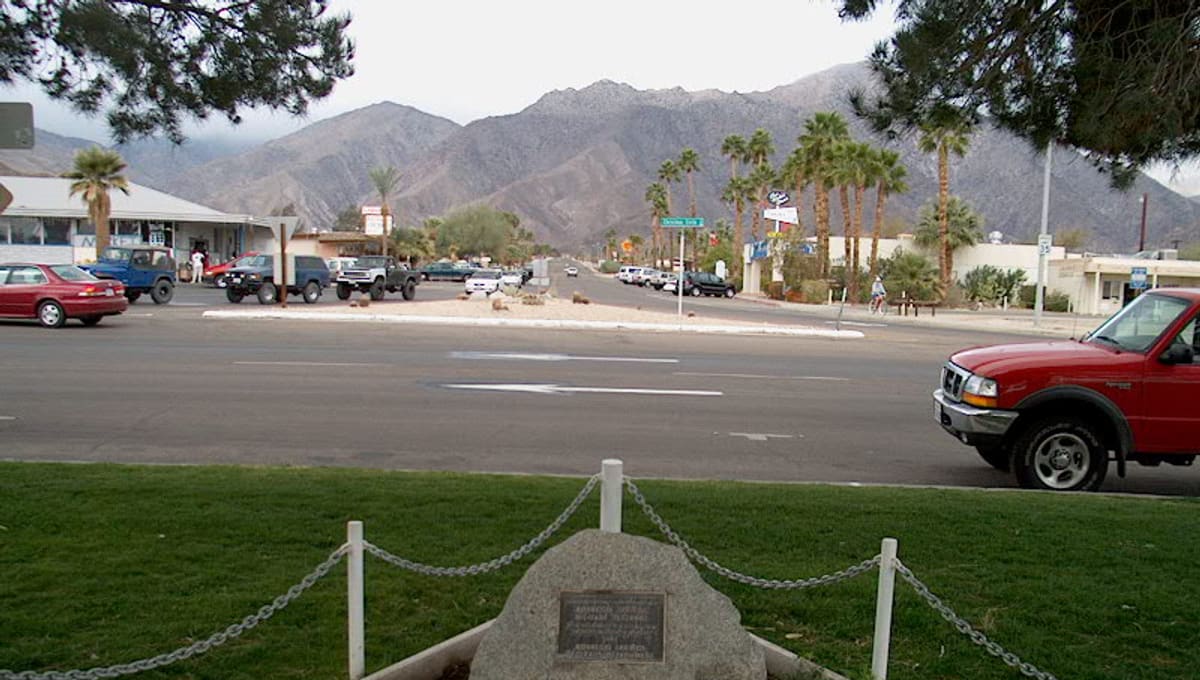
Image: Perdelsky at English Wikipedia · Public domain · Wikimedia Commons
Borrego Springs is a small desert community in northeastern San Diego County, California, almost entirely encircled by Anza-Borrego Desert State Park. In 2009 it became the world's second International Dark Sky Community, after Flagstaff, Arizona, and the first anywhere in California.
Why Borrego Springs is a top stargazing spot
Borrego Springs earned its Dark Sky Community status through an outdoor lighting ordinance in place since 2007, which requires streetlights and buildings to use shielded, downward-pointing fixtures. The result is a Bortle Class 2 sky, one of the darkest ratings a place can have. On a clear, moonless night the Milky Way is bright enough to cast a faint shadow on flat ground, and the zodiacal light, a soft glow from sunlight scattering off interplanetary dust, is visible on the horizon before dawn or after dusk.
What you can see
Under skies this dark, the core of the Milky Way stretches clearly overhead, thousands of stars are visible to the naked eye, and fainter deep-sky objects that are washed out in most towns become easy targets for binoculars. Borrego Springs sits inside Anza-Borrego Desert State Park, which was itself certified an International Dark Sky Park in 2018, creating a continuous protected dark-sky area of roughly 600,000 acres around the community.
Visiting Borrego Springs at night
The community has a well-developed stargazing scene: Borrego Night Sky Tours runs guided sessions with large telescopes, the Borrego Springs Resort and The Springs at Borrego RV Resort both host scheduled star parties with dinner and guided viewing, and noted astronomer Dennis Mammana leads sessions at several venues around town. Each autumn the Riverside Astronomical Society hosts the Nightfall Star Party with public lectures and workshops, and the state park runs Anza-Borrego Under the Stars evenings at Culp Valley with high-powered telescopes and expert guides. The Anza-Borrego Visitor Center at 200 Palm Canyon Drive is open year-round on weekdays, and on weekends and holidays through the summer. Twelve campgrounds inside Anza-Borrego range from free primitive sites to developed campgrounds with hookups for around $35 to $45 a night.
Best time to go
Because the community and the surrounding state park share the same dark-sky protections, stargazing conditions are consistent whether you're in town or out on the desert trails, and the desert's low humidity means clear nights are common year-round; cooler months from October to April are generally the most comfortable for standing out under the sky. The Milky Way's core is highest from around March through October at this latitude, while winter brings the bright constellations of Orion and Taurus overhead along with the Geminids meteor shower in December. Plan around the new Moon for the darkest views, give your eyes 20 to 30 minutes to adapt to the dark, and use a red flashlight rather than white light to preserve your night vision.
Getting there
Borrego Springs sits in the Low Desert of northeastern San Diego County, reached via county roads that wind down from the surrounding mountains into the Anza-Borrego basin. The Anza-Borrego Visitor Center on Palm Canyon Drive is the best first stop for current road and park conditions before heading out after dark.
See your named star from here
A Bortle 2 sky like Borrego Springs reveals far fainter stars than you'll ever see from a city, which makes it a genuinely good place to track down a star you've had named for someone. Bring your certificate's coordinates and a stargazing app, browse the full star catalogue to find your entry, and see our list of observatories if you'd like an even more precise view.
Conditions and access vary by season. Check Google Maps before you travel, and aim for a clear night near the new Moon for the darkest sky.
Satellite imagery: Esri, Maxar, Earthstar Geographics

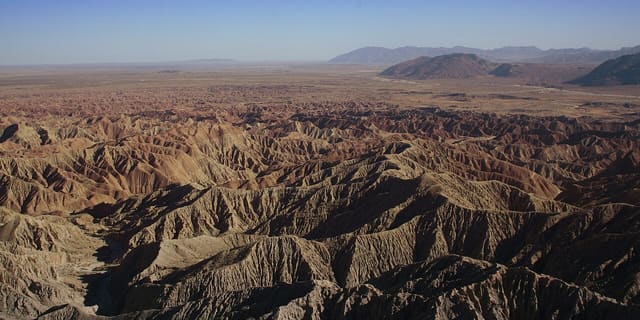 3 kmDark Sky Park
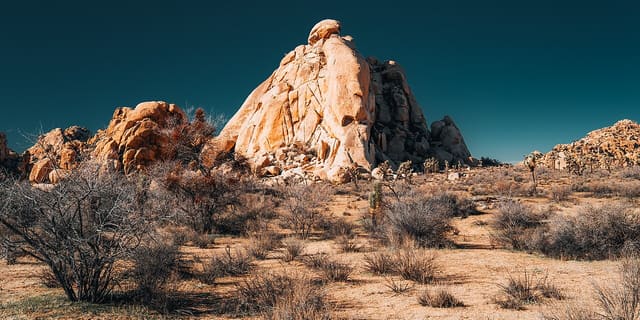 82 kmDark Sky Park
 359 kmDark Sky Park
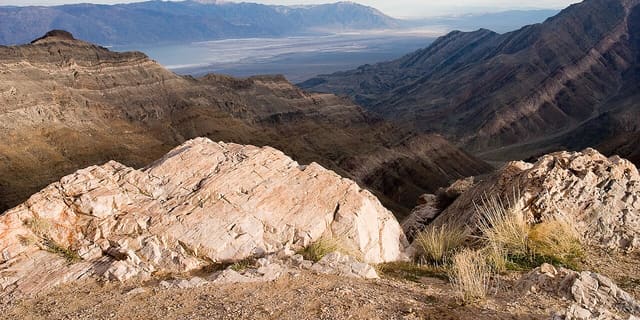
Death Valley National Park
national park in California and Nevada in the United States

 427 kmDark Sky Park
Grand Canyon-Parashant National Monument
national monument in the United States