
!Ae!Hai Kalahari Heritage Park

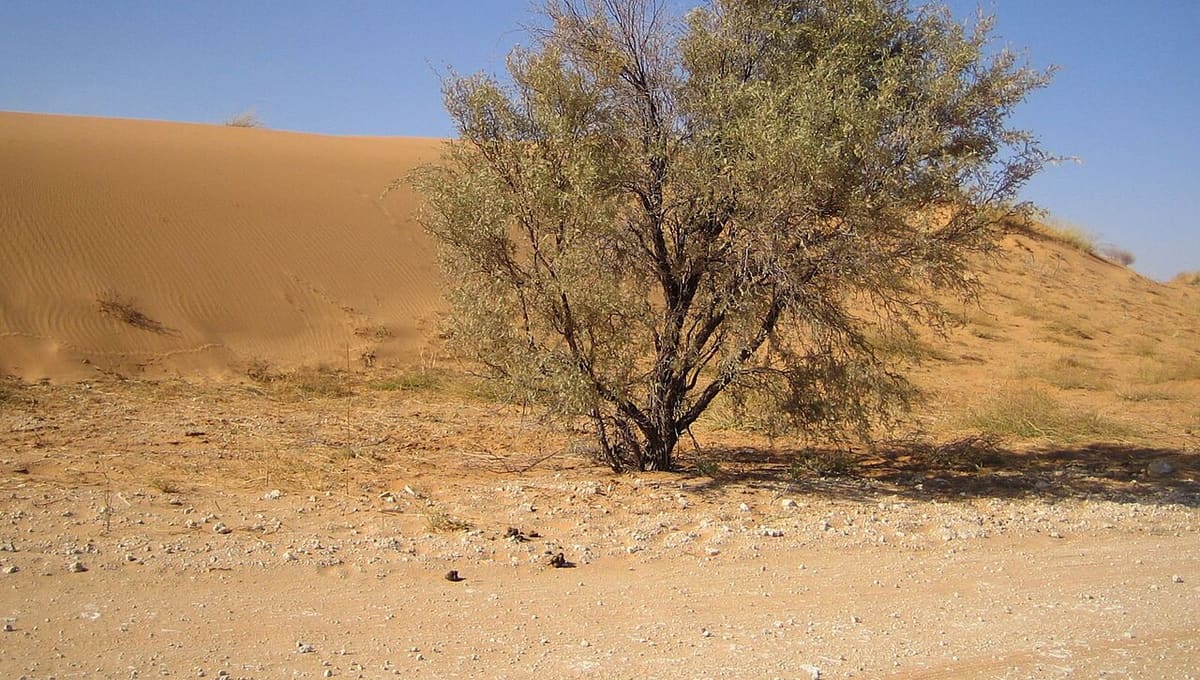
Image: Hansm · CC BY-SA 3.0 · Wikimedia Commons
!Ae!Hai Kalahari Heritage Park sits inside the Kgalagadi Transfrontier Park where South Africa, Botswana and Namibia meet, in the Northern Cape province. Since 2019 it has held International Dark Sky Sanctuary status, the only place in Africa to hold this designation, marking it as one of the most remote and least light-polluted places on the continent.
Why !Ae!Hai Kalahari Heritage Park is a top stargazing spot
The park's average sky quality reading is a striking 21.6 on the Sky Quality Meter scale, placing it among the darkest measured skies anywhere in the world. This came about through a land settlement in 2002 that returned more than 35,000 hectares of the Kalahari to the ǂKhomani San and Mier communities, whose stewardship has kept this stretch of arid wilderness free of the artificial light that washes out the night sky elsewhere. For the ǂKhomani San, the stars are not just a backdrop: celestial stories are woven into the culture's heritage, and a night here connects visitors to one of the oldest continuous relationships between people and the night sky on Earth.
What you can see
With skies this dark, the Milky Way arches overhead in dense, structured detail rather than the faint smudge it becomes near cities. The Kalahari's southern latitude also brings the galactic core high into view for much of the year, along with southern-hemisphere sights unavailable further north, including the Magellanic Clouds. Away from any competing glow, faint stars, star clusters and the zodiacal light are all within reach of the naked eye on a clear, moonless night.
Visiting !Ae!Hai Kalahari Heritage Park at night
Accommodation at the park's !Xaus Lodge is set up with dark skies in mind: electricity runs only for around five hours each evening, and the generator is switched off by 11pm specifically to preserve the darkness overhead. That makes the hours after the lights go down some of the best for stepping outside. As with any remote reserve, check current access and any seasonal notices with the park authorities before you travel, since facilities and opening arrangements can change.
Best time to go
In the southern hemisphere the Milky Way's bright core is best placed from roughly February to October, climbing high overhead on clear winter and spring nights. Plan around the new Moon for the darkest skies, and give your eyes 20 to 30 minutes to adapt fully to the dark, using only red light if you need a torch. If your visit lines up with December, the Geminid meteor shower is visible from southern latitudes too, adding shooting stars to an already exceptional sky.
Getting there
The park lies deep in the Kgalagadi Transfrontier Park region of the Northern Cape, on the border shared by South Africa, Botswana and Namibia. Its remoteness is precisely what protects its darkness, so allow plenty of travel time and plan fuel and supply stops carefully, as this is genuinely wilderness terrain far from major towns.
See your named star from here
A sky this dark is exactly where a named star stops being an abstract idea on a certificate and becomes something you can actually pick out overhead. Bring your star's coordinates and a stargazing app, and the Kalahari's near-total darkness gives you a real shot at finding it. Browse the full star catalogue to name one before you go, or explore other observatories and dark-sky sites for your next trip.
Conditions and access vary by season. Check Google Maps before you travel, and aim for a clear night near the new Moon for the darkest sky.
Satellite imagery: Esri, Maxar, Earthstar Geographics

 446 kmReserve
 832 kmDark Sky Park
Lapalala Wilderness
conservation area in Waterberg Biosphere, Limpopo, South Africa

 6,293 kmDark Sky Park
 6,443 kmDark Sky Park