
Yunnan Astronomical Observatory

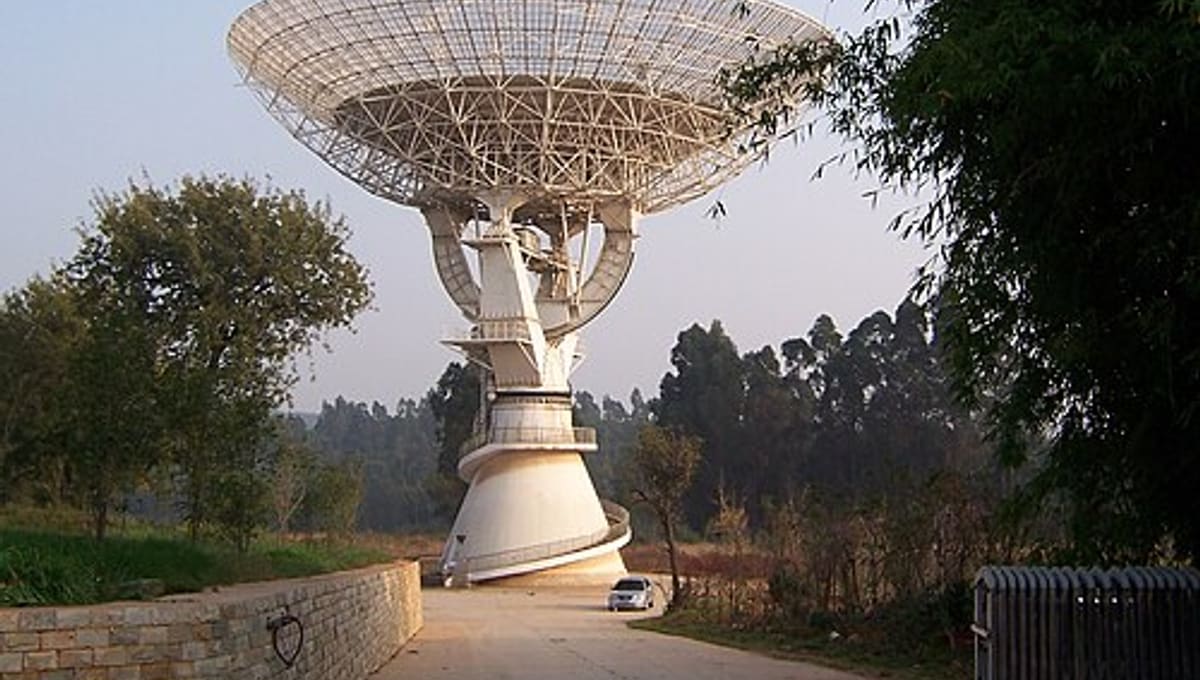
Image: Wikimedia Commons
On Phoenix Hill in the eastern suburbs of Kunming, Yunnan, the Yunnan Astronomical Observatory has been at the centre of Chinese astronomy since 1930, and remains the only research observatory in southwest China.
About Yunnan Astronomical Observatory
Yunnan Astronomical Observatory (YAO) is an institution of the Chinese Academy of Sciences, sitting on Phoenix Hill at an elevation of 2,014 metres above Kunming. It functions as both a state research institution and a public science education centre, organised into eight research groups and two observing stations.
History
The observatory was founded in 1930, during the Japanese invasion of China, when astronomers evacuated from the Beijing Astronomical Observatory and the Purple Mountain Observatory relocated to Kunming and re-established their work there. It has operated on Phoenix Hill ever since.
Telescopes & research
YAO's research groups cover solar physics, stellar physics and stellar populations, extragalactic physics, active galactic nuclei jets, binary population synthesis, high-energy astrophysics, and astrodynamics and astrometry. Its facilities include the Lijiang 2.4 metre telescope, a 1 metre solar tower at Fuxian Lake, a further 1 metre optical telescope, and a 40 metre radio telescope.
Location & getting there
The observatory sits at 2,014 metres elevation on Phoenix Hill, in the eastern suburbs of Kunming, the capital of Yunnan province in southwestern China. Its elevated, inland position is part of what makes the site useful for both solar and night-sky observation.
Visiting Yunnan Astronomical Observatory
As a research institution with a public education role, Yunnan Astronomical Observatory can be reached by phone at +86 871 6392 0919, and its official websites list current information for visitors and researchers. Confirm opening arrangements before travelling, since access can vary between its research and public-facing facilities.
See your named star from here
With instruments ranging from a 2.4 metre optical telescope to a 40 metre radio dish, Yunnan Astronomical Observatory has the range to locate objects across the sky by coordinates. A star named through Star Register comes with exactly that kind of position data; browse the star catalogue to choose one.
Opening hours and public-visit programs vary by season. Check the official website and Google Maps for current times before you travel.
Institutional and reference sources used to verify this guide.
Satellite imagery: Esri, Maxar, Earthstar Geographics

 1,042 kmResearch
Jiangmen Underground Neutrino Observatory
neutrino experiment in Jiangmen, China

 1,749 km
 1,841 km