Vera C. Rubin Observatory


Image: Wikimedia Commons
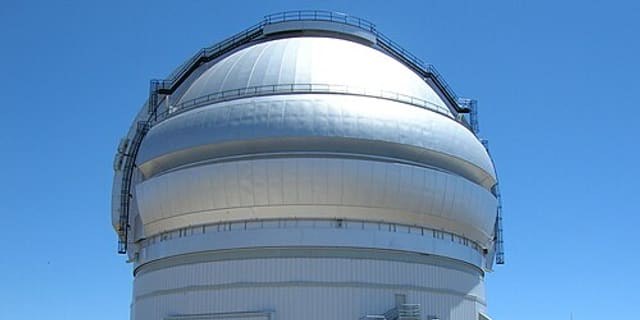
Vera C. Rubin Observatory sits on the El Peñon peak of Cerro Pachón, at about 2,673 metres elevation in the Coquimbo Region of northern Chile.
About Vera C. Rubin Observatory
Formerly known as the Large Synoptic Survey Telescope (LSST), the observatory is a joint initiative of the U.S. National Science Foundation and the U.S. Department of Energy's Office of Science, operated jointly by NSF NOIRLab and SLAC National Accelerator Laboratory. It is named after Vera Rubin, the American astronomer whose work on galactic rotation rates provided key evidence for dark matter.
Telescopes & research
The observatory's centrepiece is the Simonyi Survey Telescope, an 8.4-metre reflector using a three-mirror anastigmat design to capture sharp images across a 3.5-degree-diameter field of view. Its 3.2-gigapixel camera, the largest ever constructed, feeds the observatory's main project: the Legacy Survey of Space and Time, a ten-year time-lapse survey of the entire visible southern sky, repeated every few nights. Over its run, Rubin is expected to catalog millions of supernovae, more than five million asteroids including roughly 100,000 near-Earth objects, and image around 17 billion stars and 20 billion galaxies.
Location & getting there
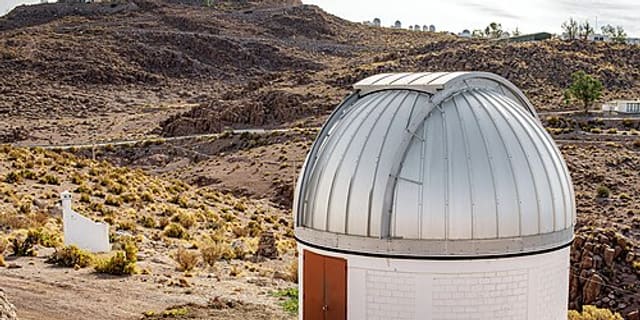
Cerro Pachón also hosts the Gemini South and Southern Astrophysical Research telescopes, making it one of the premier astronomical sites in the Southern Hemisphere. The observatory's base facility sits about 100 kilometres away by road, in the city of La Serena.
Visiting Vera C. Rubin Observatory
As an active research observatory on a remote mountaintop, public access to the summit is limited. Check the official website for current visitor programmes, public talks, or events run through the base facility in La Serena.
See your named star from here
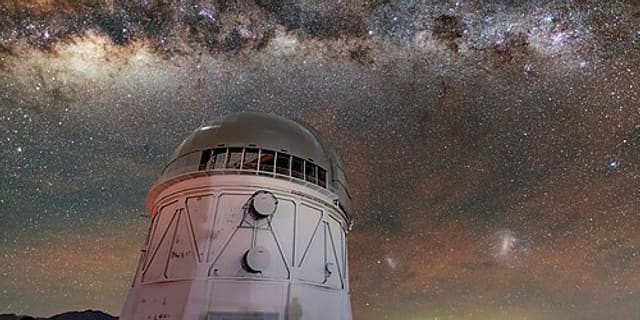
An observatory built to image tens of billions of stars is a striking place to think about one particular star named just for you. While Rubin's own survey work runs on a fixed schedule, its neighbouring observatories on Cerro Pachón and elsewhere can be asked to point at your star's exact coordinates. Name a star or browse the catalogue to find one.
Opening hours and public-visit programs vary by season. Check the official website and Google Maps for current times before you travel.
Institutional and reference sources used to verify this guide.
Satellite imagery: Esri, Maxar, Earthstar Geographics