
Uppsala Astronomical Observatory

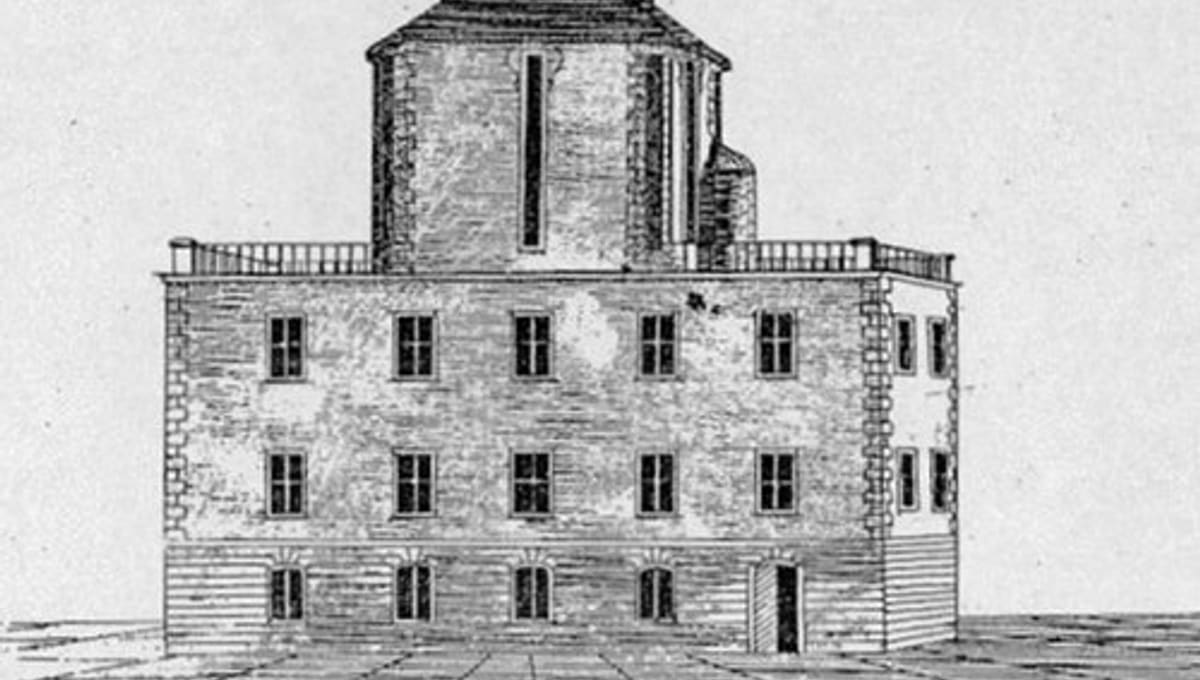
Image: Wikimedia Commons
In Uppsala, Sweden, the Uppsala Astronomical Observatory holds the title of the country's oldest astronomical observatory, with roots stretching back to the 18th century.
About Uppsala Astronomical Observatory
The observatory traces its origins to a professorial chair of astronomy at the University of Uppsala dating from 1593, with astronomy lecture notes surviving from as early as the 1480s.
History
Anders Celsius founded the observatory in 1741, having convinced the university to buy a stone house of medieval origin in central Uppsala, where he built an observatory on the rooftop and lived alongside his research. That original rooftop observatory was demolished in 1857, four years after a new building, now known as the "old observatory," opened in 1853. In the 19th century, Anders Jonas Ångström conducted research there in astronomy, physics and optics, work later continued by his son Knut Ångström on solar radiation. In 2000, the observatory merged with the Institute of Space Physics to form the Department of Astronomy and Space Physics, moving to the Ångström Laboratory, and in 2008 it became a division within the Department of Physics and Astronomy.
Telescopes & research
Over the centuries, research at Uppsala has spanned stellar parallaxes, stellar statistics, galactic structure, external galaxies, stellar atmospheres and Solar System studies. The observatory also maintains the Kvistaberg Observatory in Sweden and the Uppsala Southern Station at Siding Spring Observatory in Australia.
Location & getting there
The observatory sits in Uppsala, Sweden, at an elevation of around 51 metres, a short distance north of Stockholm.
Visiting Uppsala Astronomical Observatory
Check the observatory's website for current information on tours or public events before planning a visit.
See your named star from here
Once you've named a star with Star Register, a site with nearly three centuries of stargazing history, like this one, is a fitting place to look for its coordinates. Browse our catalogue to find your star.
Opening hours and public-visit programs vary by season. Check the official website and Google Maps for current times before you travel.
Institutional and reference sources used to verify this guide.
Satellite imagery: Esri, Maxar, Earthstar Geographics

 37 kmMuseum
 60 kmMuseum